1 month ago
With most designated targets already exhausted, US Central Command chief Admiral Brad Cooper advised Trump that further strikes had limited military value. A dwindling interceptor stockpile and renewed diplomatic efforts also influenced the US decision to pause attacks around the Strait of Hormuz.
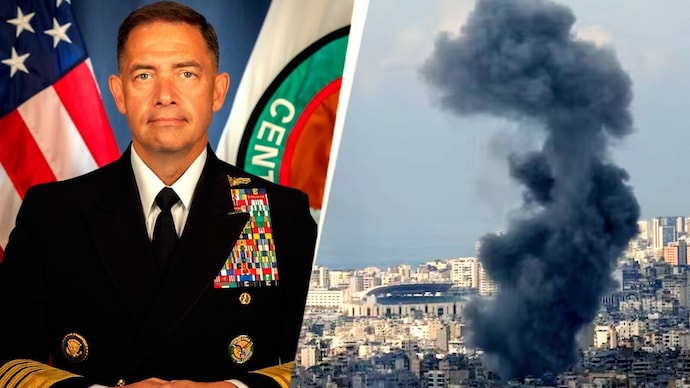
Admiral Brad Cooper (L), commander of US Central Command, advised Trump to halt strikes around the Strait of Hormuz, saying the campaign had reached its limits.

New Delhi,UPDATED: Jul 27, 2026 08:32 IST
On July 23, just hours before the US carried out its 13th consecutive night of attacks on Iran, President Donald Trump told reporters that Tehran had not “received enough pain yet”, making no attempt to mince his words about a major escalation.
Going a step further, he said, “I am considering a massive attack. Bigger than ever before. I am close to making a decision. We are all set for it.”
The US went ahead and bombed what it called Iranian military targets for the 13th night. However, as is often the case, Trump took a 360-degree turn the very next day and pressed the pause button, even as the Pentagon presented its blueprint for a 14th night of attacks.
So, what changed in 24 hours that made Trump go from threatening to go big on Iran to suddenly pausing the attacks?
We have already reported, citing various US media outlets, that Trump wanted to create more room for diplomacy and had also been warned about the rapidly dwindling stockpile of interceptor missiles.
MOST TARGETS ALREADY EXHAUSTED, SAYS US COMMANDER
Beyond these factors, a new report by Axios has shed light on how Admiral Brad Cooper, the top US military commander in the Middle East, assessed the situation on the ground -- and how his assessment ultimately changed Trump's mind at the last moment.
In his briefing to the US President, Admiral Cooper recommended halting the bombing campaign around the Strait of Hormuz after concluding that it had reached the limits of its effectiveness, Axios reported, citing two sources familiar with his position.
The recommendation by the commander of US Central Command was among a host of factors that influenced President Donald Trump’s decision on Friday to pause US strikes against Iran, the sources told Axios.
The move reflected an acknowledgement by military and civilian advisers that further military action, particularly an air campaign, had reached the limits of what it could achieve.
For the first time in two weeks, Trump ordered the military to hold fire and not carry out strikes on Iranian targets along Iran’s southern coast and in the Strait of Hormuz area.
The decision followed a meeting with senior advisers and military officials, who presented Trump with a new strike plan for the day.
In the days before that meeting, Trump had been leaning towards a return to major combat operations, sources told Axios, but his thinking began to shift on Thursday evening.
By Friday, his decision to pause the bombing campaign in the strait had firmed up.
Earlier in the week, Cooper gave his recommendation on the way forward to the Pentagon, the Joint Chiefs and the White House, Axios reported. He said two weeks of strikes in the Strait of Hormuz area had significantly reduced Iran’s ability to attack ships, and pointed out that most of the designated bombing targets had already been exhausted.
Cooper said one possible next step would be to resume major combat operations to strike the remaining 20% of targets identified but not hit during Operation Epic Fury. But without a decision to return to major combat operations, he stressed there was no point in continuing the bombing campaign of the previous two weeks, reported Axios.
Sources further revealed to Axios that General Dan Caine, chairman of the Joint Chiefs of Staff, had privately warned Pete Hegseth and Trump that a shortage of air defence interceptors could affect the ability to protect US forces and allies in the region. Caine’s warning was first reported by The New York Times.
A FRAGILE 'QUIET OF QUIET'
Iran and Oman are still negotiating a new arrangement to reopen the Strait of Hormuz for the transit of ships without attacks. It remains unclear whether any deal between the two countries would be acceptable to Trump, and if not, the conflict could escalate again.
For now, the situation appears to be “quiet for quiet”, with both sides pausing attacks. US ambassador to the UN Mike Waltz told NBC’s Meet the Press on Sunday that while Trump was “keeping all options on the table”, he was also “giving talks [with Iran] some space.” Waltz said talks between the US and Iran were “ongoing on every level.”
The US and the UK are also continuing discussions on an international conference they want to hold later this week to create a coalition to protect the Strait of Hormuz and clear mines from it.
No final date has been set for the meeting, as diplomatic talks and the military pause continue alongside uncertainty over the next phase of the standoff.
- Ends
Published By:
Sayan Ganguly
Published On:
Jul 27, 2026 08:32 IST