 16 minutes ago
The Yemen war could be over as soon as tomorrow, but the path to peace runs through the Houthis. Saudi Arabia has signalled that it is ready for a political settlement if the Iran-aligned rebels agree to a UN-backed peace plan, even as the Saudi-led coalition vows to maintain military pressure until they come to the negotiating table.
However, Saudi Arabia is not prepared to ease military pressure on the rebels until they agree to negotiate, Major General Turki al-Maliki said in an interview with Reuters. He indicated that the coalition would continue providing military support to Yemeni government forces while targeting the Houthis' ability to launch attacks against Saudi territory.
Maliki also issued a warning over the security of Aden, the interim seat of Yemen's internationally recognised government, describing the port city as a "red line" for Riyadh. With Houthi fighters advancing to positions within striking distance of Aden, he said the coalition would take all necessary measures to protect it.
More than a decade after Saudi Arabia intervened to push the Houthis out of power, the kingdom finds itself confronting a renewed threat on its southern border. The Yemen conflict has also taken on a wider regional dimension, becoming another front in the confrontation involving Iran.
The renewed fighting has killed thousands and displaced hundreds of thousands of people in Yemen. Saudi Arabia, meanwhile, has faced repeated attacks on strategic and civilian infrastructure, dealing a blow to the kingdom's efforts to attract foreign investment and establish itself as a major international business and events destination.
SAUDI ARABIA PREPARES FOR PROLONGED WAR
Despite keeping the door open for negotiations, Riyadh appears to be preparing for the conflict to continue well into next year. According to reports, Saudi Arabia is making arrangements for a prolonged military engagement rather than expecting an immediate breakthrough. The changing battlefield has also forced Yemen's government to scale back its ambitions. Its initial objective was to advance towards Sanaa, the capital controlled by the Houthis, but the focus has increasingly shifted towards defending government-held territory, particularly Aden, and breaking the rebel siege of Taiz.
"The best solution is the political solution. But we have to support the Yemeni government to achieve their objective," Maliki told Reuters. He maintained that a diplomatic breakthrough would remain possible if the Houthis agreed to the proposed settlement.
"If the Houthis decided to go for the roadmap with the Yemeni government, the war can end ... tomorrow," he said, referring to a UN-backed peace plan.
Until that happens, however, the coalition intends to continue its military campaign. Maliki said Saudi Arabia was providing continuous, 24-hour close air support to Yemeni government units and working to weaken the Houthis' missile and drone capabilities.
"We are achieving the objective to dismantle and to destroy the TBMs (theatre ballistic missiles) and also the launchers and some of the components of the ballistic missiles and UAVs," he said.
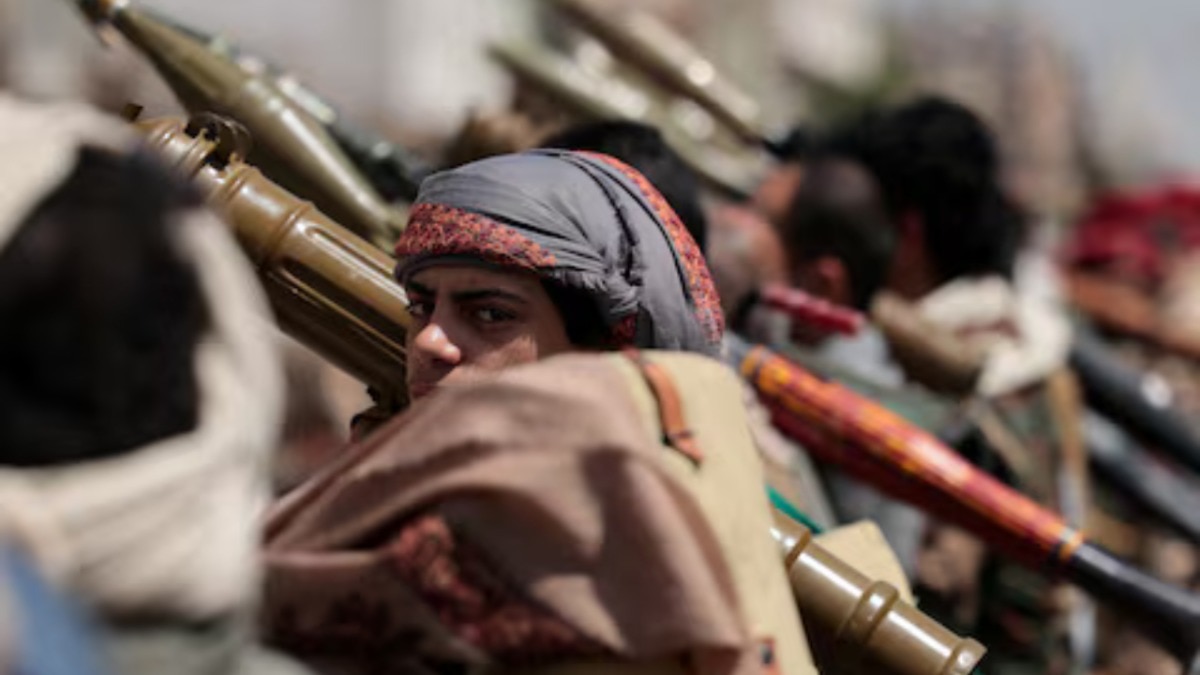
The Houthis, for their part, have demanded that Saudi Arabia end its support for Yemen's government, which it trains, arms and funds, while also lifting restrictions on the country's air and sea ports and providing financial compensation.
HOUTHIS ADVANCE TOWARDS ADEN
Saudi Arabia launched its military intervention in Yemen in 2015 at the head of an Arab coalition after the Houthis seized Sanaa and ousted the internationally recognised government. The intervention was intended to restore that government to power and push the rebels out of the capital.
Years of fighting eventually gave way to a ceasefire in 2022, which largely held until hostilities resumed earlier this year. Its collapse has once again exposed the vulnerability of government-held territory.
The Houthis have since seized important stretches of Yemen's Red Sea coastline near the Bab al-Mandeb Strait, a strategically important maritime passage connecting the Red Sea with the Gulf of Aden. Their forces have also maintained a siege around Taiz, while advancing to positions approximately 60 kilometres (37 miles) from Aden.
The government has suffered further setbacks in recent months. In November, its forces pulled back from positions around the Bab al-Mandeb Strait to reinforce the defence of Aden. However, Maliki rejected suggestions that Saudi Arabia might deploy additional ground troops to Yemen to reverse the government's battlefield losses.
"They don't have to bring another army from outside," he told Reuters, arguing that Yemeni government forces had sufficient manpower, tribal backing and military capabilities to defend their territory.
He said Saudi troops were stationed along the kingdom's southern border to prevent Houthi fighters from entering Saudi territory.
"We will do whatever it takes to destroy anything close to our borderline."
Instead of deploying more troops, the coalition is working with Yemen's military to address coordination problems that have affected operations against the rebels. Maliki acknowledged that the Yemeni government had identified "some gaps happened two times in the last three months" on the battlefield. He expressed hope that the military would address those shortcomings and improve its operational coordination.
SAUDI ARABIA DENIES SHORTAGE OF AIR DEFENCE MISSILES
The renewed Houthi attacks have also raised questions about Saudi Arabia's ability to protect its territory despite decades of investment in military equipment and air defence systems. Maliki dismissed reports claiming that the kingdom was running short of interceptor missiles used to shoot down incoming drones and ballistic missiles.
"We are buying our weapons. It goes through government-to-government agreement, and we don't have a shortage," he said. "I assure (you) that we have the capability to defend our country."
The Gulf Research Center, a Riyadh-based think tank, estimated that Saudi Arabia's interception rate had exceeded 92 per cent by October. However, attacks on prominent locations, including the headquarters of the kingdom's sovereign wealth fund in Riyadh's business district, have raised concerns about the effectiveness of its defences. The attacks also threaten Saudi Arabia's efforts to project an image of stability as it pursues ambitious economic and international engagement plans, including preparations to host World Expo 2030.
Asked why a military equipped through hundreds of billions of dollars in US investment over several decades had struggled to prevent attacks by the Houthis, who began as a rebel movement in Yemen's mountains, Maliki described the strikes as acts of terrorism rather than conventional military operations.
Riyadh is offering the Houthis a way to end the war, but its message comes with a military warning. As rebel forces advance towards Aden, Saudi Arabia is preparing to sustain its campaign while betting that continued pressure will eventually bring the Houthis to the negotiating table.
- Ends
With inputs from agencies