 6 minutes ago
A war against Yemen's Houthi rebels that Saudi Arabia once hoped to contain is threatening to become a prolonged military and economic headache for the kingdom. Despite losing ground to the Iran-backed rebels and facing attacks on major targets at home, Riyadh is preparing to sustain its campaign for another six months, two Western officials briefed on the plans told Reuters.
The renewed fighting has emerged as one of the most active fronts in the wider Iran war, killing and injuring thousands of people and forcing hundreds of thousands from their homes in Yemen. It has also created fresh problems for Saudi Arabia, whose ambitions to attract foreign investment, host major international events and establish itself as a global sporting destination have taken a hit.
However, a possible agreement to end the Iran war could also help bring down the fighting in Yemen.
SAUDI ARABIA DOUBLES DOWN DESPITE SETBACKS
Saudi Arabia first intervened in Yemen in 2015, leading an Arab military coalition to restore the internationally recognised government after the Houthis seized the capital, Sanaa, and large parts of the country. The intervention, however, failed to deliver a decisive victory. Years of fighting resulted in a bloody stalemate before the two sides reached a ceasefire in 2022. That relative calm lasted until fighting resumed in the summer of this year.
Since then, the Houthis have made significant advances, capturing parts of the Red Sea coastline and the strategically important Bab el-Mandeb Strait from Saudi-backed forces. The group has also encircled Taiz, a major city in Yemen's highlands, located above Aden, where the government has its temporary seat.
The Yemeni government forces attempted to reverse these gains last month, launching a counteroffensive that briefly recaptured territory around the strait. However, they withdrew over the past weekend to protect Aden from further Houthi advances, dealing a significant blow to the Saudi-backed campaign.
Saudi and Yemeni forces are now reorganising their positions, according to Reuters. Their immediate priority is to prevent the Houthis from advancing towards Aden. They are also considering shifting their offensive towards eastern Yemen, where government-aligned forces have either made some gains or managed to hold their positions.
Saudi Arabia announced on Monday that it had replaced the commander overseeing its military coalition in Yemen. The country's government is also expected to reshuffle its military leadership, two people familiar with the plans told Reuters.
US MILITARY SUPPORT COULD CHANGE THE EQUATION
Despite the setbacks, Riyadh reportedly believes the military situation could change if Washington provides direct offensive support for its operations in Yemen.
US President Donald Trump's administration has so far withheld such support. However, a third source familiar with the Saudi plans told Reuters that American assistance could help turn the tide, potentially allowing Saudi-backed forces to achieve their desired territorial gains within weeks.
The expectation of US support also indicates how closely the Yemen conflict is tied to the wider confrontation involving Iran. According to the sources, a deal to end the broader Iran war could create an opening for the fighting in Yemen to wind down as well.
HOUTHIS HIT SAUDI ARABIA'S GLOBAL AMBITIONS
The renewed conflict has also become increasingly difficult for Riyadh as a war being fought primarily by its Yemeni allies. Saudi Arabia had previously sought to portray itself as a supporter of Yemen's government while limiting its role to backing local forces and defending its own territory against cross-border attacks. However, repeated Houthi strikes on prominent Saudi targets have made that position harder to maintain.
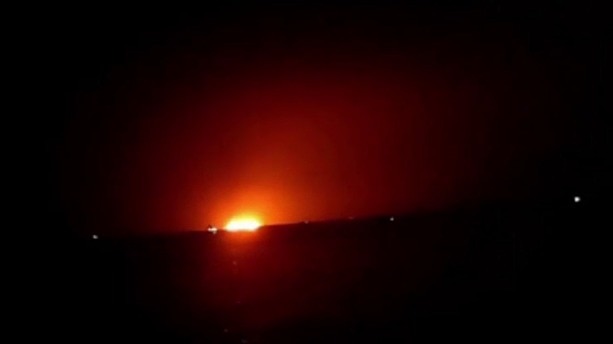
Last week, a Houthi attack blew a massive hole into the towering Riyadh headquarters of state-owned oil giant Aramco. Meanwhile, repeated deadly attacks on Riyadh's airport have kept it closed to most flights since October.
The disruption has affected Saudi Arabia's efforts to position itself as a major destination for international business, investment and sporting events. The kingdom's flagship Future Investment Initiative (FII) conference has been cancelled or postponed, while the AFC Asian Cup, a major tournament central to its sporting ambitions, has been pushed back from January 2027 to December of the same year.
Saudi Arabia has been investing heavily in attracting international businesses and hosting major global events as part of its efforts to diversify its economy beyond oil. The prolonged conflict now threatens to complicate those ambitions.
WAR MESSAGING IN SAUDI
There has also been a noticeable change in how Saudi authorities communicate the conflict to the public.
Since last month, the kingdom has begun issuing regular alerts ahead of attacks, followed by more detailed statements explaining what happened. This marks a shift from its earlier approach of releasing relatively limited information about the consequences of Houthi strikes.
Although Saudi laws restrict the distribution of images showing the aftermath of attacks, state media recently broadcast footage of the damage to the Aramco Tower after Riyadh's deputy governor visited the site two days after it was hit.
The messaging has also extended to mosques, where the government guides the themes of weekly sermons. These sermons typically focus on everyday subjects such as marriage, family responsibilities and relations with neighbours. However, last Friday, the conflict with the Houthis dominated the entire sermon at one of Riyadh's larger mosques.
According to Reuters, the imam invoked religious language to rally support for Saudi fighters, promising them "victory or martyrdom" and offering prayers for soldiers stationed along the kingdom's southern border.
"Oh Allah, guide their aim and steady their feet, and grant them victory over those who show them hostility," he said.
The shift in public messaging reflects how the war is increasingly affecting life inside Saudi Arabia, with little indication that either Riyadh or the Houthis is ready to back down. The situation also mirrors the wider US-Iran conflict, where neither side has shown a clear willingness to retreat, raising the prospect of a prolonged regional confrontation with multiple fronts continuing to burn.
- Ends
With inputs from Reuters