1 month ago
UNESCO said 2.4 million Afghan girls remain barred from secondary education nearly five years after the Taliban returned to power. The agency said the continued ban has reversed earlier gains and must be lifted without conditions.
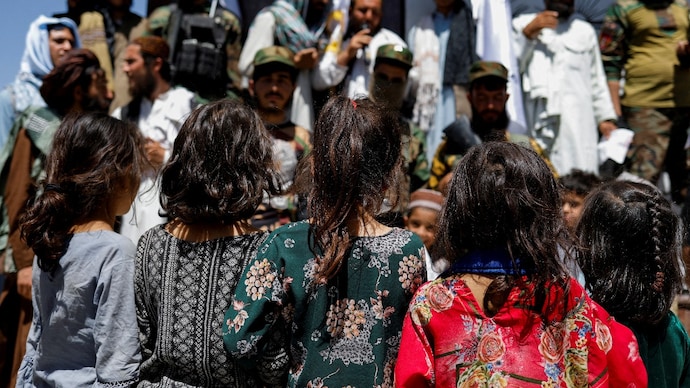
The UN said Afghanistan remains the only country in the world where girls and women are formally barred from secondary and higher education. (File Photo: Reuters)

UPDATED: Aug 11, 2026 23:36 IST
Nearly five years after the Taliban returned to power in Afghanistan, an estimated 2.4 million girls remain shut out of secondary education, UNESCO said Tuesday, renewing calls for the restrictions to be lifted immediately.
The UN Educational, Scientific and Cultural Organisation said Afghanistan remains the only country in the world where girls and women are formally barred from secondary and higher education. The agency warned that the prolonged exclusion is not simply a temporary disruption to schooling.
It is depriving an entire generation of girls of years of education and limiting their opportunities for the future.
"Afghanistan remains the only country in the world where girls and women are formally banned from secondary and higher education," Hoda Jaberian, UNESCO's programme coordinator for education in emergencies, said during a video news conference.
"Five years is not a temporary interruption in a child's education. It is clearly almost an entire secondary school cycle."
The Taliban seized power on August 15, 2021, as US and NATO forces completed their withdrawal from Afghanistan after two decades of war. The takeover was followed by sweeping restrictions on women and girls.
Girls were barred from attending secondary schools. The restrictions were later extended to higher education.
Women have also been pushed out of large parts of the workforce and public life.
'IT IS NOT NEGOTIABLE'
UNESCO said the continued restrictions represent a serious violation of the fundamental rights of Afghan women and girls. The agency again called on Taliban authorities to restore access to secondary and higher education without conditions.
"UNESCO continues to call for the immediate and unconditional restoration of girls and women's right to secondary and higher education," Jaberian said.
"It is not negotiable. It's a basic human right, and we reiterate that there is no substitute for this."
The Taliban has continued to defend its restrictions despite repeated appeals from the United Nations, humanitarian organisations and human rights groups.
Several Muslim-majority countries have also called for Afghan girls and women to be allowed to return to education.
The Taliban has maintained that the issue is an internal matter.
For girls who were able to attend school before the restrictions were introduced, the impact has stretched across some of the most important years of their education. UNESCO said the ban has effectively wiped out much of the progress Afghanistan made over the previous two decades.
TWO DECADES OF PROGRESS REVERSED
Afghanistan's education system had expanded significantly after the Taliban's first period in power ended in 2001. At that time, access to schooling for girls was severely restricted. By 2021, nearly 1 million girls were enrolled in secondary education, according to UNESCO. The progress has now been sharply reversed.
"Afghanistan had made really major progress in expanding girls' access to education," Jaberian said.
"But unfortunately, much of that progress now has been completely reversed."
The figures underline the scale of the change. Millions of Afghan girls who would otherwise have progressed through secondary school have instead been forced to remain outside the formal education system.
The restrictions have also created concerns about the country's longer-term social and economic future. Keeping girls out of education limits their ability to gain qualifications and skills that can help them enter professional life.
It also reduces the pool of educated women who can contribute to sectors such as healthcare, education and other essential services.
Despite the restrictions, UNESCO said it has continued efforts to provide Afghans with alternative routes to learning. The agency supports community-based education, literacy initiatives and skills development programmes across the country. Some of these classes are held in community spaces.
- Ends
Published By:
Satyam Singh
Published On:
Aug 11, 2026 23:36 IST