3 weeks ago
The USS Abraham Lincoln departed San Diego in November 2025, and was later diverted to the Middle East after the war with Iran began in February. The carrier became a key launch platform for thousands of aircraft sorties supporting US military operations, significantly increasing the demands placed on its crew.
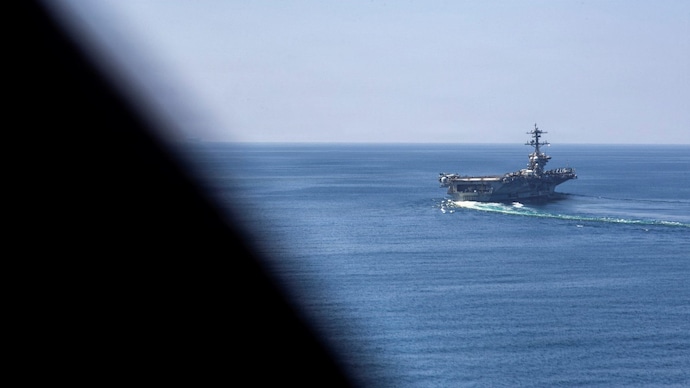
The USS Abraham Lincoln departed San Diego in November 2025, and was later diverted to the Middle East after the war with Iran began.

UPDATED: Aug 21, 2026 07:48 IST
The USS Abraham Lincoln is leaving the Middle East after an extended deployment of more than nine months amid the Iran conflict, as concerns mount over sailors’ mental health, exhaustion and reported food shortages aboard the vessel. A US official confirmed to CBS News on Thursday that the sailors and Marines are now beginning their journey back home.
Meanwhile, the Japan-based USS George Washington has arrived in the region to take over the Lincoln's role, marking the end of an unusually prolonged deployment for the San Diego-based aircraft carrier and its roughly 5,000-strong crew.
The Lincoln departed San Diego on November 21, 2025, and was later diverted to the Middle East after the war with Iran began in February.
The carrier became a key launch platform for thousands of aircraft sorties supporting US military operations, significantly increasing the demands placed on its crew.
Its departure comes amid growing concerns raised by sailors' relatives about conditions aboard the ship, including reports of deteriorating mental health, exhaustion and food shortages.
Some families have alleged that sailors became increasingly distressed during the deployment.
One relative told the BBC that a sailor aboard the carrier had lost 29 kg and was suffering from exhaustion, which the family attributed to prolonged exposure to noise, vibration and the demands of life at sea.
The concerns have drawn attention from Democratic lawmakers in Washington, who have sought answers about the welfare of sailors aboard the carrier.
The Lincoln had reportedly gone more than 200 days without a port call, which lawmakers described as a modern-era record for consecutive days at sea.
US military officials have disputed claims that conditions aboard the carrier have reached the level suggested by some media reports.
Defence Secretary Pete Hegseth has called reports of deteriorating conditions "completely misrepresented", while Acting Navy Secretary Hung Cao accused media coverage of being "dishonest".
President Donald Trump also rejected the suggestion that the deployment had lasted too long.
Asked on August 14 whether more than 260 days at sea was excessive, Trump said it was "not nearly long enough" and pointed to the arrival of another US aircraft carrier to replace the Lincoln.
US Central Command chief Admiral Brad Cooper visited the Lincoln over the weekend as concerns about the crew continued to attract attention.
In a statement on August 16, Cooper described the visit as "awe-inspiring" and praised the crew's resilience.
Cooper said the Lincoln had the lowest number of reported mental health cases among the US Navy's 11 active aircraft carriers and credited its leadership with prioritising crew welfare and resilience. He nevertheless acknowledged the particular strain of prolonged deployments.
"Deployment at sea is uniquely challenging and tough," Cooper said, adding that people respond differently to stress.
The Navy has said it has not recorded an increase in reported suicide attempts or suicidal thoughts aboard the carrier. It is, however, investigating an August 3 incident in which a sailor fell overboard and was subsequently recovered.
For families waiting for the carrier's return, the end of the deployment has brought relief after months of uncertainty.
Jefferson Kelley, whose son Jackson is serving on the Lincoln during his first deployment, told CBS News that he had been desperate to see his son return home.
The carrier's journey back to San Diego is expected to take about three weeks.
- Ends
Published By:
Karishma Saurabh Kalita
Published On:
Aug 21, 2026 07:48 IST