1 hour ago
Pro-Palestine sit-in led to University of Melbourne ‘quite sharply’ changing protest policies, royal commission hears

Caitlin Cassidy
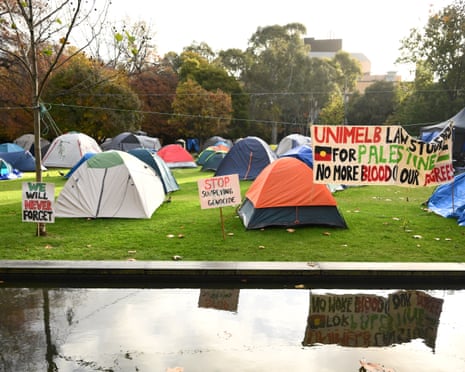
Interim vice-chancellor of the University of Melbourne, Prof Glyn Davis AC, has told the royal commission into antisemitism the institution “quite sharply” changed its policies towards protests in the wake of its pro-Palestine encampment and associated sit-in.
Davis agreed with a line of questioning that the encampment, established in April 2024, created a “level of fear and unsafety” in staff and students. Protesters were calling for the UoM to cut ties with Israel and weapons companies.
He said there were “regular discussions” between the university and police about the camp, and police attended multiple times. But Victoria Police maintained unless a law was broken they would not intervene, and they did not intervene. Davis added the right to protest was “entrenched in university policy”:
The encampment on the South Lawn, it was judged, did not override any of those concerns and therefore the university would not seek action against the encampment … That came at the end of a profound policy discussion.
Davis said one of the “clear requirements” of the then-vice-chancellor, Prof Duncan Maskell, was that the protest would “only be tolerated while it was peaceful” and there was no harassment of students. He said the university took a different approach after the occupation of the UoM’s Arts West building from 15 May.
Last year, the state’s deputy information commissioner found the UoM breached Victoria’s Privacy and Data Protection Act when it used its wifi network to surveil students and staff holding the sit-in.
Key events
Police are speaking to the media about a man who died in a public shooting in Sydney.
A police spokesperson said they do not believe it was a “random attack” and that the victim was known to police:
We do not believe that this is... a random attack.
The victim was known to police…
We believe that this is an isolated incident, and that there’s no one going threat to the public.
Authorities say emergency services were called to Carlingford, in Sydney’s north-west, just after 7am.
They found a man, aged in his 30s, with significant injuries inside a car. He was unable to be revived and died at the scene.
North Rocks Road at Carlingford remains closed for traffic, and police say it is expected to be for some time.
The investigation is ongoing.
Man charged over alleged indecent act on Perth-Sydney flight
A 62-year-old Brisbane man will face a NSW court today after allegedly committing an act of indecency on a flight from Perth to Sydney.
The AFP alleges the man inappropriately touched a female passenger seated next to him on the domestic flight yesterday.
Following a request for assistance from airline staff, AFP officers met the aircraft upon arrival at Sydney airport and interviewed passengers and staff.
The man was charged with one count of an act of indecency without consent, which carries a maximum penalty of seven years in prison.
AFP Det Acting Supt James McMillan said:
We encourage anyone who experiences or witnesses inappropriate conduct during a flight or within the airport setting to report it to airline staff or police as soon as possible.
Pro-Palestine sit-in led to University of Melbourne ‘quite sharply’ changing protest policies, royal commission hears
Caitlin Cassidy
Interim vice-chancellor of the University of Melbourne, Prof Glyn Davis AC, has told the royal commission into antisemitism the institution “quite sharply” changed its policies towards protests in the wake of its pro-Palestine encampment and associated sit-in.
Davis agreed with a line of questioning that the encampment, established in April 2024, created a “level of fear and unsafety” in staff and students. Protesters were calling for the UoM to cut ties with Israel and weapons companies.
He said there were “regular discussions” between the university and police about the camp, and police attended multiple times. But Victoria Police maintained unless a law was broken they would not intervene, and they did not intervene. Davis added the right to protest was “entrenched in university policy”:
The encampment on the South Lawn, it was judged, did not override any of those concerns and therefore the university would not seek action against the encampment … That came at the end of a profound policy discussion.
Davis said one of the “clear requirements” of the then-vice-chancellor, Prof Duncan Maskell, was that the protest would “only be tolerated while it was peaceful” and there was no harassment of students. He said the university took a different approach after the occupation of the UoM’s Arts West building from 15 May.
Last year, the state’s deputy information commissioner found the UoM breached Victoria’s Privacy and Data Protection Act when it used its wifi network to surveil students and staff holding the sit-in.
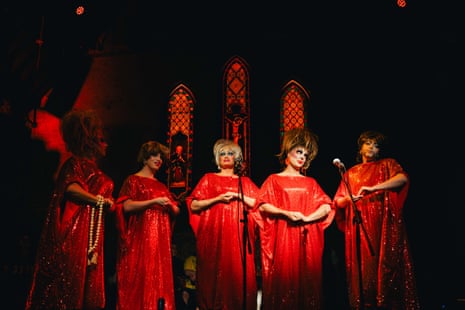
LGBTQI+ artists have been targeted for ‘insulting Christianity’. To queer people, this feels particularly cruel
James Thorpe, the vice-chair of the Night Time Industries Association, has written this morning about accusations levelled against a theatre pop-up in a former Sydney church.
He writes:
It would be easy to treat this as yet another skirmish in the culture wars, witness the inevitable jokes about habits and holy orders, and move on. But beneath the debacle is a much more fundamental debate: a question about who gets to speak and, perhaps most importantly, whose offence carries the power to silence another’s voice.
Read more here:
Tasmanian government could buy James Boag’s brewery, premier says
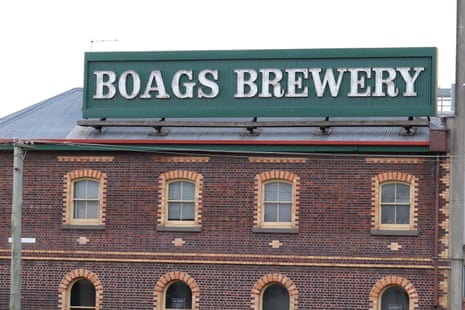
James Boag’s brewery could be bought by a state government after time is called on its beer production, AAP reports.
Parent company Lion in June announced it would shut the brewery in Launceston in northern Tasmania, first opened in 1881, in November.
Tasmanian premier Jeremy Rockliff has met with beverage company Kirin, which owns Lion, and said they had agreed to provide in-principle support to explore the state’s proposal to buy the site.
“The Boag’s site is part of Tasmania’s industrial and cultural heritage,” Rockliff said on Wednesday.
A union campaign to convince Lion to sell the brewery to another beer maker has collected more than 3,500 signatures but hasn’t shifted the company’s decision to wind-up production.
The closure will leave about 40 workers without jobs. The government hasn’t provided any details on what it would cost to buy the site, or what it could be used for in the future.
Caitlin Cassidy
Vice-chancellors to front antisemitism royal commission as university block enters third day
A former Flinders University student has told the antisemitism royal commission he has been painted in a “political light” because he is Jewish and a supporter of Israel which has limited access to spaces and safety.
The co-president of the Australasian Union of Jewish Students (AUJS) in South Australia, appearing as Mika, pointed to one student representative council meeting in 2022 when a student said “death to Israel” and “death to Australia” which he said caused a fellow peer to have a panic attack, and another instance when a student was called a “dirty Zionist”.
The term Israel, I experienced as a collective term for Jewish people … Not to mention it’s where half of the world’s Jewish population lives … For Israelis, there’s a sense of xenophobia, asking ‘where are you really from? You better not take over us’ … These assumptions have limited our access to spaces. There’s this sense that the bar of entry to a club space, for example, requires a political admission.
The antisemitism and social cohesion royal commission has entered its third day of hearings examining the university sector. Also appearing on Wednesday are the vice-chancellors of the University of Melbourne, the University of Sydney and UNSW.
Mika said since the 7 October 2023 Hamas terror attack, he noted a rise in “anti-Israel” sentiment and a “hostility” towards Israel which was projected on to Jewish students regardless of citizenship.
Swimmer Shayna Jack to retire after Commonwealth Games
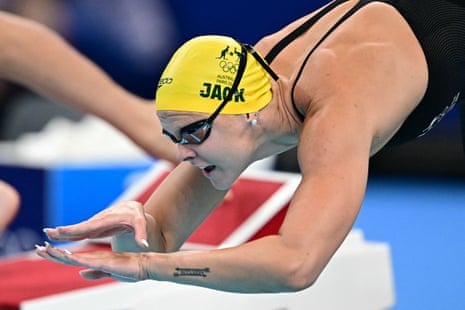
Australian swimmer Shayna Jack has announced she will retire after the Commonwealth Games in Glasgow.
In a video posted on Instagram in which Jack spoke with her coach Dean Boxall, the freestyler fought back tears as she said the Games – to be held from 23 July to 2 August – would be her competitive swan song.
“It’s been an absolute privilege being an Australian athlete, an Australian swimmer, an Olympic medallist, Commonwealth Games medallist, world medallist, and world record-holder,” the 27-year-old said.
I think I’ve definitely ticked off all the boxes. It’s been a long career, but I’m ready to announce my retirement and be Shayna Jack.
Hume concerned Labor will stifle innovation with new AI office
Deputy opposition leader Jane Hume spoke earlier about the news that Australia will create an AI office to fast-track datacentres and encourage approvals for AI projects.
Hume told Sky News of the plans, to be detailed in a speech by Anthony Albanese today:
We’ve seen our standard of living go backwards so far and so fast under Labor. I can understand why they are reaching out towards this new technology and trying to control its direction.
However, my concern is more about whether Labor stifles that innovation that comes with AI, rather than allowing it to flourish.
Hume said she understands that datacentres don’t come “without their problems”, but we should be “encouraging it where it is appropriate and where possible, because it will power the productivity boom of the future”.
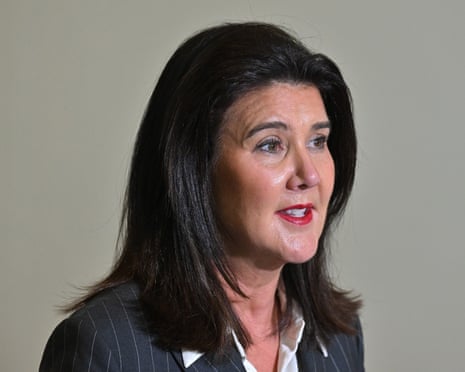
Alcoa to set up gallium plant in Western Australia
Alcoa Corp said on Tuesday it has reached a final investment decision to set up a gallium plant at its Wagerup alumina refinery in Western Australia, with backing from the Australian, Japanese and United States governments and industry partners. The US and Australian governments had said in October they would support Alcoa’s expansion plans in the region, a few months after the company signed a joint development agreement with a venture between the Japanese government and Sojitz Corp.
Reuters reports the US-based aluminium producer plans to construct and operate the plant, which could provide up to 10% of the global gallium supply.
“This final investment decision reflects a shared commitment by governments and industry to strengthen critical mineral supply chains among the partners,” said Alcoa president and CEO William F. Oplinger.
Construction activities are expected to begin after final site preparations, the company added.
Gallium, a raw material used in the production of alumina, is a critical mineral for the technology sector, especially the semiconductor and defence industries.
Earlier this month, Alcoa agreed to buy the bulk of South32’s aluminium portfolio for an implied enterprise value of up to $5.6bn to expand its access to upstream assets, including bauxite, alumina and aluminium assets across Brazil, South Africa and Western Australia.

Graham Readfearn
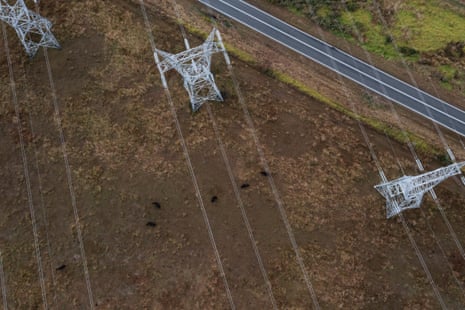
Coalition and One Nation’s plan to ditch net zero would not lower power prices, CSIRO report finds
Claims by the Coalition and One Nation that abandoning a net zero climate target would bring down power prices are contradicted in a new CSIRO report on the costs of generating electricity.
Generation costs will probably rise after 2030 regardless of Australia’s policy on net zero, according to the CSIRO’s annual GenCost report, but prices should then stabilise at levels below recent price spikes.
The report concludes electricity from nuclear plants, which the Coalition and One Nation promote, would be the most expensive way to generate electricity among the current options.
Read more here:

Dan Jervis-Bardy
Taylor takes harsher tone towards One Nation
Angus Taylor has adopted a more confrontational approach to One Nation in the past week or so after previously shying away from opportunities to openly criticise Pauline Hanson and her rightwing populist agenda.
The opposition leader’s reluctance created a sharp contrast with colleagues such as Andrew Hastie, who has gone as far as declaring political war on One Nation.
Taylor’s stance shifted in a major speech last week, when he warned that a One Nation government would bring an “eternity of pain” to Australia.
He told 2GB radio on Tuesday morning that he made those criticisms with a “heavy heart”, showing he remains sensitive to alienating conservative voters who have shifted to One Nation.
Taylor rules out power-sharing deal with One Nation
Dan Jervis-Bardy
The opposition leader, Angus Taylor, says he won’t do a deal with Pauline Hanson to form government in his latest attempt to distance the Coalition from One Nation.
Appearing on ABC’s 7.30 program on Tuesday night, Taylor was asked repeatedly to explicitly rule out a potential power-sharing deal with One Nation after the next federal election. He said:
We’ve got absolutely no plan for a deal with One Nation to form government. We want to form government in our own right, in our coalition, the Liberal and Party coalition, on the back of a strong plan and a strong team.
7.30 host Sarah Ferguson said not planning to do something was not the same as ruling it out, pushing Taylor for an iron-clad guarantee. Taylor said:
I’m ruling it out, there is no plan.
Man found dead in car after shooting in north-western Sydney
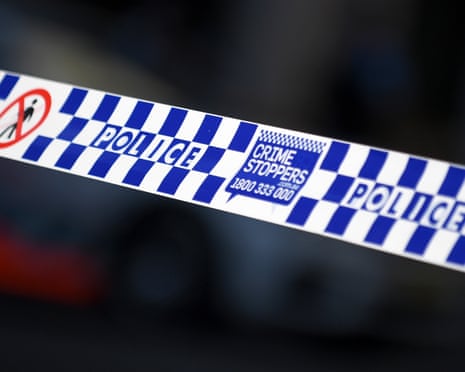
A man was killed in a public place shooting in Sydney this morning, NSW police say.
Officials said emergency services were called to Carlingford, in Sydney’s north-west, around 7am. On arrival, they found a man, aged in his 30s, with significant injuries inside a car.
He was unable to be revived and died at the scene. The man has not been identified.
Police have established a crime scene and closed the area to the public. An investigation is ongoing.
University vice-chancellors to be grilled at royal commission on antisemitism
University vice-chancellors will appear before the royal commission on antisemitism, as representatives from Australia’s highest ranked institution prepare to be the first to give evidence, AAP reports.
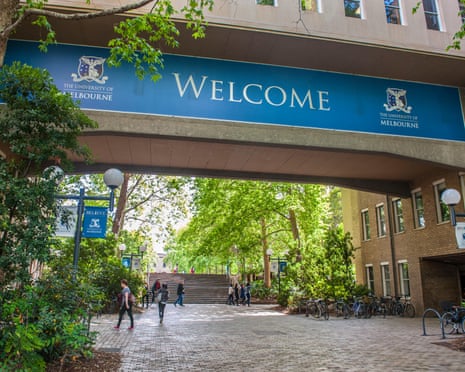
The University of Melbourne’s Glyn Davis, who is interim vice-chancellor, will appear at the royal commission’s public hearing on Wednesday.
Davis’s attendance will follow the damning testimony a day prior given by Jewish academic Steven Prawer, whose campus office was broken into and occupied by protesters in 2024.
“We reaffirm our commitment to a safe, inclusive and supportive environment for all and acknowledge the important work of the Royal Commission,” a statement from the University of Melbourne’s reads.
As a diverse university community, we must come together and stand united in our continued efforts to eradicate hate and discrimination in all forms.
Shorten labels rising anti-immigrant rhetoric a form of ‘political dementia’
Shorten said he believes there is a “creeping cultural dementia” taking place in Australian politics amid debates over multi- and monoculturalism.
The former Labor leader had this to say to RN:
I do detect – I’ve read this expression somewhere, but I’ll apply it here – a sort of creeping cultural dementia across Australian political discourse, where we’re forgetting some of the basic memory of what makes this country such a special place … Saying that we should go to zero immigration, it forgets how we got here.
Like again, to be really straight talking, I could understand why perhaps some Aboriginal Australians might say, well, immigration hasn’t been a success. But you know what? The other 97% of us, we all came from somewhere else.
He went on:
We’ve got to stop this sort of rush to extremism, which extinguishes sort of the country’s history, which is a successful story of bringing things in. …
When I see people proposing very simplistic solutions and trying to put everything to a binary … that intolerance I think is a form of political dementia where we’re just shutting down our ability to think.