1 hour ago
The US has reinstated its blockade on Iranian ports after fresh attacks around the Strait of Hormuz. The move has deepened regional tensions, disrupted diplomacy and renewed fears over oil supplies.

Dubai,UPDATED: Jul 15, 2026 07:10 IST
The United States early Wednesday reimposed a blockade on Iranian ports, blaming Tehran for attacks on ships trying to pass through the Strait of Hormuz, as an interim deal meant to pause the war appeared to be falling apart. The move came after fresh American strikes and was followed by new attacks on countries hosting US forces.
Days of retaliatory strikes across the Middle East by Iran, and efforts by both sides to control the strait through which a fifth of the world's oil and natural gas passes in peacetime, have raised the risk of the region sliding back into all-out war. Regional mediators are still trying to bring Washington and Tehran back to negotiations.
The US first imposed the blockade in mid-April and lifted it in mid-June, a day after signing the interim deal that set a 60-day period for talks on issues including Iran's nuclear programme. But negotiations have stalled as fighting around the strait has intensified. When US President Donald Trump announced the return of the blockade on Monday, he also said ships passing through the strait would face a 20 per cent fee. Hours before the blockade resumed, he dropped that plan, saying allies in the Persian Gulf had asked for a different approach.
The US military's Central Command said it carried out another wave of strikes before the blockade was reimposed. Missile alerts were issued in Bahrain and Kuwait early Wednesday as they faced incoming Iranian fire, something that has become a daily occurrence and has further strained a ceasefire in the war. Hours after the blockade was reinstated, Iranian state media reported an exchange of fire in the strait without giving details. In a statement, Admiral Brad Cooper, who leads Central Command, said Iran had launched dozens of missiles and drones at neighbouring Gulf Arab countries. "US forces are holding Iran accountable for unwarranted aggression that continues to endanger innocent lives," Cooper said.
There are at least 19 US warships in the Arabian Sea, including two aircraft carriers and an amphibious assault ship carrying more than 1,000 Marines. Central Command also said in a social media post that there are "hundreds of military aircraft operating across the Middle East".
When the US and Israel launched the war on Iran on February 28, Tehran effectively shut the passage by attacking and threatening ships, sending the prices of oil, fertiliser and other goods sharply higher. More recently, Iran has attacked ships travelling through the strait on a route near Oman that is overseen by the US military and lies outside Tehran's control, triggering the latest violence. The US has threatened to reopen the strait by force, though experts say that would require a much larger armada, if not tens of thousands of ground troops.
Iran's ambassador to the United Nations, Amir Saeid Iravani, criticised the continuing American attacks on his country. "The US is the aggressor, not the victim," he wrote to the head of the world body, according to the state-run IRNA news agency.
Trump said on Tuesday that he had received calls from the region's "kings and emirs", who suggested an alternative to the fee proposal. "They said we'd love to do it a different way. We'd love to invest in the United States with billions and billions of dollars," Trump told reporters in the Oval Office. He added that he preferred that arrangement to charging tolls "because I don't think anybody should be able to charge a fee for the strait". It was not clear whether those investment deals would be new commitments beyond what Trump announced after his visit to the Middle East last year. His proposal to charge ships would have marked a shift from longstanding US policy and from past American assurances that the strait would remain open to all without tolls.
Trump told Fox News Channel on Tuesday night that more US strikes on Iran would follow over the next two days and that bridges and power plants could be targeted by next week unless talks resume. At least one bridge has already been struck. "You better make a deal, or you're not going to have anything left," Trump warned. Central Command said it struck several areas in Iran earlier on Tuesday. Iran acknowledged the strikes but did not provide any overall assessment of casualties or damage.
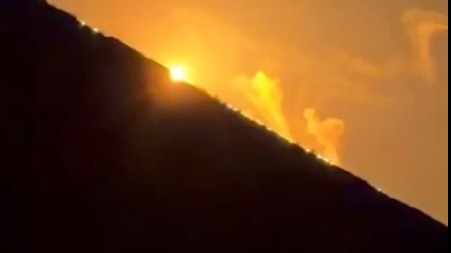
Hours after the US said it had ended its strikes, the Iranian city of Bushehr on the Persian Gulf was hit in at least four locations, IRNA reported. Iranian state media also reported explosions in the south-western city of Ahvaz and the southern port city of Bandar Abbas on Tuesday night. The attacks again raised the possibility that Gulf Arab states were retaliating against Iran without saying so publicly.
Under the interim deal, Iran agreed that passage through the strait would remain free of charge for 60 days, but the arrangement did not settle what would happen after that period. Iran says it has the right to manage traffic and may charge fees, a position disputed by the US. Brent crude, the international benchmark, briefly rose above USD 87 a barrel early Tuesday, though that remained below the nearly USD 120 seen at the height of the war. Prices later fell to USD 78 after Trump announced he had changed course on fees.
Regional mediators are still trying to return the US and Iran to the negotiating table, according to two regional officials. The officials, who spoke on condition of anonymity because of the sensitivity of the diplomatic process, said Pakistan-led mediation was working around the clock to revive the ceasefire. For now, the blockade, continued strikes and stalled diplomacy have left the Strait of Hormuz at the centre of a widening regional confrontation.
With PTI Inputs
- Ends
Published By:
India Today Web Desk
Published On:
Jul 15, 2026 07:10 IST