 9 minutes ago
Good morning. It is quite easy for politicians to declare that they will cut the welfare bill by X amount – but much harder when they have to explain exactly who will lose out. This is summed up by a good anecdote about a former chancellor (Ken Clarke, according to some versions, but it could have been any of them), who gave this reply when asked for cuts that would save £1bn:
So, do you want one million people to lose £1,000 each, or 10 million people to lose £100 each?
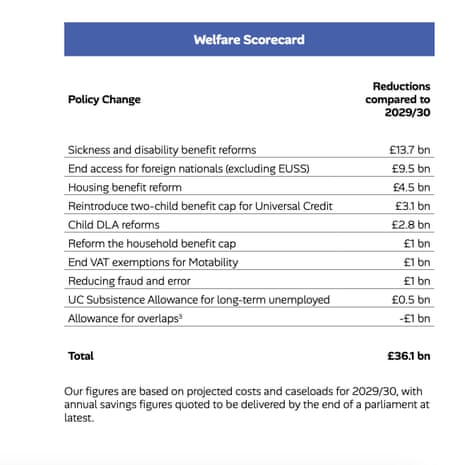
Today Kemi Badenoch is giving a speech to launch a policy document, Welfare That Works, explaining how the Tories would cut welfare by £36bn. That’s 36 million people losing £1,000 each, according to the logic of our notional chancellor, although of course it is not quite as simple as that. All of these cuts are ones that the Conservative party has proposed already, but what we are getting today is a bit more detail about how some of them would be implemented in practice, and a big overall argument defending them.
Here is a page from the document summarising where the cuts would fall.
I will post more on the detail in the document later.
According to extracts from her speech released in advance, Badenoch will say that she is publishing these proposals now so that voters do not get any “nasty surprises” if they elect a Tory government.
It is too late to work out what you think once you’re in government. If you want to change this country, you need to know exactly what you want to do and how you’re going to do it …
We’re telling people what we are going to do now so that there will be no nasty surprises from us such as cutting your winter fuel payment, the jobs tax or the family farm tax once we get into government.
Badenoch will also claim that spending on working-age benefits is “crushing our economy”. More than a third of her proposed savings would come from cuts to sickness and disability benefits, and Badenoch will claim there is a “fundamental difference” between Conservative and Labour thinking on this issue. She will say:
Labour MPs think cutting welfare is always cruel. They believe the kindest thing you can do for someone who is struggling is to tell them it’s okay not to look after themselves. That there’s nothing wrong with a life of dependency. And if you don’t think very hard about it, I can see why you might believe that is kind. Of course, there are people who genuinely cannot work. People with serious illnesses and disabilities. People who need time to recover. We must have a safety net for those people.
But the reality is that millions of people can and do contribute to our economy to their families to their communities even when they face serious challenges. Double amputees run marathons. People who are housebound do wonderful creative work from home. People with autism run some of the biggest tech companies in the world.
If you tell a young person that their ADHD means they are defective and will never amount to anything, that mindset is likely to be more destructive to their future than the condition itself. That is what our welfare system is currently doing. Conservatives believe in a system that looks at people through the lens of what they can do, not what they cannot.
In fact, this is a misleading caricature of Labour thinking on welfare; the government is about to publish a report from Alan Milburn that will be 100% dedicated to making the system more focused on what young people “can do, not what they cannot”. But, as is often the case with Badenoch’s rhetoric, it crystalises an argument and makes for a good headline.
Here is the agenda for the day.
9.30am: Andy Burnham chairs a political cabinet.
10.30am: Kemi Badenoch gives a speech on her plan to cut benefits by £36bn.
11am: Michael Marra gives what is being billed as his first major speech since becoming Scottish Labour leader.
11.30am: Alex Norris, the justice secretary, takes questions in the Commons.
Noon: Downing Street holds a lobby briefing.
I’m afraid we are no longer able to have comments open below the line every day on this blog. If you want to contact me, please email politics.live@theguardian.com. You can use this email to flag up corrections, comments for publication, questions or complaints.