2 weeks ago
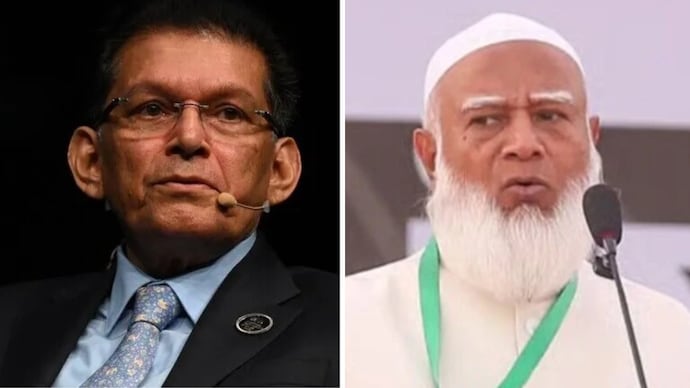
Bangladesh's government and opposition have backed Dhaka's interest in the Mecca Joint Defence Agreement, with the foreign minister calling it a pact for the "Muslim family" and Jamaat chief terming membership a sovereign decision.
Govt and opposition both back Dhaka's right to join the pact
Bangladesh's government and the country's main opposition have both backed Dhaka's interest in the Mecca Joint Defence Agreement, with Foreign Minister Khalilur Rahman saying Bangladesh would positively consider joining if the pact's existing members invite it.
Opposition leader and Bangladesh Jamaat-e-Islami chief Shafiqur Rahman separately defended Dhaka's right to join the Saudi Arabia-Pakistan-Trkiye-backed security framework, calling any such decision a sovereign matter.
The convergence comes as India said it is closely following developments in West Asia when asked about reports that Bangladesh is keen to join the recently signed Mecca Defence Pact.
BANGLADESH SAYS IT WILL CONSIDER JOINING
Foreign Minister Khalilur Rahman said on Thursday that Bangladesh viewed the Mecca pact positively but had not yet reached the stage of formally considering membership.
Responding to a supplementary question from independent MP Rumeen Farhana during a question-and-answer session in parliament, Khalilur said Bangladesh's entry would depend on whether the existing members decided to expand the agreement.
"We view this pact positively," Khalilur said, according to The Daily Star.
He said the question of Bangladesh joining had not yet arisen because no invitation had been extended.
"If they express an intention to include Bangladesh in the pact, we will certainly consider it positively," he added.
Khalilur said it would be premature to discuss the advantages and disadvantages of joining because Bangladesh had not yet reached that stage.
"We will, of course, keep all these matters under consideration. However, we must remember one thing -- if this pact expands, it will serve as a system of self-defence for the global Muslim community," he said.
"And this is an internal matter of our family, the Muslim family. Therefore, there is no scope for others to be concerned about it," Khalilur added.
His remarks are the clearest indication yet from the Bangladesh government that it is open to joining the defence framework, while making clear that no membership process has begun.
JAMAAT CHIEF SAYS DECISION IS BANGLADESH'S SOVEREIGN MATTER
Opposition leader and Jamaat-e-Islami chief Shafiqur Rahman also backed Bangladesh's interest in the pact.
In a post on X on Thursday, Rahman called joining the Mecca Pact an "entirely sovereign and internal matter for Bangladesh".
"If Bangladesh takes any decision considering the needs and interests of the country and its people, there is no reason for anyone else to feel disturbed or distressed by it," he said.
Rahman is the Leader of the Opposition in Bangladesh's Jatiya Sangsad and Amir of Bangladesh Jamaat-e-Islami.
His comments came against the backdrop of India's close monitoring of Dhaka's interest in the agreement.
INDIA SAYS IT IS CLOSELY WATCHING THE MOVE
India had on August 21 said it was closely following developments in West Asia when asked about reports that Bangladesh was interested in joining the newly signed Mecca Defence Pact.
MEA spokesperson Randhir Jaiswal said India was monitoring developments in the region.
"We continue to closely follow developments that are happening in West Asia. This is what I have to say at this point in time," Jaiswal had said during a media briefing.
The MEA had earlier said India was examining the implications of the agreement from the perspective of national security as well as regional peace and stability.
"Regarding the agreement that was signed recently, let me say that we continue to closely follow developments in the West Asia conflict. As far as this particular agreement is concerned, we are examining its implications, both from the perspective of our national security as well as considerations of regional stability, peace and stability," Jaiswal had said.
He had also said India remained committed to safeguarding its national interests and would take all necessary measures in this regard.
The latest comments from Dhaka therefore come as New Delhi watches whether Bangladesh's interest develops into a formal bid to join the pact.
DHAKA FIRST EXPRESSED INTEREST ON AUGUST 24
Bangladesh's interest in the Mecca Joint Defence Agreement was first made public on August 24, when State Minister for Foreign Affairs Humayun Kabir said Dhaka had expressed interest in the security framework.
Kabir said no formal progress had been made and no final decision had been taken.
Speaking to reporters at the Ministry of Foreign Affairs, he said it would not be unusual for Bangladesh to join a security pact formed among Islamic countries and indicated that Dhaka viewed the possibility positively.
Asked about Bangladesh's interest, Kabir said: "We are expressing interest in the Mecca Defence Pact, I told you. Bangladesh now has this country of recognition and there is an interest."
His comments came just days before the foreign minister said Bangladesh would positively consider membership if the existing members invited Dhaka.
WHAT IS THE MECCA JOINT DEFENCE AGREEMENT?
Saudi Arabia, Pakistan and Trkiye signed the Mecca Joint Defence Agreement on August 7 in Mecca.
The agreement seeks to strengthen defence cooperation and collective deterrence among the three countries. It provides that an armed attack against any one of the signatories will be regarded as an attack against all three.
The pact has been described by some analysts as a potential starting point for a wider security grouping involving other Muslim-majority countries.
Pakistan has described the arrangement as defensive and open to other countries.
Egypt has also indicated that it is considering joining the framework and is reviewing the constitutional and legal implications of the defence commitments. Trkiye has backed Egypt's possible entry, describing Cairo as a "natural partner".
IS IT AN 'ISLAMIC NATO'?
The Mecca pact has prompted comparisons with Nato, with some analysts describing it as a possible first step towards an "Islamic Nato".
However, the existing agreement does not create a Nato-style military command structure or replicate the institutional framework of the North Atlantic alliance.
Its collective-defence provision is nevertheless significant, particularly because the three founding members bring considerable military, economic and strategic weight.
Saudi Arabia brings major financial and energy resources and extensive economic influence across the region. Trkiye has a large military, a growing defence industry and is itself a Nato member. Pakistan is a nuclear-armed country with extensive military experience.
Whether the pact develops into a broader military alliance will depend on how its existing members implement their commitments and whether other countries join.
BANGLADESH'S SHIFTING FOREIGN POLICY
Dhaka's interest in the Mecca pact comes against the backdrop of a broader reshaping of Bangladesh's foreign relations.
Relations with India have been strained since Sheikh Hasina's government fell in 2024. At the same time, Bangladesh has been working to strengthen engagement with Pakistan and China and expand its relationships with other countries.
Joining the Mecca framework could provide Dhaka with another channel for defence cooperation and closer diplomatic and economic engagement with Saudi Arabia, Pakistan and Trkiye.
For now, however, Bangladesh has not made a formal request to join the pact.
The government's position is that membership would be considered if an invitation comes from the existing members, while the opposition Jamaat-e-Islami has already backed Dhaka's sovereign right to make that decision.
INDIA-BANGLADESH TIES ALSO UNDER STRAIN
The Mecca Pact question comes at a sensitive time in India-Bangladesh relations.
New Delhi has also been watching developments concerning a possible visit to India by Bangladesh Prime Minister Tarique Rahman. Asked about the proposed visit on August 21, Jaiswal said the ministry had no update at that time.
"I would like to say that I have nothing to say on this for now. If I have any update, I will share it with you," he said.
The two countries are also dealing with the Ganga Water Treaty, which was signed in 1996 for 30 years.
Jaiswal said matters related to the treaty are discussed at the technical level through the Joint Rivers Commission.
"It was signed in 1996 for 30 years. All such issues are discussed at the technical level through the Joint Rivers Commission," he said.
The treaty governs the sharing of Ganga waters between India and Bangladesh and is due for review as its 30-year term approaches its conclusion in December.
For now, Dhaka's Mecca Pact position remains at the stage of expressed interest rather than formal membership. But with both the government and opposition backing the possibility, and New Delhi closely watching, any invitation from the three founding members could put the issue firmly on the regional diplomatic agenda.
- Ends
Published By:
Sonali Verma
Published On:
Aug 27, 2026 20:05 IST