 4 weeks ago
Pakistan has increased diplomatic engagement between Tehran and Washington over the past week in an attempt to prevent the ceasefire from collapsing. Pakistani Interior Minister Mohsin Naqvi has already visited Tehran twice this week.
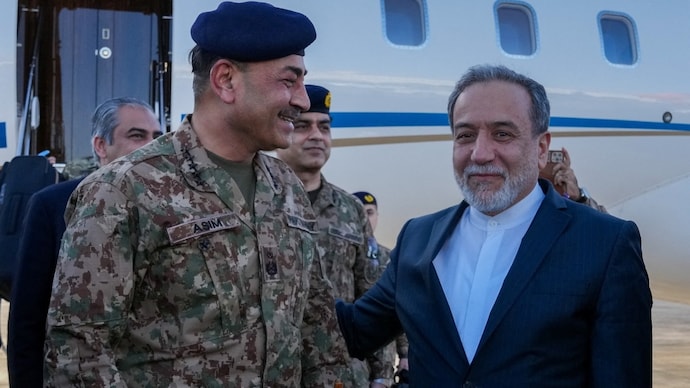
Iranian Foreign Minister Abbas Araqchi welcomes Pakistan army chief Asim Munir at an airport in Tehran. (File Photo: Reuters)

UPDATED: May 21, 2026 18:58 IST
Fresh efforts are underway to prevent another round of conflict between Iran, the United States and Israel. Pakistan Army chief Asim Munir is expected to travel to Tehran for high-level consultations as Iran reviews the latest US-backed truce proposal. The visit comes at a crucial time, with negotiations moving slowly nearly six weeks after a fragile ceasefire took effect.
Pakistan has increased diplomatic engagement between Tehran and Washington over the past week in an attempt to prevent the ceasefire from collapsing. Pakistani Interior Minister Mohsin Naqvi has already visited Tehran twice this week, while Iranian state media reported that Asim Munir would arrive on Thursday for further consultations over the proposed peace framework.
News agency Reuters reported that Pakistan is trying to speed up communication between both sides before tensions worsen further.
"We're speaking to all the various groups in Iran to streamline communication and so things pick up pace," one source told Reuters.
"Trump's patience running thin is a concern, but we're working on the pace at which messages are relayed from each side," he added.
Iranian Foreign Ministry spokesperson Esmail Baqaei confirmed that multiple rounds of messages had already been exchanged through Pakistani intermediaries based on Tehran's 14-point peace proposal. Baqaei said Iran was negotiating "in good faith" despite having "deep suspicion" toward the United States because of Washington's past actions.
"Our eyes are open, and our Armed Forces are vigilant because we absolutely cannot have the slightest trust or goodwill toward the opposing side," he said during a televised interview. He added that Iran had received Washington's latest views and was reviewing them carefully.
NUCLEAR DEADLOCK CONTINUES
The biggest obstacle in the negotiations remains Iran's enriched uranium stockpile.
The United States and Israel want Tehran to send the material out of the country, arguing that uranium enriched to high levels could eventually be used to develop nuclear weapons. Israeli Prime Minister Benjamin Netanyahu has repeatedly stated that the war cannot truly end unless Iran's enriched uranium is removed completely.
Iran, however, appears unwilling to back down.
"The Supreme Leader's directive, and the consensus within the establishment, is that the stockpile of enriched uranium should not leave the country," one Iranian source told Reuters.
Iran currently has enriched uranium to 60 percent purity, much higher than civilian requirements and closer to weapons-grade levels. Tehran insists its nuclear programme is peaceful. Trump said on Wednesday that while he remained open to diplomacy, the option of renewed strikes was still on the table.
"Believe me, if we don't get the right answers, it goes very quickly. We're all ready to go," Trump told reporters. Asked how long he would wait, Trump replied: "It could be a few days, but it could go very quickly."
Iran's Revolutionary Guards later warned that any fresh attack could trigger a much wider regional war.
IRAN'S CONTROL OVER HORMUZ RAISES CONCERNS
Alongside the nuclear dispute, tensions are also growing around the Strait of Hormuz, one of the world's most important energy shipping routes.
Before the war began in late February, nearly one-fifth of global oil and liquefied natural gas shipments passed through the strait each day. Since the conflict erupted, traffic through the route has fallen sharply, pushing global oil prices higher.
This week, Iran released a map showing a "controlled maritime zone" around the Strait of Hormuz. Tehran said ships would now need authorisation from a newly formed authority, the Persian Gulf Strait Authority (PGSA) to transit through the area.
Iran said friendly countries could still use the route if they complied with Tehran's conditions. Washington has rejected any step that could give Iran effective control over international shipping lanes. Iranian officials said only 26 ships crossed the strait in the past 24 hours. Before the war, between 125 and 140 vessels typically passed through daily.
The ceasefire between Iran, Israel and the United States has largely held since taking effect, but the broader situation remains fragile.
- Ends
WIth inputs from agencies
Published On:
May 21, 2026 18:58 IST