3 weeks ago
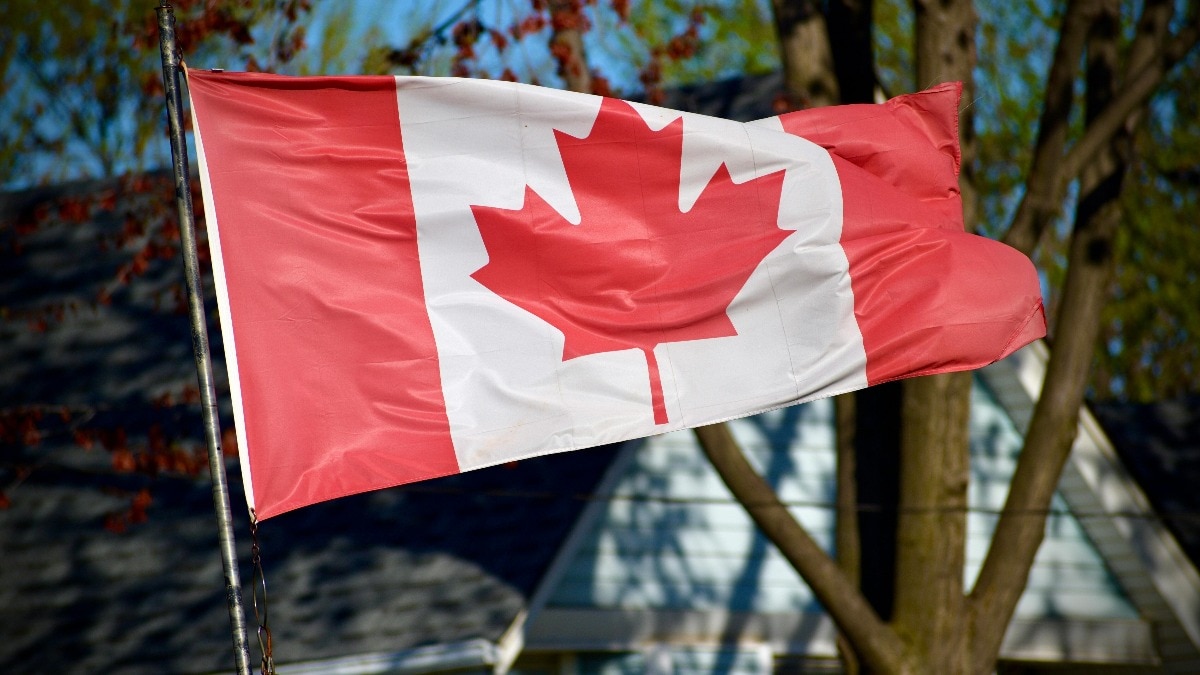
Canadian banker Mark Carney has made 30-odd visits to the Swiss resort town of Davos. But this time was different, making a speech, not as a technocrat or banker, but as Canada's Prime Minister. This time, he did not speak for the "powerful", towing their line and managing the capitalist markets. But his much-touted speech was against the one he called the "hegemon". The target was obvious to everyone; the Donald Trump-led United States of America (USA). And it's precisely why Carney's tone and words were different at Davos. He was all in for a "new world order" and tried to champion the cause on behalf of the "middle powers".
But, in doing so, Carney seemingly glossed over Canada's own role in shouldering the very US-led order he now critiqued. By backing Washington in building US-dominated multilateral institutions, military alliances, and numerous wars worldwide that weakened the non-aligned nations of the bipolar world, Ottawa helped damage the global middle powers it is suddenly championing today. Canada, America's cultural twin, is equally to blame for the tilted world that got created in the process.
For many outsiders, there was little sense of difference between people from both the North American countries. There was a long-running joke in the US: "What does Canada produce that no other country in the world produces?"
"Canadians," was the answer, because of the trade and commercial dependence on the US.
Mark Carney's recalibration flows from a hard realisation that Canada's partnership with the US is now shaped by transactionalism under Donald Trump, as Washington weaponised trade, tariffs and leverages with little pretence of restraint.
Trump's aggressive policies strained ties quickly. Sweeping tariffs were imposed on Canadian goods to pressure Ottawa on border security, migration and fentanyl trafficking. Tariffs for the northern neighbour rose to 35% on most non-energy imports by August 2025. The old "good neighbour from the north" comfort collapsed further when Trump kept claiming Canada as America’s 51st state.
The shockwaves did not stop in North America. Trump's escalating warnings over Greenland, threatening tariffs on European Nato allies and refusing to rule out military force on partners, rattled the age-old partners, including Canada. For Carney, Trump's posture confirmed that Canada could no longer rely on old guarantees, despite being an American ally for decades.
There is this sudden realisation that though Canada is part of the rich G7 bloc, it is a country in the middle order for all practical purposes.
'WE LIVE IN AN ERA OF GREAT POWER RIVALRY'. BUT WHO BUILT IT?
Canadian PM Carney opened his Davos address by saying that "we live in an era of great power rivalry" where "the rules-based order is fading". While the diagnosis is hard to contest, the omission is telling. The post-World War II order did not simply establish itself on its own. It was actively shaped, enforced, and defended by the United States and its closest allies, with Canada acting as its Siamese twin.
From the late 1940s through the Cold War, Canada was not a passive observer but a key participant in the Western bloc. Ottawa was a founding member of the United Nations in 1945 and a core architect of the US-dominated multilateral system that followed.
Canada was a founding member of the North Atlantic Treaty Organization (Nato). It stationed tens of thousands of troops in Western Europe, particularly in West Germany, over decades as part of Nato's forward defence against the USSR. Canada also co-founded NORAD with the US in 1958, which integrated its air defence and early-warning systems directly into US strategic planning. Canada also fought alongside the US troops in the Korean War (1950-53), contributing over 26,000 troops under a UN command dominated by Washington.
During the Vietnam War, Canada rejected the Non-Alignment Movement's core criticism that the war represented imperial aggression, even as Ottawa positioned itself as a mediator through the Control Commission.
That system, though dressed in the language of universal rules, consistently privileged Western power and interests, often at the expense of the newly decolonised world.
'AMERICAN HEGEMONY PROVIDED PUBLIC GOODS'. BUT AT WHAT COST?
Carney acknowledged that countries like Canada "placed the sign in the window" and participated in the US-led system they privately knew was only partially true. He admitted that trade rules were enforced asymmetrically, and that international law was applied with "varied rigour".
For context, the "sign in the window" comes from an essay called, The Power of the Powerless, by Vaclav Havel, a Czech statesman, author, and dissident. In the essay, he wrote that a greengrocer displayed a Communist slogan to appear compliant, even though he didn't believe in it. Carney used it to say that Canada was removing that facade, and refusing to passively follow the US-led order.
But it was Canada that helped legitimise the system. It played a key role at the 1944 Bretton Woods Conference that created the Monetary Fund (IMF) and the World Bank, institutions that shaped the economic destinies of the Global South through conditional lending and structural adjustment. While Washington led, Ottawa was a crucial ally, stabilising and defending the rules.
For many non-aligned nations, these institutions became tools of economic discipline, which locked them into cycles of debt and dependency.
Carney was careful to note that American hegemony provided public goods such as open sea lanes, financial stability, and collective security. That is true, but half the fact. The same order also enabled regime change wars, selective enforcement of international law, and the marginalisation of non-aligned voices.
Canada consistently stood with the US during the Cold War and after, be it in Southeast or West Asia. Even Canada's celebrated peacekeeping role, during the 1956 Suez Crisis, helped lend moral legitimacy to a Western order anchored in US hard power.
Canada's peacekeeping role softened the image of a system that, for many in Asia, Africa, and Latin America, remained coercive and abusive.
'BARGAIN NO LONGER WORKS' FOR WHOM DID IT WORK?
Carney declared that the "bargain no longer works", pointing out the perks of American hegemony. But for much of the Global South, the bargain never did for decades. Non-aligned countries during the Cold War were squeezed between the US and the Soviet camps, punished for asserting autonomy, and subjected to coups, sanctions, and even proxy wars.
The US backed a coup against Iranian PM Mossadegh in 1953 and another one in Guatemala in 1954. Chile and Congo endured coups, sanctions, or proxy wars, with their sovereignty repeatedly violated by Cold War power politics.
Canada's alignment with Washington meant it was complicit in the broader architecture. From backing the US position in international fora to intelligence cooperation through the Five Eyes alliance, Ottawa rarely challenged the fundamentals of American power. Carney's admission doesn't erase memories that Canada condoned American tactics for decades.
MIDDLE POWERS MUST ACT TOGETHER IS A CONVENIENT DISCOVERY BY CARNEY
Carney's central argument was that middle powers must combine to create a "third path" between rival hegemons. It is a compelling pitch, especially in an era of US-China rivalry. But it raises the question, where was the solidarity when the Non-Aligned Movement (NAM), in which India was a key player, was systematically weakened?
Canada chose sides. It did not align with the middle or the NAM, which was championed by newly independent countries like India, Egypt and Indonesia. But Canada with the US. That choice brought prosperity and security for Canadians. It also helped entrench a system that hollowed out the strategic and moral space for Canada.
Carney ended his speech by saying Canada is "taking a sign out of the window", rejecting nostalgia for the old order. But the credibility of this Canadian pivot depends on honesty. What happens three years from now, when Donald Trump ends his four-year term in 2029? Today, Canada is positioning itself as the champion of the middle world order. Tomorrow, if a favourable administration comes to power in the White House, will Ottawa abandon the camp and resume singing the old tune?
The bigger question than if the old order is broken, is whether Canada, who helped build it, can now convincingly lead the effort to replace it. Does Carney's Canada have the moral standing?
- Ends
Published By:
Sushim Mukul
Published On:
Jan 22, 2026
Tune In