4 weeks ago
Donald Trump's Davos speech marked a sharp America First turn, questioning alliances, pressuring Europe over Greenland, recasting Nato as transactional, and signalling a global shift toward power politics with implications for Europe, China, Russia and India.
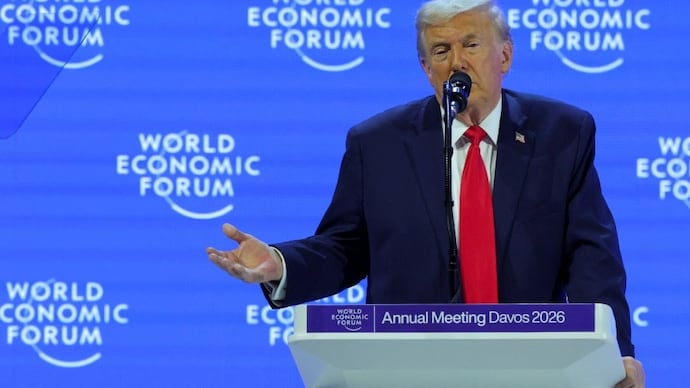
Donald Trump speaking at Davos

UPDATED: Jan 22, 2026 05:40 IST
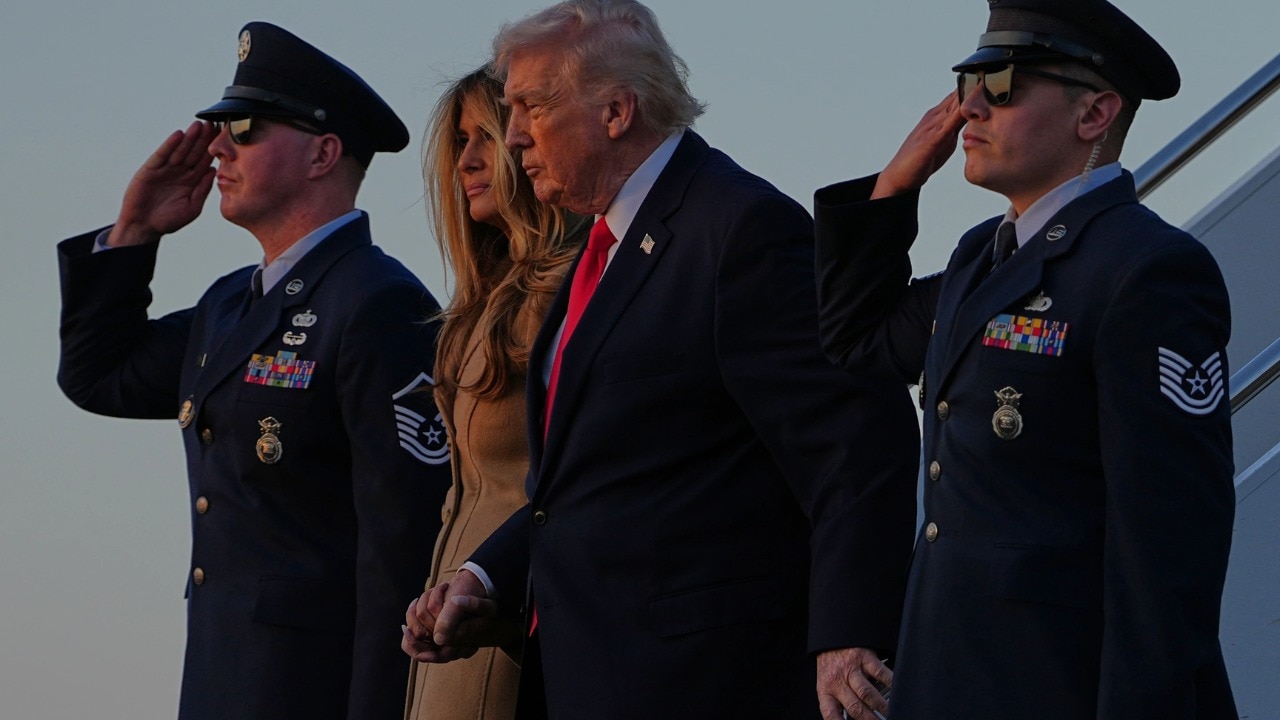
When President Donald Trump addressed the World Economic Forum in Davos for 72 minutes today, completing exactly a year of his second term, the speech was painted with a broad brush that said, America First! President Trump took a victory lap, comparing his first year to that of his predecessor and letting the world know that Daddy has different plans. His speech presented a blunt reassessment of alliances, sovereignty, and the rules that have governed global power since the end of the Cold War.
Davos has traditionally served as a sanctuary for multilateralism — a place where leaders reaffirmed faith in global institutions, collective security, and liberal economic order. Trump used that same stage to question each of those assumptions. His remarks were a signal that the United States is increasingly comfortable acting alone, and on its own terms.
At the centre of the controversy was Greenland. Trump reiterated his argument that the Arctic territory is strategically indispensable to US security, briefly reviving the threat of tariffs against European partners before stepping back from coercion and speaking of a negotiated “framework.” While the immediate escalation was avoided, the message landed: even close allies are now subject to pressure when US strategic interests are involved.
That logic extended to Nato. Trump did not call for the alliance’s dissolution, but his language reflected a transactional view of collective defence — one where commitments are contingent, costs are recalculated, and guarantees are no longer automatic. For Europe, this reinforced long-standing anxieties about American reliability. For the rest of the world, it underscored a deeper shift in Washington’s worldview.
If Nato were to weaken — whether through formal withdrawal or gradual erosion — the implications would extend well beyond Europe. Collective deterrence would give way to fragmented security arrangements, compelling states to hedge, rearm, or seek alternative partnerships. The credibility of alliances as stabilising instruments would diminish, replaced by ad hoc bargaining.
Russia and China have been watching this evolution closely.
From Moscow’s perspective, a less cohesive transatlantic alliance lowers strategic costs. Russia has consistently sought to exploit fissures within Nato, preferring bilateral leverage to multilateral resistance. Any ambiguity over American commitment emboldens pressure tactics in Eastern Europe, the Arctic, and beyond.
China’s reading is more structural. Beijing has long argued that the Western-led order is neither permanent nor universal. Trump’s emphasis on unilateral leverage, economic coercion, and selective engagement reinforces China’s belief that power — not institutions — ultimately determines outcomes. In the Arctic, where new shipping lanes and resource competition intersect, the weakening of Western cohesion could create a space for a Chinese strategic presence.
Together, these dynamics point toward a world increasingly defined by spheres of influence rather than shared rules.
In Trump’s formulation, the United States prioritises dominance in the Western Hemisphere while extracting value from partnerships elsewhere. We have not heard much about how this administration views The Eastern Hemisphere, but in the absence of US-led or US-influenced multilateral organisations, The Eastern Hemisphere becomes more contested, shaped by regional power balances and transactional alignments rather than alliance discipline. Multilateral institutions recede; bilateral deals gain prominence.
For India, this shift is neither abstract nor unfamiliar.
New Delhi has long operated under the assumption that global politics is multipolar, interest-driven, and fluid. Strategic autonomy — rather than alliance entanglement — has been India’s organising principle. In that sense, Trump’s Davos message validates a worldview India has practised for decades.
But validation does not equal comfort.
A world where alliances weaken and norms erode may offer flexibility to major powers, but it also increases volatility. Middle powers like India must navigate sharper trade-offs, manage simultaneous partnerships with competing blocs, and absorb greater strategic risk. Economic coercion — normalised in transatlantic relations — could just as easily be deployed elsewhere.
Davos once symbolised elite consensus around globalisation and cooperative security. Trump’s speech suggested that era could be closing. In its place is a more transactional order — one that rewards leverage, tolerates coercion, and accepts fragmentation as the price of sovereignty.
Trump did not announce the end of the post-war order. But he made clear that the United States no longer feels bound to preserve it.
For Indian policymakers and strategists, the lesson is clear: the world is moving closer to the realist assumptions New Delhi has always held — but the costs of that realism are rising. In such an environment, autonomy will matter more than alignment, and prudence more than principle.
The Davos speech was not about today’s markets. It was about tomorrow’s map.
- Ends
Published By:
Nitish Singh
Published On:
Jan 22, 2026
Tune In