1 month ago
Last Updated:December 30, 2025, 07:43 IST
Zia scripted history by becoming Bangladesh’s first woman prime minister, serving terms between 1991 and 1996 and 2001 and 2006

Activists in support of Bangladesh's former prime minister Khaleda Zia, hold a banner with her portrait as they pray for her recovery in Dhaka. (AFP)
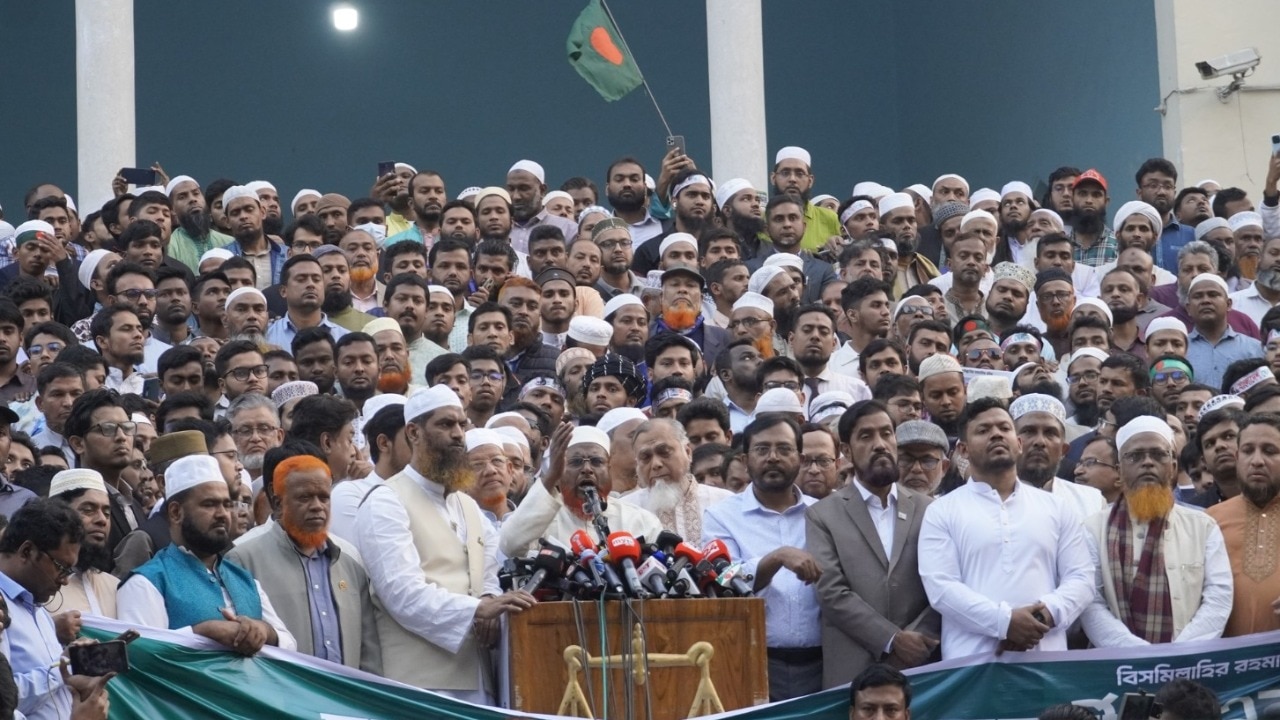
At a time when Bangladesh is in the throes of a political crisis, the country on Tuesday bid adieu to one of its most towering figures in history—Begum Khaleda Zia. Zia, Bangladesh’s first woman prime minister and chairperson of the Bangladesh ist Party (BNP), has died at the age of 80 after suffering from a prolonged illness, marking the end of a remarkable and often controversial career in national politics.
“BNP Chairperson and former Prime Minister Begum Khaleda Zia is no more," an official statement issued by the BNP chairperson’s press wing read. Zia had been undergoing treatment at Evercare Hospital since November 23 for multiple health complications and earlier this month, her doctors had described her condition as “extremely critical"—even placing her on ventilator support.
Who Was Khaleda Zia?
Born into a middle-class family, Khaleda Zia married Zia ur Rahman in 1959, a military officer who later became a key leader in Bangladesh’s struggle for independence and then President of Bangladesh. She did not enter politics until after her husband’s assassination in 1981, when she took up leadership of the BNP in 1984 amid a turbulent political environment.
She scripted history by becoming Bangladesh’s first woman prime minister, serving terms between 1991 and 1996 and 2001 and 2006. In her first term, she steered the country back to parliamentary democracy and worked on economic reforms, educational access, and women’s opportunities. However, her tenure faced major challenges, including natural disasters, economic distress, and civil unrest.
In her 2001-2006 term, she pledged to tackle corruption and terrorism, although both issues remained central problems during her government.
Khaleda Zia’s career was also defined by her longstanding rivalry with Sheikh Hasina, leader of the competing Awami League party, and the two alternated power for decades.
In the years after her premiership, she faced multiple corruption charges and convictions, which she and her supporters described as politically motivated. She spent time in prison and under house arrest before being released for medical treatment in later years.
Throughout her life, Khaleda Zia remained a symbol of female political leadership in South Asia and an influential yet polarising figure in Bangladesh’s democratic evolution.
Location :
Dhaka, Bangladesh
First Published:
December 30, 2025, 07:43 IST
News world From First Woman PM To Political Powerbroker: The Life And Legacy of Khaleda Zia
Disclaimer: Comments reflect users’ views, not News18’s. Please keep discussions respectful and constructive. Abusive, defamatory, or illegal comments will be removed. News18 may disable any comment at its discretion. By posting, you agree to our Terms of Use and Privacy Policy.
Read More