1 hour ago
An alleged Iranian shipping empire. Indian-linked firms and nationals. Thousands of seafarers in Hormuz. Here's why the latest US sanctions matter beyond Tehran.
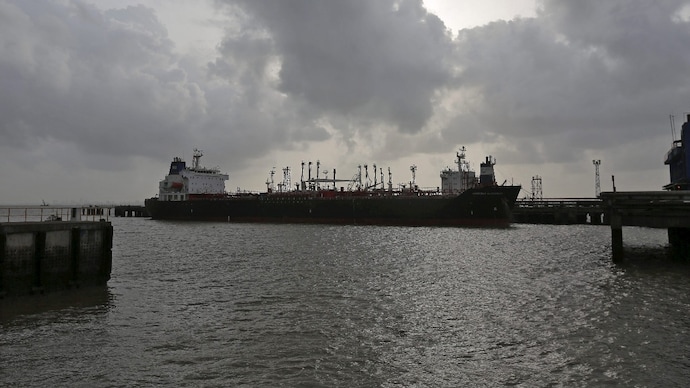
More than 18,000 Indian seafarers were deployed on Indian flagged and foreign-flagged commercial vessels in and around the Strait of Hormuz.
Three Indian seafarers were killed when US forces struck what Washington described as a "non-compliant" vessel on June 10 during an earlier phase of its maritime enforcement campaign against Iran. Now, as the US moves into “Blockade 2.0,” the US Treasury Department has shifted its focus to Mohammad Hossein Shamkhani's alleged shipping empire, bringing renewed attention to the risks facing commercial crews operating in one of the world's busiest shipping lanes.
The sanctions also reveal a significant Indian footprint. Across the Treasury's April and July actions, Washington has named four Indian nationals, four India-linked companies, and eight commercial vessels connected to India.
For India, however, the implications extend beyond the sanctions list. More than 18,000 Indian seafarers were deployed on Indian flagged and foreign-flagged commercial vessels in and around the Strait of Hormuz, according to a June 11 statement by the Ministry of Ports, Shipping and Waterways.
Drawing on the latest US Treasury sanctions, official government statements and recent maritime incidents, India Today's Open Source Intelligence (OSINT) team identifies the India-linked entities named in the sanctions, explains how the alleged shipping network operated, and what the latest action could mean for commercial seafarers in the Strait of Hormuz.
HOW DOES THE SHAMKHANI NETWORK OPERATE?
According to the US Treasury, the network is overseen by Mohammad Hossein Shamkhani, the son of Ali Shamkhani, a senior adviser to Iran's Supreme Leader. Treasury alleges he concealed his role by using pseudonyms such as "Hector" or simply "H", while directing a sprawling network involved in the movement of Iranian and Russian oil.
The US government alleges that the network grew far beyond an oil smuggling operation into a global shipping and logistics empire. It relied on a web of front companies, shipping agencies, exchange houses and commercial vessels to move oil while concealing the origin of cargo, ownership and financial transactions.
TRACING THE INDIA LINKAGES
The latest sanctions are not the first to uncover Indian links to the Shamkhani network. Instead, they build on an April action that had already identified Indian companies, shipping managers and commercial vessels as part of what Washington says was a wider sanctions evasion operation moving Iranian and Russian oil.
In the latest round announced on July 14, the US designated Mumbai-linked Sea Lead Shipping Agency, describing it as a subsidiary of Singapore-based Sea Lead Shipping Pte. Ltd., which Treasury calls one of the "key containerised shipping firms" within the Shamkhani network. According to the US government, Sea Lead and its subsidiaries manage a fleet carrying goods worldwide, enabling the network to transport both licit and illicit cargo. Three commercial vessels linked to Sea Lead – SHENTON WAY, TANJONG PAGAR 1 and PAYA LEBAR – were also identified as blocked property.
The July sanctions also named two Indian nationals. The document alleges Jijin George facilitated the operation of vessels within the Shamkhani fleet, while Gautam Vishavdeep managed network operations, coordinated with business partners and facilitated shipments of Iranian oil.
The Treasury also identifies Dubai-based We Freight Shipping LLC as part of a logistics group with an office in Mumbai, alongside operations in the UAE and Thailand. Treasury also alleges that the group provided intermediary transport for illicit trade under the Shamkhani network.
The Indian footprint had already begun to emerge in the April 15 sanctions. In the April document, the US Department designated Fleet Tanqo Private Limited, based in Navi Mumbai, alleging it managed five vessels – HORAE, VERSA, ANAYA, DAPHNE V, and SILVAR – that transported multiple cargoes of Russian oil or petroleum products on behalf of the Shamkhani network.
It also sanctioned House of Shipping Private Limited, based in Chennai, describing it as the Indian office and a direct subsidiary of Dubai-based House of Shipping Investment FZCO, which Treasury says acted as a shipping firm for Shamkhani and his business partners.
Two more Indian nationals were sanctioned in April. Chetan Prakash Balhotra, a director of Meritron DMCC, was accused of working on behalf of companies linked to the network, while Tanjore Sunilkumar Srinivas was described as an official in multiple Shamkhani-linked firms, serving as a procurement manager and executive across associated companies.
Taken together, the two rounds of sanctions show that the network's links to India extend well beyond individuals. According to the Treasury, the alleged connections span shipping agencies, vessel managers, logistics firms and commercial vessels.
Announcing the latest sanctions, US Treasury Secretary Scott Bessent described the Shamkhani network as "one of its most profitable engines" for the Iranian regime. He said the latest action seeks to dismantle "the financial infrastructure" that enables Tehran to continue activities threatening "US national security and global shipping."
The July 14 action targets more than 50 individuals, companies and vessels allegedly linked to the network. The US Treasury said it builds on earlier sanctions announced in April and previous designations, bringing the total number of individuals, entities and vessels sanctioned under Mohammad Hossein Shamkhani's patronage to more than 200.
WHAT DOES IT MEAN FOR INDIA SEAFEARERS?
For Indian seafarers, the significance of the latest sanctions lies less in the designations themselves and more in the changing risks of operating in one of the world's busiest shipping corridors. With approximately 18,000 Indians serving aboard commercial vessels in and around the Strait of Hormuz, many work on foreign-owned and foreign-flagged ships where ownership, management and cargo often span multiple jurisdictions.
As Washington widens sanctions to include shipping agencies, vessel managers and commercial ships, crews could increasingly find themselves aboard vessels subjected to inspections, port restrictions, enhanced compliance checks or commercial disruptions, despite having no role in ownership or trading decisions.
Recent attacks on merchant shipping and previous US enforcement actions have shown that commercial vessels can become caught in wider geopolitical confrontations. While sanctions are directed at networks rather than crews, the operational uncertainty – from inspections and delays to changing compliance requirements – is often experienced first by the seafarers on board.
With the US maritime blockade back in force, vessels linked to Iran or designated under US sanctions once again face the risk of interdiction or even military action, as seen during previous enforcement operations. Unlike the post-June 17 MoU period, when the US had suspended its blockade and the primary threat came from Iran's IRGC, commercial shipping in the Strait of Hormuz now faces risks from both sides of the confrontation.
The growing risks, however, have already prompted a policy response in India. Following the recent attacks on merchant vessels in the Strait of Hormuz, the Ministry of Ports, Shipping and Waterways launched a "Seafarer-First" initiative, ordering vessel-by-vessel monitoring, appointing dedicated liaison officers for affected Indian seafarers and setting up a real-time operational dashboard to track Indian crews across the Persian Gulf, Strait of Hormuz and Gulf of Oman. The ministry also directed that "every Indian seafarer in the affected region will be individually accounted for, irrespective of the vessel's flag," underscoring the government's concern that many Indians serve aboard foreign-owned and foreign-flagged vessels operating in the conflict zone.
- Ends
Published By:
bidisha saha
Published On:
Jul 15, 2026 19:24 IST