1 hour ago
A Thai Airways flight attendant's arrest in Australia for smuggling heroin has exposed a growing trend of international drug syndicates attempting to recruit airline crew members through social media.
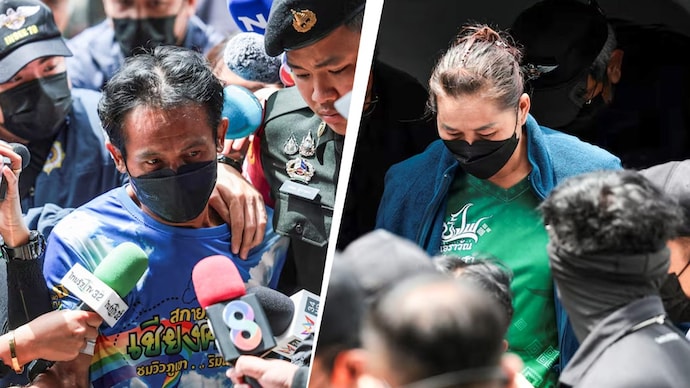
Suspected members of the drug racket with officials after their arrest in Bangkok. (Photo: Reuters)

New Delhi,UPDATED: Jul 3, 2026 19:01 IST
Early in the morning on June 18, an unsolicited message slipped into the TikTok inbox of a thirty-year-old flight attendant based in Bangkok. Sending a series of direct enquiries, an unknown account asked if she was flying to Australia, if she participated in carry-for-hire services and what her financial rate would be. Flying for a regional budget carrier and well-aware of strict industry safety regulations, she chose to ignore and forget the interaction.
The reality of that close encounter only set in days later when a fellow flight attendant from the national carrier, Thai Airways, was charged with importing over one kilogram of heroin into Australia, hidden cleverly inside the linings of several tote bags.
The rare and highly publicised detention of a national airline staff member has triggered widespread alarm across Thailand, raising urgent questions about the efficacy of airport security protocols. There is growing concern that sophisticated international drug trafficking networks are now systematically targeting commercial air crews to slip high-value illicit substances into lucrative foreign markets.
During a high-level meeting of the national anti-drug committee, Thai Prime Minister Anutin Charnvirakul expressed deep distress over the trend, noting that at least six individuals travelling from Thailand had already been charged with commercial drug trafficking in the first half of the year alone.
"According to reports, in the first half of this year, there have already been at least six cases of people travelling from Thailand who were charged with commercial drug trafficking," Thai Prime Minister Charnvirakul. "This is considered a high number... and it damages the country's image," he added.
In response to the growing crisis, the Thai government has pledged immediate and sweeping reforms to aviation security. A government spokesperson announced that the country's primary airport operator will radically improve baggage screening and physical inspections, specifically expanding these strict checks to include all flight crew members.
Concurrently, commercial airlines are moving to enforce severe disciplinary actions against any staff found carrying or accepting items on behalf of third parties. While industry veterans reiterate that the "no carry-for-hire" policy is a fundamental, universally understood rule among personnel, the allure of benefits continues to pose a vulnerability.
Investigations led by Thailand’s Office of the Narcotics Control Board have peeled back the layers of this digital recruitment strategy. The anonymous TikTok account that initiated contact in June operated under a Thai alias translating to "Powder is Powder" and was directly linked to a syndicate creating fake social media personas to scout for international couriers.
In the case of the arrested Thai Airways employee, authorities discovered she had initially posted in a social media group catering to paid overseas transport. A Facebook user operating under the pseudonym "Rose Rose" subsequently contacted her and the two ultimately settled on a courier fee of just 8,800 baht, just above Rs 25,000. For that money, the employee took a risk on a package that the Australian Federal Police later valued at an estimated street market price of USD 347,150 (Rs 3.31 crore).
This aggressive recruitment pivot by syndicates coincides with a massive surge in drug production just beyond Thailand's borders. According to data from the United Nations Office on Drugs and Crime, opium poppy cultivation in neighbouring Myanmar reached a decade-long high following significant supply drops in Afghanistan.
Plagued by civil conflict and severe economic hardship, farmers in Myanmar have increasingly turned to the illicit trade, turning the war-torn nation into the world's primary source of illicit opium. Because these massive production facilities are landlocked, trafficking networks rely on concealing the refined heroin inside everyday export items like clothing, coffee packets and vases to move them through Thailand to the rest of the world.
While the arrest in Australia exposed a critical vulnerability in aviation staffing, it also allowed law enforcement to disrupt a much larger smuggling operation. Police Major Suriya Singhakamol, Secretary-General of the narcotics board, revealed that the same network had finalised plans to ship five additional drug-laden packages from Bangkok to Australia and Taiwan over the turn of July.
Alert authorities managed to intercept the cargo, seizing an additional 24.38 kilograms of heroin meticulously hidden inside winter jackets, traditional silk clothing and coffee sachets.
As Thai agencies coordinate with Australian and Taiwanese counter-narcotics units to trace the international destination cells, local police have already arrested a Thai man and his Laotian wife under suspicion of running the domestic pipeline that funnelled these parcels from the border provinces straight into the capital.
- Ends
Published On:
Jul 3, 2026 19:00 IST