 1 month ago
HomeMarket NewsHere's why banking stocks could see a significant reaction on Monday after this RBI action
Usually, banks are allowed to have net open positions of up to 25% of their respective tier-1 capital, while there are no caps on gross positions.
2 Min Read
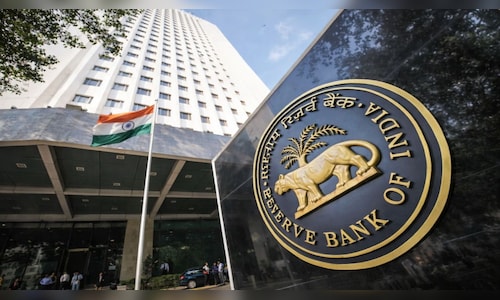
Shares of India's banks, both private and PSU lenders, will be in focus on Monday, March 30, after the Reserve Bank of India capped the total positions that they can take in the onshore currency market.
In an announcement after market closing on Friday, the RBI capped the total positions to $100 million. The banks will have to bring down their positions to that level by April 10.
How Does This Work
Usually, banks are allowed to have net open positions of up to 25% of their respective tier-1 capital, while there are no caps on gross positions.
Banks generally have held large open positions in the onshore market with most of it matched by open positions in the offshore (Non-Deliverable Forwards) market.
With gross open positions in the onshore market having to come down to $100 million, banks are seeing huge unwinding in the onshore and the offshore market.
Worries For Banks
According to bankers that CNBC-TV18 spoke to, the total positions that will have to be wound down could be $40 million.
For example, if the difference between the USD-INR in the NDF market and the onshore market on Monday rises to ₹1, it will result in market-to-market losses for banks worth ₹4,000 crore, across private, PSU and foreign banks.
Since this is also the end of the quarter / financial year, some losses may have to be booked in the P&L of the current quarter itself.
Experts are off the view that bankers may approach clients to take some of their positions as the client side does not have any limits.
Where Is The Currency Headed?
After closing near to levels of 95 against the US Dollar, the market sees the currency seeing a sharp appreciation towards at least 93 against the greenback as banks unwind positions on Monday.
Jefferies is of the view that the MTM losses may be to the tune of ₹3,000 crore to ₹4,000 crore, with large banks and select foreign banks lending.
The Nifty Bank index is down 13.6% so far in the month of March, which is the worst month that the index has seen since March 2020.
The PSU Bank index has also declined 16% in the month of March, which is turning out to be the worst month for the index since September 2020.
First Published:
Mar 30, 2026 8:20 AM
IST