1 month ago
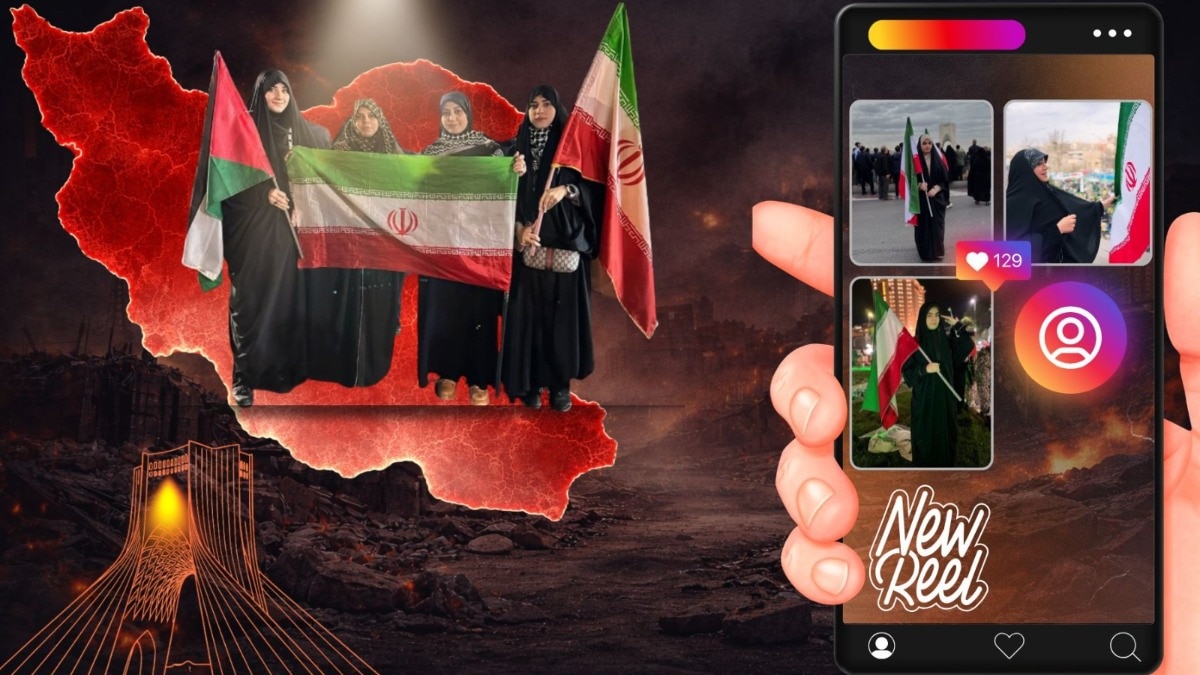
On Saturday morning, following the coordinated Israel-US strike, millions of Iranians looked at their phones where they received a message, "Help has arrived," on the Bade Saba app - something that had been used so far as a platform to receive prayer updates.
Israel launched a cyberattack on Iran using Bade Saba prayer app. (AP Photo)

UPDATED: Mar 2, 2026 14:54 IST
India Today's OSINT team analysed Bade Saba Calendar, a simple religious app used by millions of Iranians and found exactly why it made the perfect vehicle for a sophisticated cyber-psychological operation.
Israel appears to have launched a coordinated cyberattack on Iran, timed alongside the US-Israeli airstrikes that killed Supreme Leader Ayatollah Ali Khamenei.
On Saturday morning, following the coordinated Israel-US strike, millions of Iranians looked at their phones where they received a message, "Help has arrived," on the Bade Saba app - something that had been used so far as a platform to receive prayer updates.
The notification did not come from a mosque, the government, or a news channel. It came from Bade Saba Calendar, Iran's most widely used Islamic prayer app, now apparently weaponized in a cyber-psychological operation attributed to Israel.
WHAT IS BADE SABA
On the surface, Bade Saba is a simple religious utility. It shows users the Islamic (Hijri) calendar, which sends reminders for the five daily prayers which includes Fajr, Dhuhr, Asr, Maghrib, and Isha and pushes the Adhan (the Islamic call to prayer) as a sound alert directly to your lock screen. It also flags important Islamic occasions: birthdays of prophets, martyrdom anniversaries, and religious holidays.
It is an app people trust, check five times a day, and never question. Google Play alone lists over 5M+ official downloads, and the app is also available across several third-party platforms including Cafe Bazaar, Softonic, APKPure and others.
WHAT DID THE HACKERS ACTUALLY SAY
The India Today OSINT team broke down the Persian-language push notifications delivered to millions of Iranian phones on the morning of the 28th. Disguised in the app's familiar "Help Arrived" format, the messages carried pointed political content:
"The time for revenge has come. The regime's repressive forces will pay for their cruel and merciless actions against the innocent people of Iran. Anyone who joins in defending and protecting the Iranian nation will be granted amnesty and forgiveness."
At 10:14 a.m., a follow-up message urged users to "lay down your weapons or join the forces of liberation" in support of Iranian freedom, as reported by WIRED Middle East. No party has officially claimed responsibility for the hack.
It is formatted to look like routine prayer reminders; these were direct appeals urging Iran's armed forces to turn against the Islamic Revolutionary Guard Corps (IRGC) and the regime.
The timing was no coincidence, the hack hit as US-Israeli missiles were already in the air, and Bade Saba was the perfect tool. A prayer app commands instant, unquestioning trust; it reaches Iranians across every age group; and crucially, as a domestic app, it operates freely inside Iran's heavily filtered internet, bypassing the firewall that would have blocked a foreign platform carrying the same message.
The attack also did not happen in isolation. Internet monitor NetBlocks reported a 36-hour internet disruption across Iran following the strikes, severely limiting people's ability to verify information or reach family. In that blackout, a trusted local app push notification was one of the few digital messages that could still get through.
Update: #Iran has now been cut off from the world for 36 hours with metrics showing connectivity at 1% of ordinary levels.
The internet blackout imposed on Saturday morning continues to limit Iranians' access to information as the war with the US and Israel widens regionally. pic.twitter.com/BhN7dDdExi— NetBlocks (@netblocks) March 1, 2026
Bade Saba was just one front. Simultaneously, Iran's major media organizations including IRNA, ISNA, Tabnak, and Asr-e Iran were also hit, pointing to a coordinated, pre-planned operation aimed at Iran's entire information ecosystem: disrupt what people believe, silence where they turn for news, and do it all while the missiles are still in the air.
- Ends
Published By:
Karishma Saurabh Kalita
Published On:
Mar 2, 2026 14:54 IST