1 hour ago
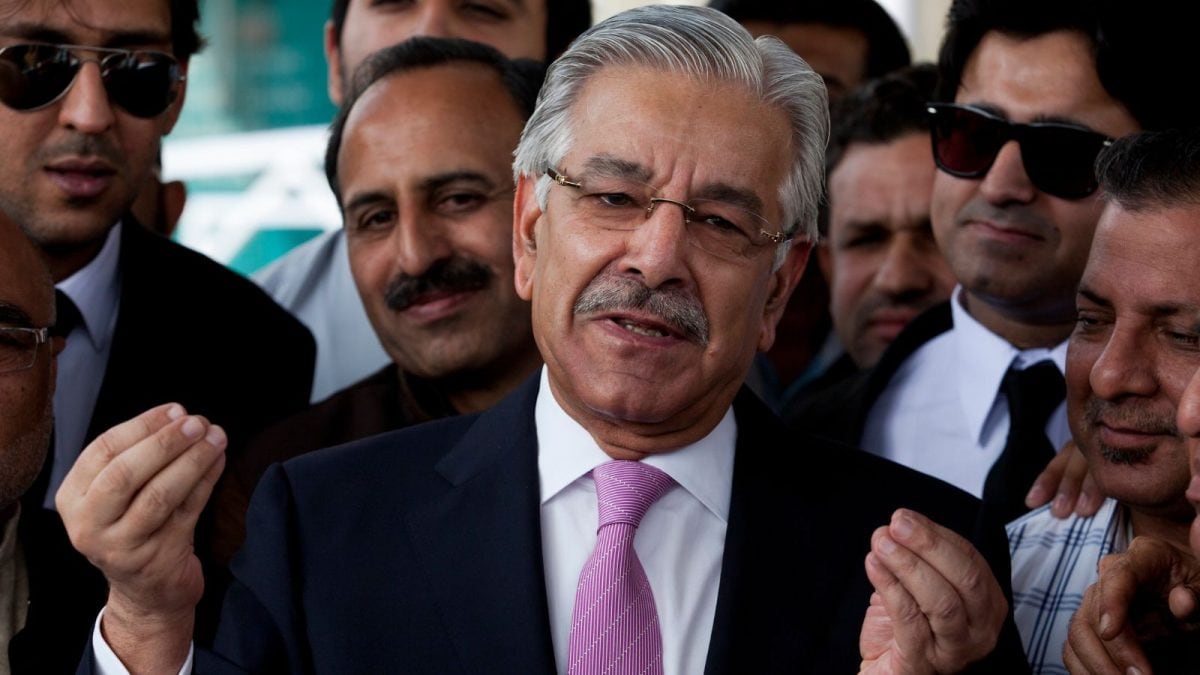
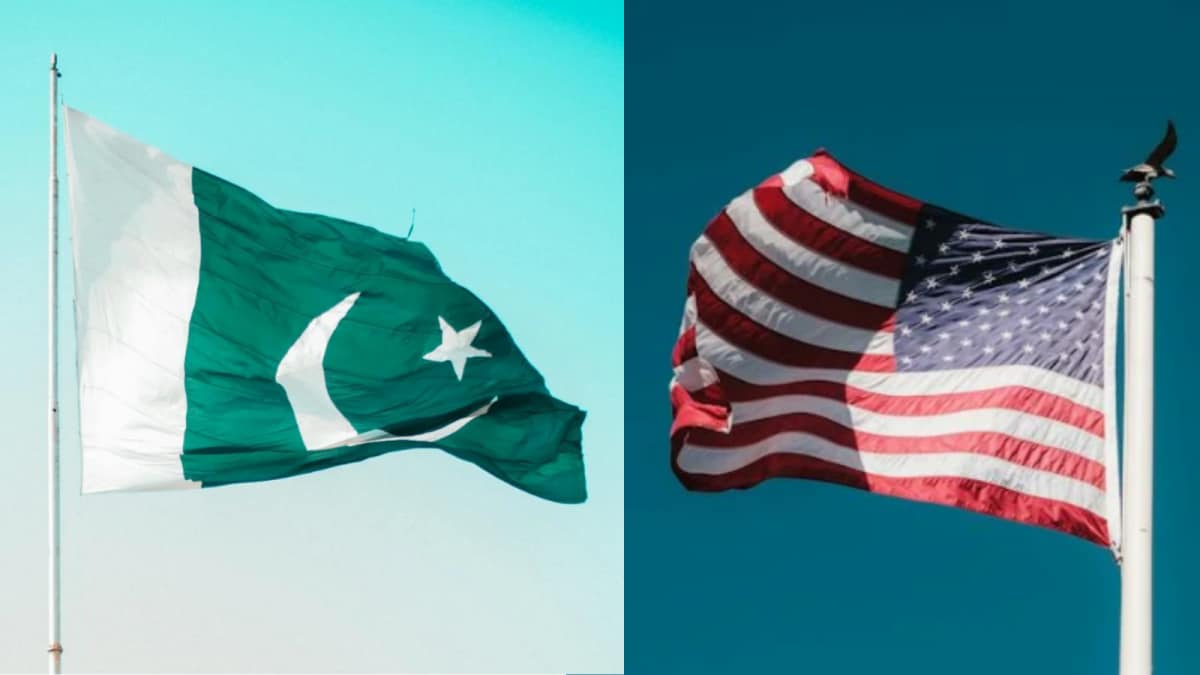
Pakistani Defence Minister Khwaja Asif described US treatment of Pakistan as "worse than toilet paper". The reference was to Pakistan's support of the US in its wars. What he doesn't mention is how Islamabad's Kashmir obsession actually brought its ruin.
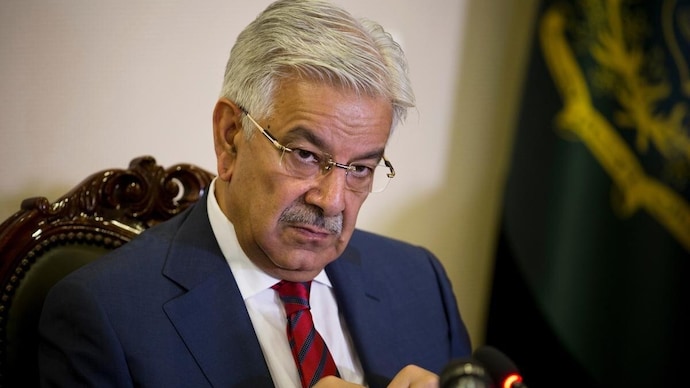
Pakistan Defence Minister Khwaja Asif alleged the US had use Pakistan for its wars in Afghanistan and the threw the nation away like toilet paper. (Image: File)

New Delhi,UPDATED: Feb 11, 2026 13:36 IST
Pakistan's Defence Minister Khwaja Asif, while speaking in the country's Parliament on Tuesday, made a particularly strong admission when he alleged that the US had treated Pakistan "worse than toilet paper". He said the US used and discarded Pakistan in pursuit of its own strategic interests. He described Pakistan's decision to align with Washington DC's stance on Afghanistan after 1999 as a grave mistake whose consequences would be felt for years.
Asif's admission stands out as one of the most blunt public criticisms of US alignment by a sitting Pakistani defence minister in recent years. It comes even as the country has been attempting to woo US President Donald Trump with a Nobel Peace Prize nomination for "pivotal leadership" and mining rights for rare earth minerals in Balochistan.
But the question that remains is this that how did Pakistan become a piece of "toilet paper" for the US to be used and discarded at will? Why did Pakistan align itself with US interests? And what consequences did Pakistan have to deal with because of its alignment with the US? And did the Islamabad-Rawalpindi hybrid regime's obsession with India and Kashmir play a role in it?
HOW AND WHY DID PAKISTAN BECOME ALIGNED WITH US INTERESTS IN AFGHANISTAN?
Pakistan, almost immediately after it was carved out in 1947, sided with the US on defence and security. Over time, Pakistan, which had evolved into a security state, deepened its cooperation, with its eyes on India, particularly obsessing over Kashmir.
Pakistan's alignment with the US further deepened during the Soviet-Afghan war, which lasted from 1979 to 1989. The US was looking for a regional security foothold and Pakistan emerged as a desirable option. While many newly independent nations tried to stay non-aligned during the Cold War, Pakistan emerged as the US's steadfast military ally in South Asia.
The strategic positioning of Pakistan at the crossroads of South Asia, the Middle East (Western Asia) and the former Soviet republics of Central Asia made it a staging ground for the US. And the Islamabad-Rawalpindi security regime used this leverage to make the US more comfortable with Pakistan militarily.
Islamabad did not mind giving up its strategic autonomy as long as it got missiles to fire and jets to fly. Thanks to the billions of dollars from the US. The money was nothing but payment for using Pakistani soil and its army as a mercenary force.
Asif alleged that Islamabad's involvement in that conflict in Afghanistan was not driven by any religious imperative, but rather by politics. "We did not enter these wars to defend Islam or for jihad. We entered them for political legitimacy and to secure the support of a superpower," Asif told lawmakers.
During the Soviet war in Afghanistan, Pakistan served as a vital logistical base for the US-backed Mujahideen resistance fighters. Its notorious spy agency, the ISI, helped to shelter and train fighters, and facilitated arms shipments into Afghanistan.
Asif also said that Pakistan became even more entangled with US affairs after 1999, and especially after the 9/11 attacks in 2001, describing the decision as Pakistan's failure to learn from the Soviet Union's withdrawal.
Like in the 1980s, during the US war in Afghanistan, Pakistan again became a US partner, this time against the Taliban. The US had started the War on Terror after the 9/11 attacks. Pakistan again became a crucial logistical hub, this time for NATO forces, while also allowing its airbases to be used by American aircraft operating in Afghanistan.
Asif alleged that despite Pakistan knowing Afghans were not involved in the 9/11 attacks, the country still became deeply involved in the subsequent war. "For not one decade, but two decades, we rented ourselves out. The only objective was to gain American support," he said.
Asif also criticised Pakistani military dictators, Zia-ul-Haq and Pervez Musharraf, for deliberately entangling Pakistan in external wars for the sole purpose of securing support and recognition from the US, without considering the consequences of such actions.
CONSEQUENCES FOR PAKISTAN OF BEING AMERICA'S TOILET PAPER
According to Asif, Pakistan is now, and will continue to, deal with the consequences of entangling itself in external wars on behalf of the US.
Referring to Islamabad's involvement in the war against the Soviets in Afghanistan, Asif alleged that it brought about long-lasting changes to Pakistan. He said, "That was not jihad. It was the war of a superpower. And because of that war, we changed our education system. Even today, that curriculum has not been fully corrected."
Referring to the post-2001 period, he said Pakistan turned against the Taliban to support the US-led war on terror, only for Washington to eventually withdraw while Pakistan remained mired in violence, radicalisation and economic strain. According to the defence minister, Pakistan's participation in conflicts that were not its own produced long-term instability and social damage that has yet to be fully undone.
For context, Pakistan has been mired in on and off-border skirmishes with the Afghan Taliban and even launched airstrikes within Afghanistan against the Tehreek-e-Taliban Pakistan(TTP), which Islamabad claims is backed by Kabul. The TTP had last week claimed responsibility for a suicide-bombing attack on a mosque in Islamabad that had resulted in at least 50 civilian deaths.
HOW PAK BLED BILLIONS OF DOLLARS OVER INDIA OBSESSION
While Pakistan was busy with wars and its fascination for acquiring "strategic depth" against India, and spent billions on becoming a security state, it had very little time and appetite to look at crucial domains of economy, human development and law and order. Repercussions of these policies are still being felt. Inflation is touching 6% and the GDP growth is stuck somewhere at around 2-3%.
"The losses we suffered can never be compensated," Asif said, describing those decisions as irreversible mistakes that reduced Pakistan to a pawn in conflicts driven by others. He added that Pakistan's leadership had consistently avoided admitting past mistakes. "Until we admit our mistakes, nothing will improve," Asif said, adding that he had personally apologised for the decisions made by previous generations.
While Pakistan's bonhomie with the US heightened security risks, its rogue theory of "bleeding India through a thousand cuts" further sidetracked it from the key domestic domains it had to attend to and fix. As Asif admitted that the association with the US was a grave mistake, it must be noted that Pakistani leaders and dictators did little to jump out of the ship. And the problem is, it is still on the same ship, irrespective of Asif's realisation. Pakistan's India, especially Kashmir, obsession played a key role in turning itself into toilet paper.
- Ends
Published By:
Shounak Sanyal
Published On:
Feb 11, 2026
Tune In