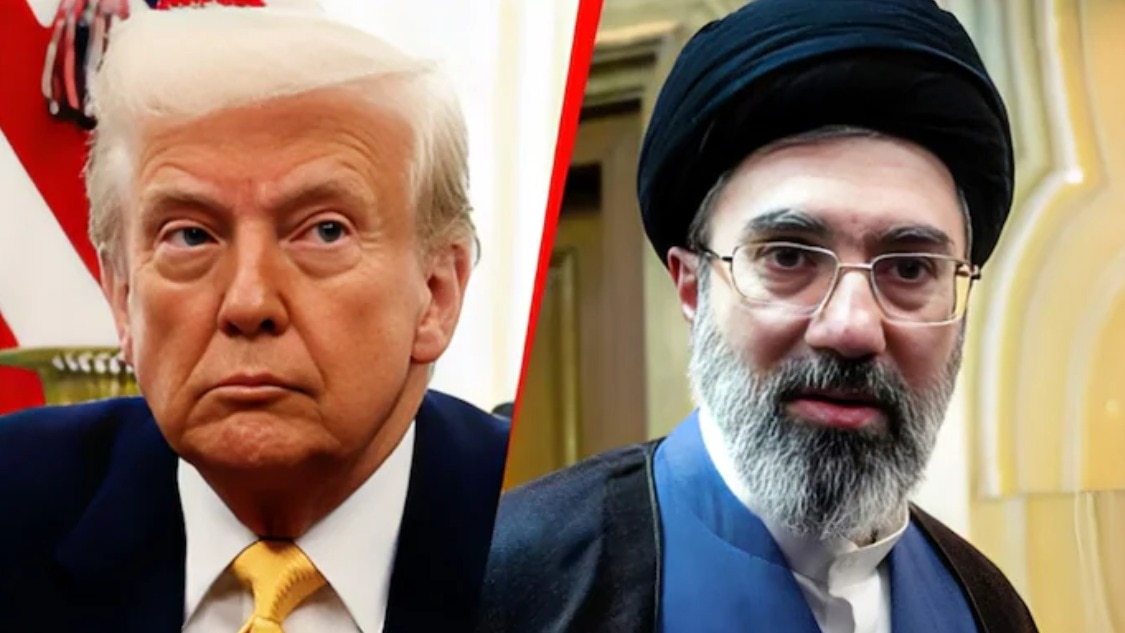
1 month ago
At the 2026 World Government Summit, Tucker Carlson declared India a great power that no longer takes orders from Washington, praising Prime Minister Modi as a history-defining, consequential global leader.
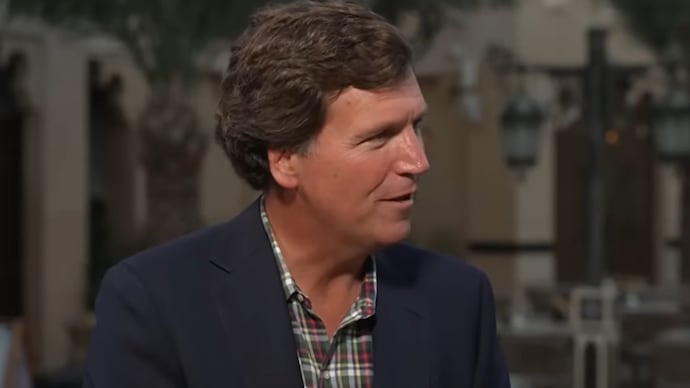
Carlson struck a more cautious note on Donald Trump.
At a summit built around the idea of shifting power, Tucker Carlson wasted no time saying the quiet part out loud.
"India is now a great power. You don’t dictate terms to them anymore," Carlson said, brushing aside decades of US foreign policy muscle memory in one line.
Speaking to India Today Global at the World Government Summit 2026 in Dubai, the former Fox News host delivered an assessment of geopolitics that challenged Washington’s assumptions, defended India’s sovereignty, and questioned America’s habit of lecturing rising powers.
"This is not the India we visited 25 years ago," Carlson said. "This is a completely different country. And this is not a country to whom you can dictate terms. You negotiate terms."
Carlson was particularly unsparing about Washington’s attempts to influence India’s foreign policy choices, including energy purchases from Russia.
"Of course the United States can’t dictate to India what oil it should buy," he said. "Unfortunately, people adjust to reality slowly. Emerging powers aren’t emerging anymore. They’ve arrived."
He described US pressure tactics as outdated in a world where India, China and Russia now operate as independent poles of power rather than junior partners.
MODI AND THE AGE OF CONSEQUENTIAL LEADERS
Asked about Prime Minister Narendra Modi, Carlson was careful to avoid direct prescriptions for Indian politics but left little doubt about his admiration.
"Whether you like Modi or not, Modi is impressive," he said. "Nobody doubts that."
He placed Modi among what he called a rare generation of leaders who will define history.
"We’re living in a moment of historical leadership," Carlson said. "Modi, Putin, Trump, Erdogan, MBS, MBZ. These are real people. Books will be written about them."
In contrast, he dismissed much of the Western political class as forgettable. "Most people live in times with a hundred Keir Starmers," he quipped. "No one will remember his name next week."
BIDEN, RUSSIA AND A FOREIGN POLICY MISTAKE
Carlson was critical of former US President Joe Biden, particularly over Washington’s confrontation with Moscow.
"Joe Biden started a war with Russia. He wanted a war with Russia," Carlson said. "It has hurt the United States. It’s hurt the dollar. Sanctions have never helped us once."
He argued that isolating Russia had backfired, pushing Moscow closer to Asia and weakening American influence.
"They didn’t isolate Russia," he said. "They drove Russia to China, to India, to the Middle East. That’s been terrible for the United States."
TRUMP'S TARIFF DIPLOMACY
On Donald Trump and his aggressive use of tariffs, Carlson struck a more cautious note, calling it an experiment whose results are still unclear.
"Tariffs hadn’t been used in generations," he said. "Then Trump announces Liberation Day and uses them as a diplomatic tool. The jury’s out."
Still, Carlson framed Trump’s approach as negotiation rather than punishment. "There’s the opening bid and the real bid," he said. "That’s how deals work."
Carlson also reflected on his interview with Russian President Vladimir Putin, judging leadership by outcomes rather than ideology.
"How are your people doing?" Carlson said. "Russia is in infinitely better shape than it was 26 years ago."
He pointed to Putin’s ability to hold together a vast, diverse country as his most significant achievement. "That’s the most impressive thing he’s done," Carlson said. "Our leaders haven’t managed that."
JOURNALISM, POWER AND TELLING THE TRUTH
Beyond geopolitics, Carlson spoke at length about journalism itself, arguing that legacy media outlets remain tied to a post-World War II power structure that is now collapsing.
"Journalism was the propaganda department for the post-war order," he said. "That system is changing in real time."
He framed independent media as a response to institutional failure rather than rebellion. "You can’t use the old structures anymore," Carlson said. "They’re too invested in the old system, and they lie."
Carlson’s core argument in Dubai was simple and unsettling for Western capitals: power has shifted, and pretending otherwise only accelerates decline.
"India has grown up," he said, offering an analogy. "Like children. One day you realise you can’t tell them what to do anymore."
In today’s geopolitics, Carlson suggested, the era of instructions is over. The age of negotiation has begun.
- Ends
Published By:
Satyam Singh
Published On:
Feb 4, 2026