3 weeks ago
The Strait of Hormuz has long been considered one of the most strategically sensitive bottlenecks. Amid the Iran war, shipping has been squeezed to a trickle. How many ships are struck? Which countries have been allowed passage? Is Iran charging a toll? We have divided the article into sections. Read on to find out.
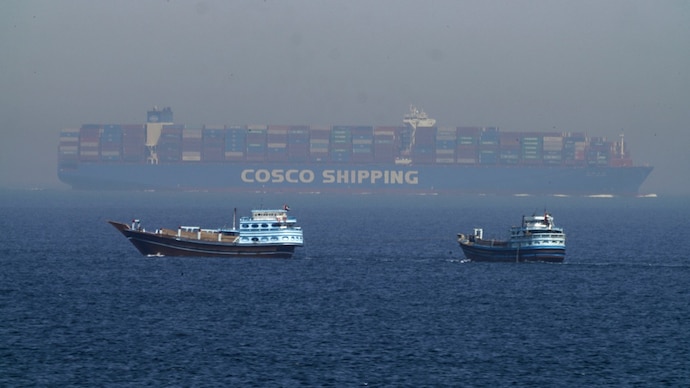
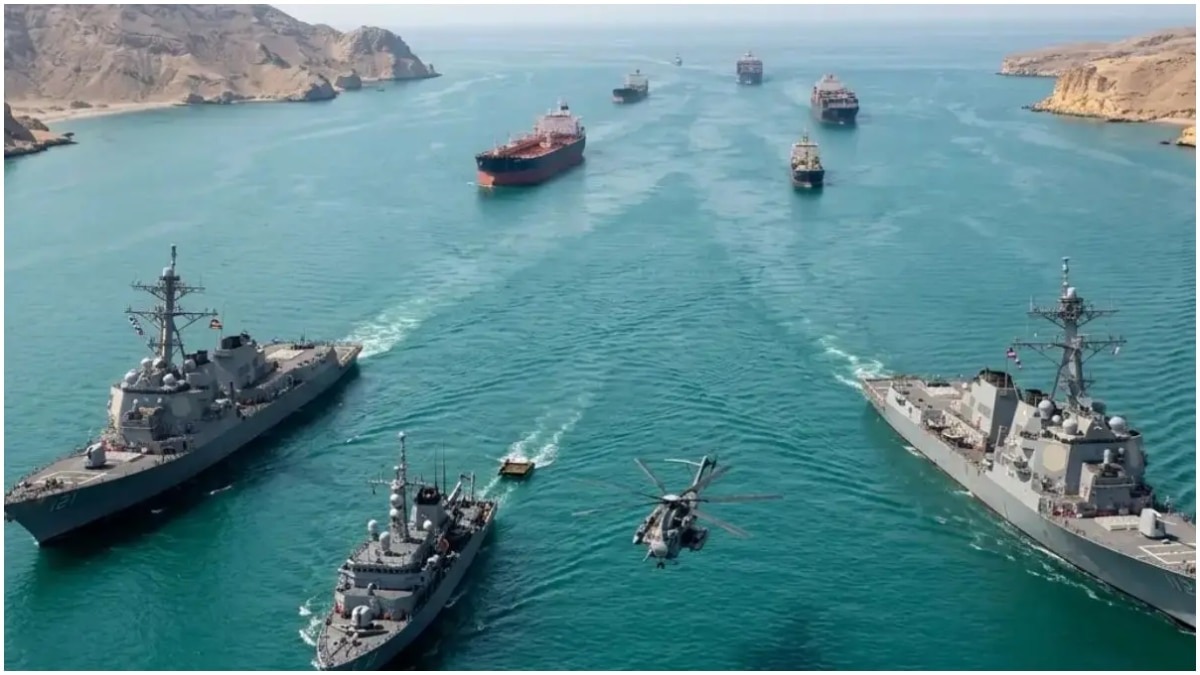
The Strait of Hormuz is a narrow waterway between Iran and Oman at the mouth of the Persian Gulf
The Strait of Hormuz, through which 20% of the world's oil and gas passes, is neither fully open nor formally shut. It's an interesting paradox, isn't it? Instead, amid the Iran war, shipping through the world's most critical oil chokepoint has shrunk to a trickle, become more costly, and become far more uncertain. The result: Oil prices going through the roof and natural gas hitting a peak. In essence, the world is bearing the economic cost of a war being fought between three countries.
It is not that the consequences were not known to the US or Israel when the first wave of missiles struck Iran on February 28, killing its Supreme Leader Ayatollah Khamenei. Iran, a coastal state bordering the Strait of Hormuz, effectively controls the crucial shipping route. The strait is too narrow (33 km) for ships to avoid navigating waters claimed by Iran. It is a leverage Iran has used previously as well.
HOW MANY SHIPS HAVE BEEN ALLOWED TO PASS?
This time, the impact has been more stark, with the conflict, now in its fourth week, seeing a major shift. Iran has moved to tighten its grip on Hormuz, not by closing it but by reopening it on its own terms and forcing "non-enemy" countries to pay for passage of their ships. We will come to this later.
Since the war began, Iran has attacked around 20 ships that have attempted to cross the strait without its permission. Tehran has repeatedly warned that only its "enemies and their allies" would be attacked. However, it has not clearly defined which countries fall under that category.
According to analysis firm Kpler, just 138 ships crossed the narrow waterway so far in March, including 87 oil and gas tankers. That's just 5-6 ships per day. It amounts to a whopping 95% drop in crossings since the war began.
Before the conflict, about 138-140 ships passed through Hormuz each day, carrying one-fifth of the global oil supply.
Presently, some 2,000 ships are stuck in the waters near the Strait of Hormuz, according to the Maritime Organisation (IMO).
WHICH COUNTRIES HAVE GOT IRAN NOD?
Now, a very limited number of countries have managed to get their tankers through the strait. Sanctioned tankers and shadow-fleet vessels, usually uninsured, now make up the overwhelming majority of shipping through Hormuz.
Most of the oil since February 28 has headed for Asia, especially China, the world's top crude importer and among the few countries that have condemned the strikes on Iran. Over 12 million barrels of crude have reached China since the war began.
An analysis by Lloyd's has shown that a third of the ships were owned or had connections to Iran. Greek and Chinese carriers come next. Six India-bound tankers have transited the strait. Around 20 India-flagged vessels, with 540 Indian seafarers, are waiting to cross the strait. Pakistani and Turkish vessels have also been allowed to pass by Iran.
HOW ARE SHIPS PASSING THROUGH HORMUZ?
The gate is not open for all. Drones, missiles, and underwater mines present a serious challenge. Geography is on Iran's side. The mountainous coastline allows Iran to launch attacks from a height, giving less time for ships to react.
Initially, a handful of ships were deliberately switching off their tracking system or AIS (Automatic Identification System) to evade detection. But it has been largely stopped after the March 12 attack on the US-owned crude oil tanker MT Safesea Vishnu, which killed an Indian crew member.
THE 'TEHRAN TOLL BOOTH'
Presently, Iranian authorities are reportedly handling requests from countries on a case-by-case basis. There is also a 'Tehran toll booth' in place, with reports in foreign media saying that Iran was charging as much as $2 million (Rs 18 crore) to safely transit the strait. It is similar to how Egypt controls the Suez Canal. However, Iran has denied the report.
What is in place is a controlled corridor run by the powerful Islamic Revolutionary Guard Corps (IRGC), which seems to have a system of its own.
If a tanker wants to cross the strait, the operator has to first reach out to middlemen linked to the IRGC and submit documents like ship ID, ownership, cargo details, destination and crew list for vetting.
These are then carefully reviewed by IRGC authorities. Cargo with oil is given priority. The vessel then undergoes a layered scrutiny in Hormozgan province.
According to analyst and author Shanaka Anslem Perera, a fee of $2 million per tanker -- roughly $1 per barrel -- is charged for Very Large Crude Carriers (VLCCs). The payment is reportedly taken in Chinese yuan. This has been viewed as a move to weaken the petrodollar, which has governed energy trade since 1974.
If cleared, the ship gets a code and instructions on which route to take. As the ship nears the strait, the communication shifts to VHF radio. The verification tracking system is checked. After this is done, patrol boats escort the ship through the narrowest stretch.
WAR-RISK PREMIUMS RISE
Thus, the Strait of Hormuz remains open. Instead, the risk of passage through the route has risen massively. The risk turned into a pain point for insurance markets. As tensions escalated, so did war-risk premiums, which are now seeing rates between 3-7.5%.
If we see it in perspective, large oil tankers valued at $200–300 million are seeing a rise in premiums from 0.25% to 3%. It has led to insurance costs jumping from $600,000 to $7-9 million per voyage. It has severely affected profitability.
Thus, when risk can no longer be priced, ships disappear. The Strait of Hormuz remains open. But shipments have turned to a trickle.
- Ends
Published By:
Abhishek De
Published On:
Mar 25, 2026 12:02 IST
Tune In