1 month ago
After a ten-year gap, India is preparing to host its most important diplomatic engagement with Africa. As trade, critical minerals, renewable energy and Global South solidarity rise in significance, the upcoming summit could mark a major reset in India-Africa relations.
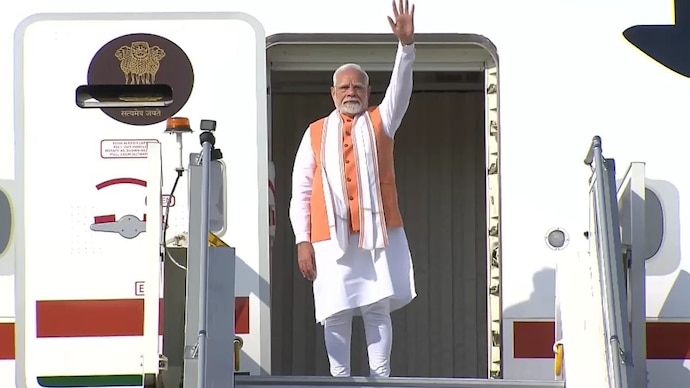
PM Modi leaves for 5-nation tour to Africa, Latin America and Caribbean in 8-day diplomatic mission.
India is preparing to host one of its most consequential diplomatic gatherings with the African continent in nearly a decade. The fourth India-Africa Forum Summit (IAFS), expected to take place in New Delhi between 28 and 31 May, is likely to bring together heads of state, senior ministers and high-level delegations from across Africa for what is shaping up to be a major strategic and political event.
Preparations in the national capital are already underway, with multiple hotels reportedly reserved for visiting delegations and logistical planning gathering pace. More than just a ceremonial summit, this edition of the IAFS comes at a moment of profound geopolitical and economic transition. It will be the first India-Africa Forum Summit since 2015, and its timing reflects New Delhi’s renewed desire to deepen ties with a continent that is becoming increasingly central to the global political and economic future.
A platform returning at a critical moment
The India-Africa Forum Summit was first launched in 2008 as India’s premier platform for structured political and economic engagement with African countries. The first summit was held in New Delhi, the second in Addis Ababa in 2011, and the third returned to New Delhi in 2015. Since then, however, the platform has remained dormant. That ten-year gap makes this year’s summit especially significant.
In the intervening years, Africa has undergone major shifts — economically, demographically and geopolitically. At the same time, India’s own external engagement has evolved, with New Delhi increasingly positioning itself as a leading voice of the Global South. The upcoming summit therefore arrives not as a routine diplomatic event, but as an opportunity to update, expand and institutionalise a relationship that both sides increasingly view as strategically indispensable.
This edition is expected to take place soon after the BRICS Sherpas meeting, further underlining its geopolitical importance. One of the summit’s central themes is expected to be the alignment of Africa’s Agenda 2063 — the African Union’s long-term blueprint for inclusive growth and sustainable development — with India’s own development and cooperation priorities. Digital infrastructure, green development, capacity-building and co-development models are all expected to feature prominently.
Trade has become a major driver of the relationship
One of the strongest indicators of how rapidly India-Africa relations have evolved is trade.
India is now Africa’s third-largest trading partner, with bilateral trade touching $103 billion in 2024–25, marking a 17 per cent increase year-on-year. That figure reflects not only the scale of commercial engagement, but also the breadth of sectors now connecting India and the continent.
Trade discussions at the summit are expected to focus on a wide range of sectors including healthcare, education, agriculture, information technology, pharmaceuticals, maritime security and defence cooperation. Defence ties, in particular, are quietly but steadily deepening, with India increasingly seen as a credible and cost-effective partner for African countries seeking patrol vessels, surveillance capabilities, training aircraft and military training support.
Unlike some external powers whose engagement with Africa is often seen as heavily extractive or narrowly strategic, India’s approach has traditionally combined commercial ambition with development cooperation. That balance is likely to be one of the defining themes of the summit.
Critical Minerals Could Be One of the Biggest Strategic Conversations
Among the most closely watched agenda items will be critical minerals.
Africa is estimated to hold around 30 per cent of the world’s critical mineral reserves — resources that are now central to the global race for clean energy, advanced manufacturing, batteries, semiconductors and defence technologies. For India, which is attempting to accelerate industrial modernisation, expand clean energy capacity and reduce strategic vulnerabilities in global supply chains, access to these minerals has become increasingly important.
African countries, for their part, are not merely looking for buyers. Many are actively seeking technical expertise, responsible investment and long-term industrial partnerships that move beyond simple extraction.
That creates an area of natural convergence.
India brings experience in mining, refining, industrial processing and technical manpower. Africa brings the resource base. The challenge — and opportunity — lies in designing partnerships that are commercially viable, politically acceptable and development-oriented. If handled correctly, critical minerals could become one of the most important pillars of India-Africa strategic cooperation in the coming decade.
Renewable Energy: A Shared Development Frontier
Energy cooperation is expected to be another major pillar of summit discussions — particularly in the field of renewables.
Africa accounts for nearly 60 per cent of global renewable energy potential, yet that extraordinary capacity remains significantly underutilised. The solar story is especially striking. Despite some of the strongest solar irradiation levels in the world, solar power currently contributes only a small fraction of the continent’s overall electricity generation.
That gap between potential and deployment represents both a challenge and an opportunity.
India’s own experience in rapidly scaling solar and renewable energy infrastructure over the past decade gives it significant credibility in this domain. Through policy frameworks, solar park development, financing models, grid integration experience and technology partnerships, India is well positioned to become a valuable partner in Africa’s energy transition.
At a time when energy access, climate resilience and green growth are all becoming deeply intertwined, India and Africa have a strong basis for building long-term collaboration in renewable energy deployment, training and financing.
The Geopolitics of the Global South Will Loom Large
The summit is not only about economics. It is also about geopolitical alignment.
The world is currently navigating overlapping disruptions — wars, energy shocks, food insecurity, debt stress, fractured supply chains and intensifying great power competition. In that environment, countries across Africa and Asia are increasingly seeking to assert a more coordinated voice in global affairs.
India has positioned itself as one of the leading advocates of this broader Global South agenda, and the summit will likely reinforce that framing.
Discussions are expected to include efforts to strengthen South-South cooperation, promote more equitable multilateralism, and explore practical mechanisms such as local currency trade between India and African partners. The summit is also expected to feed into broader conversations within multilateral forums such as BRICS, where Africa’s role is steadily expanding.
The African Continental Free Trade Area (AfCFTA) is also likely to feature prominently. Since becoming operational in 2021, AfCFTA has emerged as one of the most ambitious integration projects in the developing world, linking a combined market of around 1.3 billion people. For India, this presents not just a trade opportunity but a strategic opening into one of the fastest-evolving consumer and industrial markets globally.
By some estimates, Africa’s combined consumer and business spending could rise dramatically by 2030, driven by urbanisation, population growth and a youthful labour force. India will be keen to position itself early and credibly in that future.
The G20 Moment Changed the Optics of India-Africa Ties
The diplomatic context for this summit has also shifted significantly since 2015.
One of the most important milestones in recent India-Africa relations came during India’s G20 presidency in 2023, when the African Union was admitted as a permanent member of the grouping. That move was widely viewed as a major diplomatic achievement and a symbolic as well as substantive expansion of Africa’s voice in global governance.
For New Delhi, it also reinforced its credentials as a country willing to advocate for institutional reform and greater representation for the Global South.
The upcoming summit is expected to build on that momentum. In that sense, the IAFS is not just a bilateral or regional forum — it is also a staging ground for a wider political narrative in which India and Africa increasingly see themselves as partners in reshaping global governance structures.
India’s Africa Outreach Is Also Being Built Through Humanitarian Goodwill
Yet one of the most important dimensions of India’s Africa engagement lies outside summit halls and investment announcements.
In recent months, India has quietly extended humanitarian support to several African countries facing severe distress. Burkina Faso received 1,000 metric tonnes of rice to assist vulnerable communities amid deepening humanitarian pressures. Malawi, hit hard by an El Nio-induced drought that affected millions, also received Indian rice assistance. Mozambique, battered by severe flooding, was supported with rice as well as emergency supplies including tents, sanitation kits and medicines.
These may appear like modest gestures in the larger geopolitical picture, but they matter.
They reflect a broader pattern in India’s foreign policy approach — one that increasingly seeks to combine strategic interest with visible solidarity in moments of crisis. This is particularly important in Africa, where memories of who showed up during difficult times often shape long-term diplomatic trust just as much as investment numbers do.
From Transaction to Trust
That may ultimately be the defining significance of this summit.
India’s Africa strategy is no longer just about market access, energy routes or diplomatic optics. It is becoming something more layered: a relationship rooted in trade and technology, yes, but also in political trust, development cooperation and shared aspirations within a changing world order.
As African leaders prepare to arrive in New Delhi, India has an opportunity not simply to relaunch a dormant summit mechanism, but to present a more coherent and ambitious vision for the partnership ahead.
The challenge will be to ensure that this summit produces more than declarations and symbolism. Africa today is too important — and too strategically contested — for vague rhetoric alone. What is needed are concrete frameworks, implementable projects and a partnership model that is visibly different from older, extractive or paternalistic approaches.
If New Delhi can deliver that, the fourth India-Africa Forum Summit may not simply mark the return of a diplomatic platform after ten years.
It may well mark the beginning of a far more consequential phase in India-Africa relations.
- Ends
Published By:
indiatodayglobal
Published On:
Apr 16, 2026 23:31 IST