1 month ago
How a Bangladesh-linked extremist network target Hindu festival, spread propaganda, recruit followers and claim attacks on temples
Representative image generated using AI


New Delhi,UPDATED: Jul 29, 2026 20:03 IST
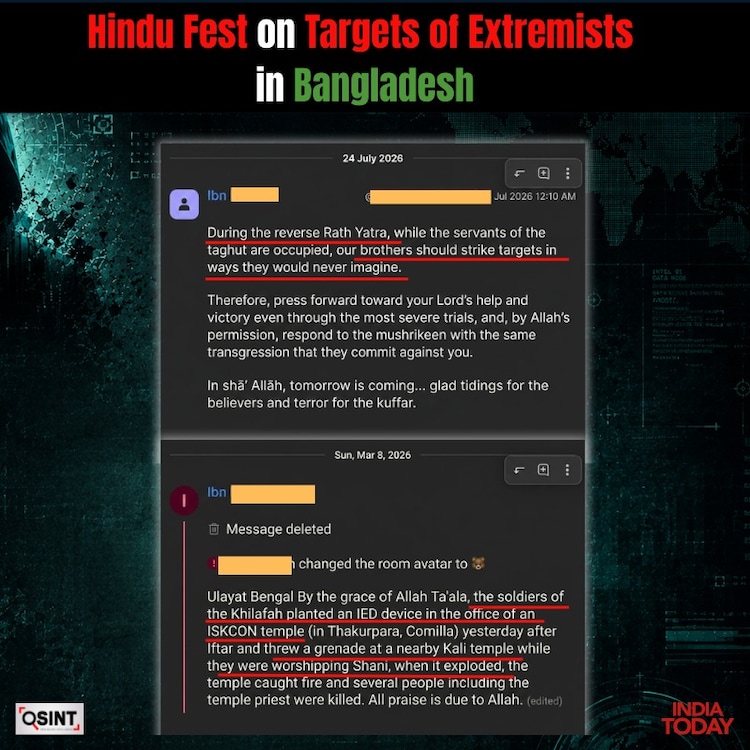
As devotees prepared for the Bahuda Yatra, the return leg of the Lord Jagannath Rath Yatra, a message appeared on a secret online group carrying a chilling call to action.
"During the reverse Rath Yatra, while the servants of the Taghut are occupied, our brothers should strike targets in ways they would never imagine."
Just days earlier, another post on the same ecosystem claimed responsibility for an attack in Bangladesh's Comilla district. It alleged that members had planted an improvised explosive device (IED) inside an ISKCON temple office in Thakurpara before throwing a grenade at a nearby Kali temple during Shani worship. India Today has not independently verified these claims.
However, these were not isolated posts.
India Today's Open Source Intelligence (OSINT) team found a structured Bangladesh-linked extremist ecosystem operating on Matrix, a decentralised communication platform. Publicly accessible channels were used to identify potential targets, discuss operations, circulate propaganda, recruit supporters and publicise claimed attacks while spreading extremist narratives.
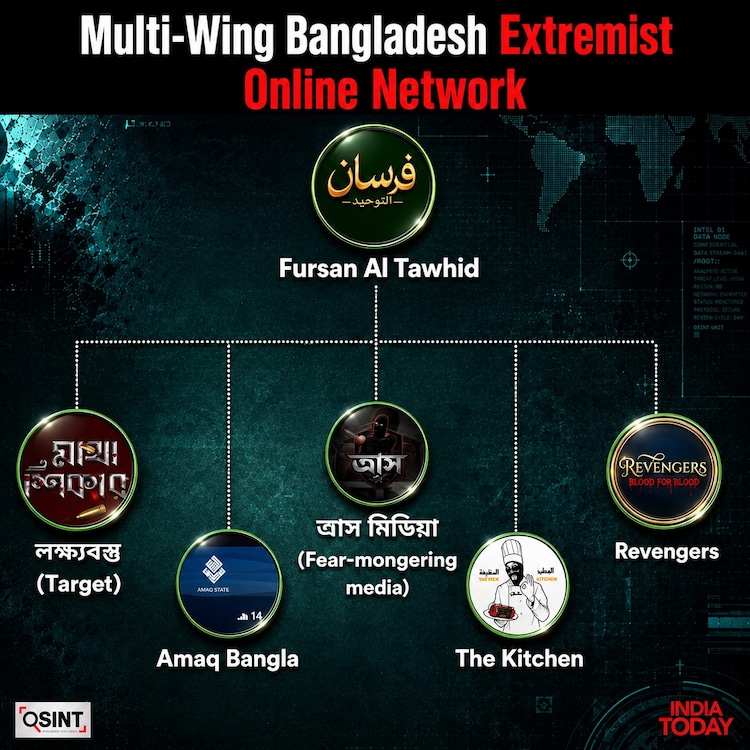
At the centre of this ecosystem is Fursan Al-Tawhid, a pro-Islamic State online extremist network that describes itself as "a vibrant hope for the Mujahideen (Islamic fighters) and Muslims of Hind, Bengal and Arakan."
Arakan is Myanmar's Rakhine State, which borders Bangladesh and is home to a large Rohingya Muslim population.
The group also portrays itself as "the centre of unity and the core point of Ghazwat al-Hind", - an extremist interpretation of a “prophesied battle” for India.
The ecosystem operates through at least five specialised Matrix channels, each serving a distinct purpose.
One channel, Target, was used to identify and discuss potential targets. Amaq Bangla, adopting the branding of the Islamic State's Amaq propaganda network, functioned as the media arm, publishing ideological material, operational messaging and claims of attacks. Tras, the Bengali word for "terror" or "fear", focused on spreading intimidation through extremist content. The Kitchen acted as a repository for operational manuals, including material related to improvised explosive devices and other attack methods. Another channel, Revengers, promoted retaliation narratives, glorified violence, and encouraged followers to avenge perceived enemies.

Why the Matrix? The platform's decentralised architecture makes the network harder to disrupt.
Unlike WhatsApp or Telegram, which are controlled by a single company and operate through centralised infrastructure, Matrix is an open source communication protocol that allows anyone to create and operate their own server, known as a homeserver.
The material reviewed suggests the network extends well beyond ideological messaging.
Posts examined also included target identification, attack-related discussions, propaganda, recruitment material and claims of responsibility for attacks.
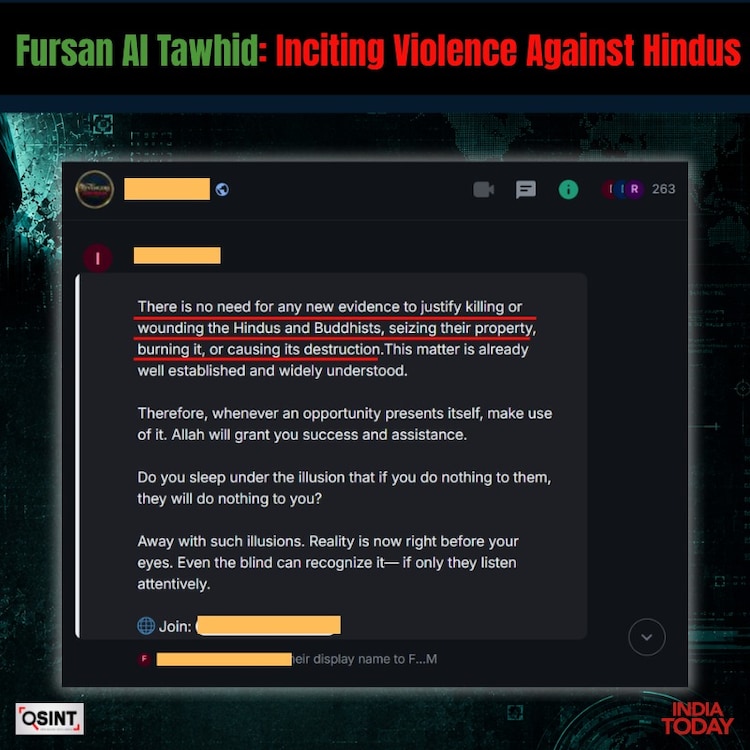
One propaganda document declares:
"There is no need for any new evidence to justify killing or wounding the Hindus and Buddhists."
Another message urges followers to exploit opportunities to launch attacks, while a separate post calls on supporters to "prepare, resist and take revenge."
India Today also identified posts naming prominent Bangladeshi industrialists, business groups, banks, commercial establishments and media organisations, indicating that the group's list of perceived adversaries extends far beyond religious communities. Other messages encouraged attacks during Hindu religious events, including the Rath Yatra, while also claiming responsibility for attacks on Hindu places of worship.
The messaging consistently draws on terminology commonly associated with “jihadist” ideology. It refers to non-believers as Kuffar (disbelievers), labels certain Hindu organisations as Mushrik (polytheists), and invokes concepts such as Bay'ah (pledge of allegiance), Jama'ah (the organised group), Taghut (a term extremists use for governments or authorities they consider illegitimate) and Al-Wala wal-Bara (loyalty to believers and disavowal of non-believers) to frame recruitment efforts and justify violence.
- Ends
Published By:
bidisha saha
Published On:
Jul 29, 2026 20:03 IST