2 hours ago
Iran launched drones at Bahrain and a tanker was attacked in the Strait of Hormuz. The incidents signalled renewed Gulf escalation despite a tentative US-Iran understanding.

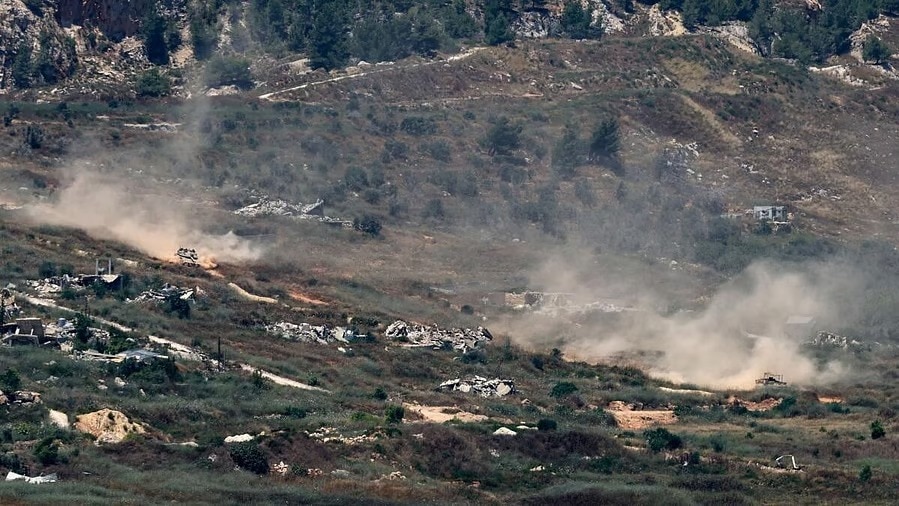
Image used for representational purposes only

Dubai,UPDATED: Jun 27, 2026 16:18 IST
Iran launched a drone attack targeting Bahrain and a ship in the Strait of Hormuz separately came under attack on Saturday, in what appeared to be Tehran's response to overnight US airstrikes. The incidents across the Persian Gulf highlighted the risk of the conflict spiralling again, even after Iran and the US reached an interim deal aimed at securing a final accord to end the war.
The US airstrikes had followed an Iranian drone attack on a ship trying to leave the strait on Thursday, part of a series of attacks that have shaken the uneasy ceasefire. Separately, a multinational maritime body overseen by the US Navy said on Saturday that it would expand a route near Oman's shores in the strait to allow both inbound and outbound traffic, a move likely to open up a fresh point of tension with Tehran.
Bahrain said a "number of Iranian drones" targeted the country and described the attack as "a flagrant threat to the security of citizens and residents". Iran's targeting of Bahrain was seen as notable as the kingdom is one of Tehran's strongest critics and hosts the US Navy's 5th Fleet. It had also hosted US Secretary of State Marco Rubio for a meeting of the Gulf Cooperation Council's foreign ministers, which ended with a call for an end to Iran's attacks and for the strait to remain completely open.
Earlier on Saturday, Iran's paramilitary Revolutionary Guard said in a statement carried by the state-run IRNA news agency that it had targeted several locations "of the US terrorist army in the region". The statement did not say which places had been targeted.
Meanwhile, the British military's United Kingdom Maritime Trade Operations centre said a tanker was attacked in the strait on Saturday. It said the crew was safe and there was no environmental damage. No one immediately claimed responsibility for the strike, though suspicion quickly fell on Iran. Soon after that report, the Joint Maritime Information Centre said the route near Oman's shores was being expanded to allow ships to move in both directions.
Iran has said ships must obey its orders and has warned that it will begin charging fees for transit through the strait, through which a fifth of all oil and natural gas once passed. The US and Gulf Arab states have rejected Iran's demands. Although the strait lies in the territorial waters of Iran and Oman, it is regarded internationally as an international waterway. In its notice, the Joint Maritime Information Centre warned that the threat to ships in the region was "substantial" and said, "Mariners are advised of the existence of mines and should expect a naval presence as clearance operations continue."
Saturday's developments brought together a drone attack on Bahrain, an attack on a tanker in the Strait of Hormuz and a fresh warning to shipping, underlining the renewed strain in the region despite the interim understanding between Iran and the US.
With PTI Inputs
- Ends
Published By:
India Today Web Desk
Published On:
Jun 27, 2026 16:18 IST