3 weeks ago
Iran has discovered more than 7.5 trillion cubic feet of natural gas in a field south of Fars Province, Oil Minister Mohsen Paknejad said on Sunday.
The discovery adds to Iran’s vast energy reserves at a time when war, sanctions and a US blockade have disrupted its energy industry. Its value will depend on whether Tehran can secure the investment and technology needed to bring the field into production.
Iran has some of the world’s largest gas reserves but consumes most of its output. Supply shortages have repeatedly caused power cuts and industrial disruptions.
The situation has worsened since Israel and the United States launched their joint war against Iran on February 28. Strikes on energy infrastructure have compounded problems caused by ageing facilities and sanctions. Iran said in July that the attacks had cut daily gas production by about 230 million cubic metres.
SECOND MAJOR FIND IN SOUTHERN IRAN
Sunday’s announcement follows another major discovery in southern Iran in October 2025.
Paknejad said exploration at the Pazan field had identified 10 trillion cubic feet of gas and at least 200 million barrels of crude oil. The field lies in southern Fars Province and extends towards Bushehr Province.
Iran estimated that about 7 trillion cubic feet of the gas could be recovered, with production expected to begin in about 40 months.
The discoveries underscore Iran’s energy wealth as well as its difficulty in exploiting it. Sanctions have restricted foreign investment and access to modern technology, while much of the country’s infrastructure is decades old.
Iran also depends on the South Pars field, shared with Qatar, for most of its gas production. The field has been targeted during the conflict.
OIL EARNINGS RISE AS EXPORTS COME UNDER PRESSURE
The latest discovery comes days after Iranian media reported that Tehran had transferred $7.5 billion in foreign currency earnings from oil sales to its central bank during the first four months of the Iranian year.
The amount was 50 per cent higher than in the corresponding period of 2025, the semiofficial Fars news agency reported, citing Oil Ministry data. Officials expect it to meet the government’s foreign currency requirements until late December.
The figures cover part of the period after the war began, showing that Iran continued to earn heavily from oil despite attacks and shipping restrictions. That revenue is now under pressure.
The United States reimposed its blockade of Iranian ports and shipping on July 13 after an interim agreement to halt the war collapsed. The measure seeks to cut off oil exports, Tehran’s main source of hard currency.
Iranian exports have fallen since mid-July. Kpler data showed no visible passage of supertankers carrying Iranian crude through the Strait of Hormuz, although many vessels involved in sanctioned trade turn off their tracking systems.
Iranian crude held in floating storage outside the blockade zone has fallen from about 105 million barrels to 80 million barrels. Trade sources estimated that only around 30 million barrels remained in Asian waters, half the usual volume.
HORMUZ CLOSURE DEEPENS EXPORT SQUEEZE
At the centre of the supply disruption is the Strait of Hormuz, the main maritime route connecting Iran’s Gulf ports with buyers in Asia.
Iran has linked its reopening to the conditions of an interim agreement signed with the United States on June 17. Iranian negotiator Mohammad Baqer Qalibaf said the strait would remain closed until Washington lifted its blockade and oil sanctions, released Tehran’s frozen assets and ended military operations and threats.
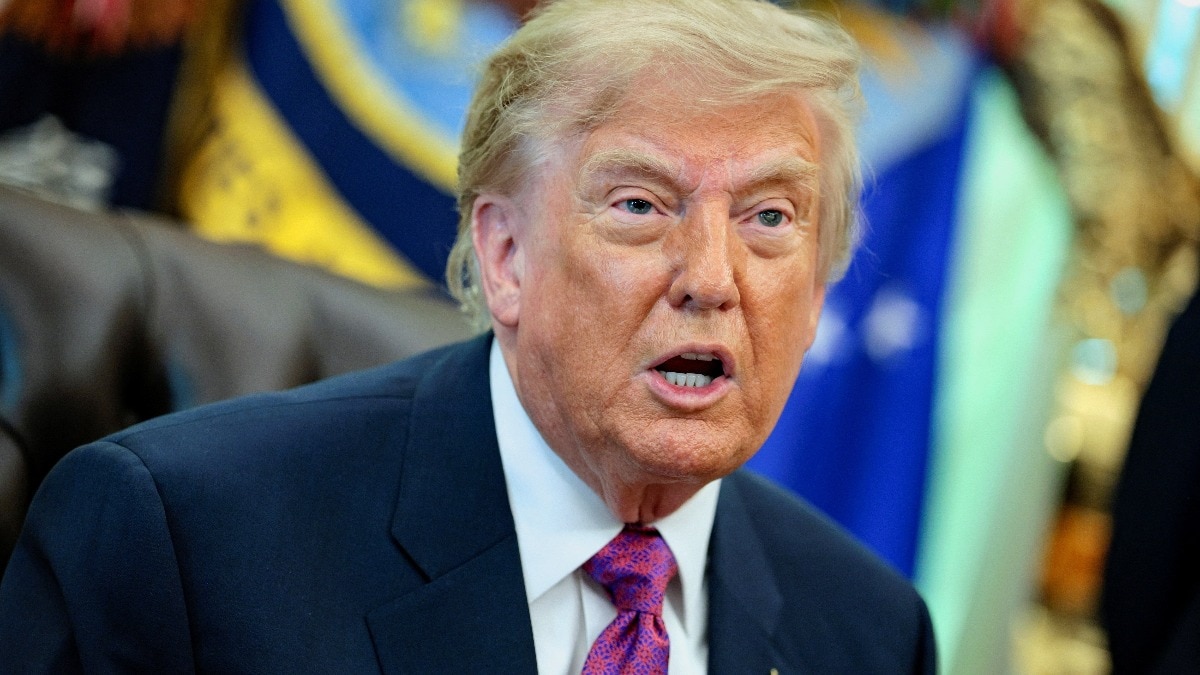
The agreement collapsed over control of the waterway. US President Donald Trump declared it “over” on July 7, and Iran suspended it a week later.
Tehran has since allowed some Iraqi oil tankers to pass following requests from Baghdad, but wider commercial traffic remains severely restricted.
Before the war, about a fifth of the world’s oil and liquefied natural gas passed through the Strait of Hormuz. Major Gulf producers depend on the route, while Qatar sends almost all its LNG through it.
Iran’s latest discovery offers long-term potential. Its more immediate challenge is bringing its reserves into production and getting its oil and gas to buyers.
- Ends
Published By:
Aprameya Rao
Published On:
Aug 23, 2026 17:46 IST