 1 month ago
Narendra Modi urges citizens to avoid non essential gold buys for a year, jewellery stocks fall sharply, industry meets PMO as gold imports and bullion demand face policy and FX concerns
By Anshul May 12, 2026, 7:25:21 AM IST (Published)
3 Min Read
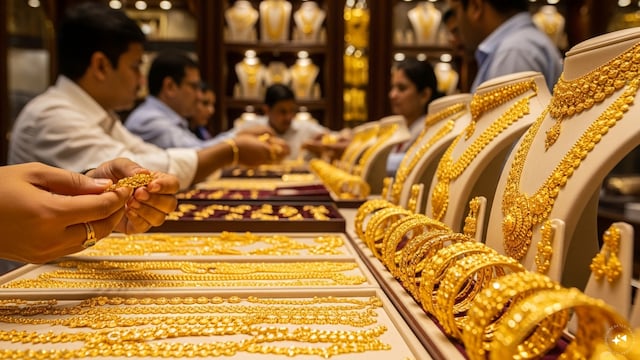
Prime Minister Narendra Modi’s appeal to citizens to avoid non-essential gold purchases for a year is expected to be a key agenda item at Tuesday’s (May 12's) meeting between jewellery industry associations and officials from the Prime Minister’s Office (PMO), according to sources familiar with the matter.
The meeting comes a day after listed jewellery stocks witnessed sharp declines following the Prime Minister’s remarks during a public event in Hyderabad, where he urged people to defer gold purchases for weddings and reduce discretionary consumption to help conserve India’s foreign exchange reserves amid global uncertainty.
Shares of major jewellery retailers fell sharply
on Monday (May 11), with Titan Company declining 7%, while Kalyan Jewellers dropped more than 9%. Shares of Senco Gold, Thangamayil Jewellery and P N Gadgil Jewellers also ended lower by 6% to 8%.
Combined, the companies saw nearly ₹35,000 crore erased from their market capitalisation during the session.
Alongside the appeal on gold consumption, Modi also called for measures such as avoiding unnecessary travel and encouraging work-from-home practices to reduce pressure on fuel imports and foreign exchange outflows.
The government’s concerns come at a time when India’s gold imports have already slowed sharply. India, the world’s second-largest gold consumer, imported an average of around 60 tonnes of gold per month in FY26, with imports valued at nearly $6 billion monthly.
However, imports have declined significantly in recent months. After touching nearly 100 tonnes in January 2026, imports fell to around 65–66 tonnes in February, then to about 20–22 tonnes in March. April imports are estimated at roughly 15 tonnes, among the lowest monthly levels recorded in almost three decades outside the pandemic period.
Industry participants have linked the decline not only to elevated gold prices but also to operational disruptions. Delays in customs clearances, uncertainty over tax treatment, and the renewal process for authorised importing banks reportedly affected bullion shipments. Banks had also paused imports after customs authorities sought integrated GST payments on shipments, according to industry officials.
C Vinod Hayagriv, Managing Director of C. Krishniah Chetty Group, said India imports nearly 800 tonnes of gold annually, with industry estimates suggesting that around 200 tonnes are held as passive bullion investments each year.
He said such purchases put pressure on foreign exchange reserves without significantly contributing to economic activity, while the gems and jewellery sector contributes close to 7% of India’s GDP and supports more than 5 million livelihoods through manufacturing, exports and retail activity.
Hayagriv added that restricting raw bullion sales to GST-registered buyers could help curb non-productive imports, improve transparency and strengthen the organised jewellery ecosystem over the longer term.
Meanwhile, Prithviraj Kothari, Managing Director of RiddiSiddhi Bullions Ltd. and President of the India Bullion and Jewellers Association, said the Prime Minister’s comments were likely to have a “psychological rather than structural” impact on demand.
According to Kothari, India’s wedding-driven gold consumption remains deeply embedded culturally, making a sharp fall in purchases unlikely despite the appeal. However, he said the comments could encourage some discretionary buyers to shift toward lighter jewellery, digital gold and gold exchange-traded funds, which may reduce immediate import pressure.
He also noted that broader global factors — including crude oil prices, geopolitical tensions in West Asia and movements in the US dollar — would continue to influence gold prices and India’s import bill more significantly than sentiment-driven changes in consumption.