1 hour ago
Prime Minister Narendra Modi will attend the SCO Summit in Bishkek and meet regional leaders. Experts say the visit could turn India's Central Asia outreach into practical gains on connectivity and cooperation.

Bishkek,UPDATED: Aug 30, 2026 17:20 IST
Prime Minister Narendra Modi's visit to Kyrgyzstan for the Shanghai Cooperation Organisation (SCO) Summit is being seen by experts as a chance to give fresh momentum to India's engagement with Central Asia. They say the visit should focus on practical steps to improve connectivity with the region while also widening cooperation in healthcare, tourism, education and digital infrastructure.
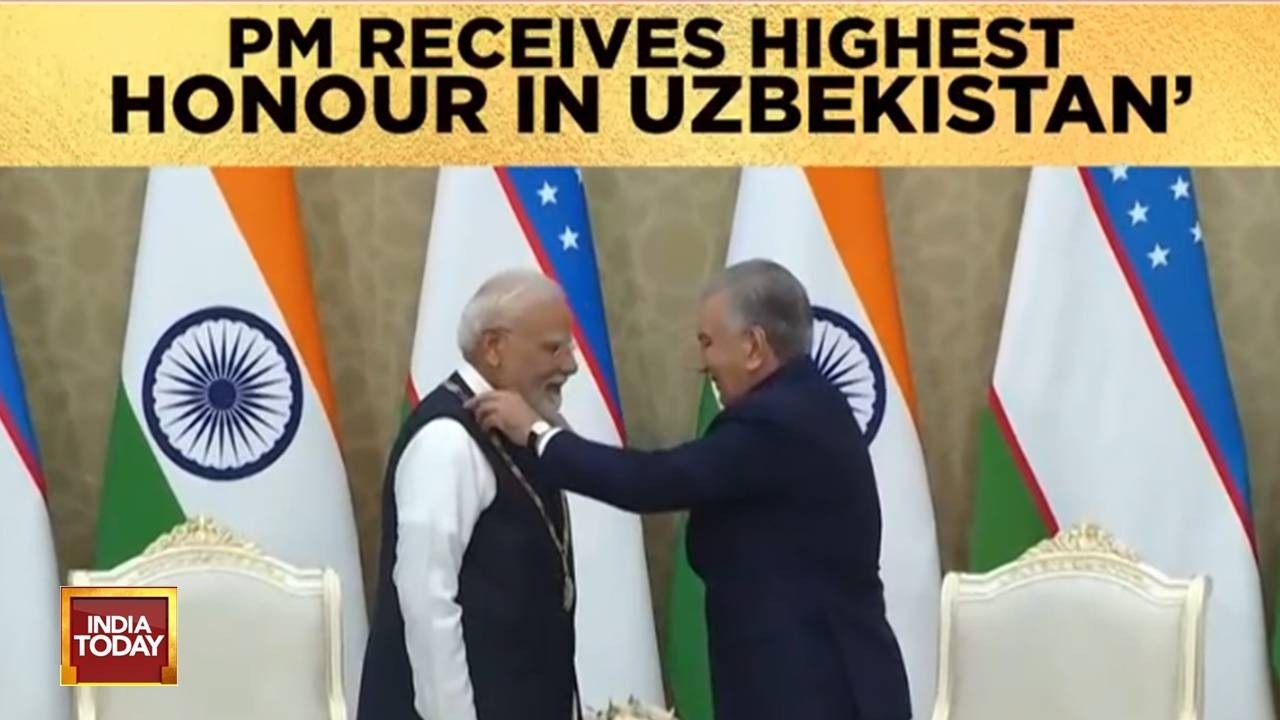
Modi will be in Bishkek for the 26th SCO Summit on August 31 and September 1 after a two-day visit to Uzbekistan. He is also expected to hold bilateral meetings with SCO leaders on the sidelines, including Kyrgyz President Sadyr Zhaparov. While addressing the summit, Modi will highlight India's priorities of 'Security, Connectivity and Opportunity', according to the Ministry of External Affairs.
The 10-member SCO was founded in 2001 by China, Russia, Kazakhstan, Kyrgyzstan, Tajikistan and Uzbekistan, with India and Pakistan joining as full members in 2017, followed by Iran in 2023 and Belarus in 2024. Kyrgyzstan, which is chairing the SCO this year, is holding its chairmanship under the motto, '25 Years of the SCO: Together for Sustainable Peace, Development and Prosperity.'
Shairbek Dzhuraev, co-founder and executive director of Crossroads Central Asia, an independent research institute in Bishkek, said the summit comes at a time when Central Asia is drawing greater attention as ties within the region improve and outside partners focus more on transport connectivity and mineral resources. He said the more substantive outcomes of Modi's visit were likely to come from bilateral engagement, as Central Asian countries look to diversify their external partnerships and attract more investment.
Dzhuraev cautioned against presenting India's engagement with Kyrgyzstan as an attempt to counter China or Russia. "Bishkek is not looking to India as a counterweight to China or Russia, and framing the visit in those terms will land poorly here," he told PTI over email. He said Kyrgyzstan was primarily interested in hosting a successful summit that raised its diplomatic profile.
Anusua Ganguly, a research scholar at Jamia Millia Islamia University in New Delhi, said India's engagement with Central Asia also needed to address the region's geographical disconnect with India. "One of the biggest barriers remains the geographical disconnect between India and the Central Asian republics," she said, adding that the Chabahar port and the North-South Transport Corridor, or INSTC, offer alternative routes. "The priority now should be to make these routes commercially viable, predictable and efficient," she said.
The 7,200-km multi-modal INSTC links Mumbai with St Petersburg via Iran while bypassing the Suez Canal, and has gained added significance in recent times. This year, the Israeli-American joint strike on Iran destroyed the Customs House and other structures at Bandar Anzali port on the Caspian Sea coast, a key transit hub on the corridor. The US-Iran conflict, which began on February 28, has also disrupted energy supply chains, particularly around the Strait of Hormuz, underlining the need to keep shipping lanes open and secure.
Ganguly said the continuation of the Russia-Ukraine war and changing regional dynamics had pushed Central Asian republics to diversify their external partnerships, giving India an opportunity to build a stronger economic presence in pharmaceuticals, IT, digital public infrastructure, human-resource development and capacity building. She also suggested expanding air connectivity, university partnerships, scholarships, medical cooperation, digital technologies and entrepreneurship between Bishkek and New Delhi. Culture, she said, could be a relatively low-cost way to strengthen ties if such efforts were turned into sustained institutional partnerships. She added that India's 'Connect Central Asia' policy provides a framework for sustained engagement, but needs to translate into commercially viable connectivity, economic partnerships and people-to-people links.
Dzhuraev said one of the most significant existing links between India and Kyrgyzstan was education, with more than 10,000 Indian students enrolled in Kyrgyz universities, mostly in medical programmes. He said accreditation, quality assurance, student welfare and recognition of qualifications in medical education were still being handled through separate regulatory systems in both countries without a bilateral framework, and said a decision on this could be a "concrete deliverable". He also said healthcare cooperation could grow through medical tourism, noting that more than 1,000 Kyrgyz citizens travel to India for medical services every year. Although a bilateral health memorandum has existed since 2019, patient referral, aftercare and institutional linkages remain largely unstructured, he said.
Tourism and connectivity are also areas where the two sides can deepen cooperation, Dzhuraev said. "Direct Delhi-Bishkek flights already operate, but at a low frequency," he said. He also pointed to digital public infrastructure as another area of bilateral cooperation and praised India's model of identity and payments.
Overall, experts said Modi's visit should aim for practical and implementable outcomes. Dzhuraev said India's relationship with Kyrgyzstan may not be broad in overall scope, but there was considerable room to strengthen existing links. "The tasks are organisational before they are financial," he said. In that sense, the visit is being seen as an opportunity to build stronger economic and people-to-people ties alongside India's security engagement with Central Asia.
With PTI Inputs
- Ends
Published By:
India Today Web Desk
Published On:
Aug 30, 2026 17:20 IST