1 hour ago
Omani co-pilot Hammam al-Hammami allegedly tried to bring down a flydubai flight after attacking its Indian captain with an axe. Oman hasn't been linked to any big Islamist terror plot till now. So, how and where did al-Hammami get radicalised?
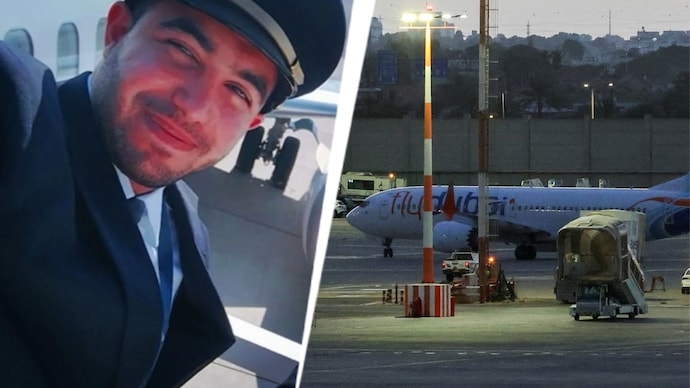
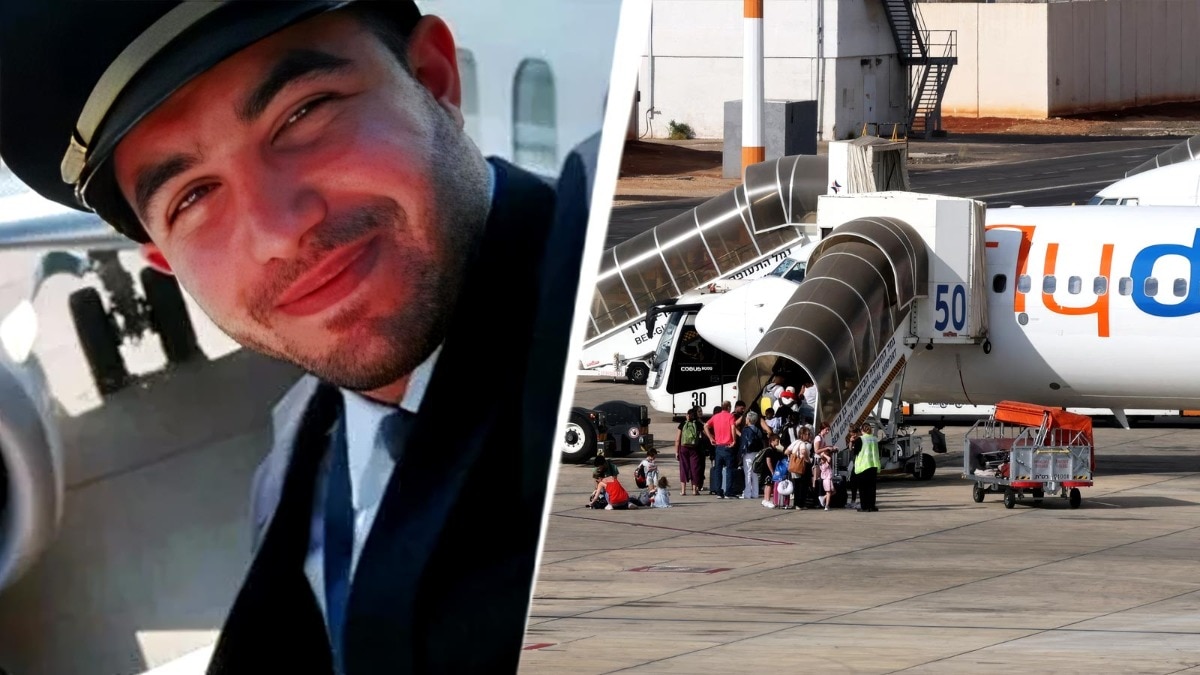
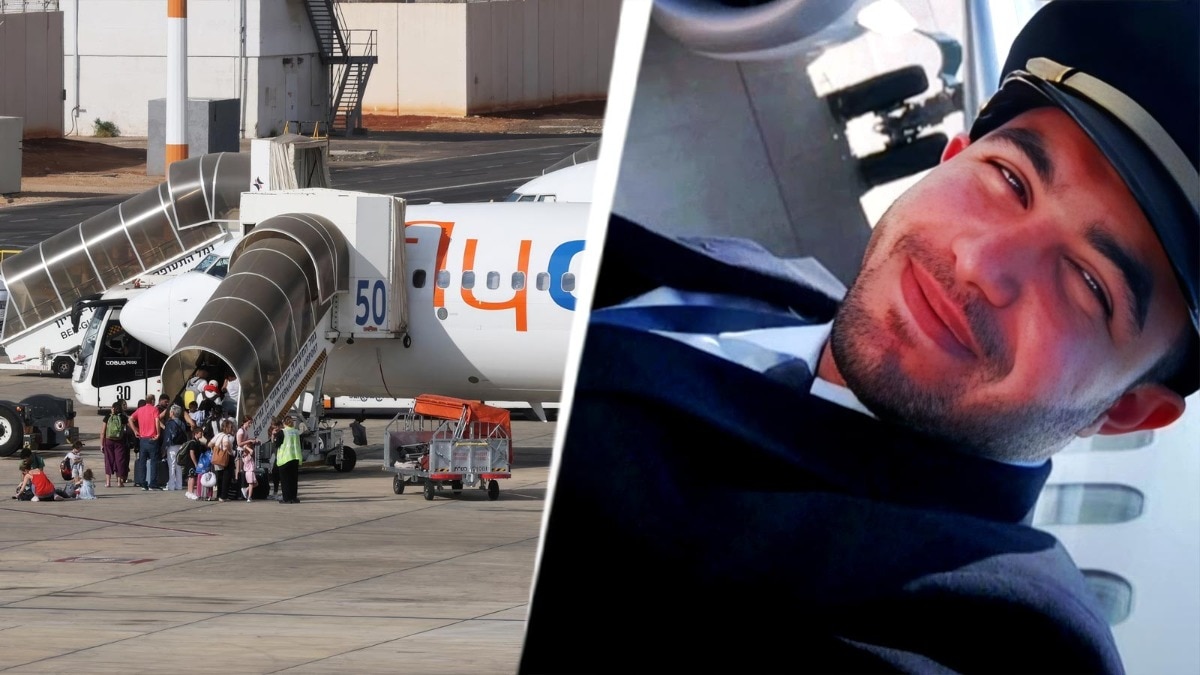
Hammam al-Hammami, the flydubai co-pilot, frequently travelled to Syria as a teenager during its civil war. (File)
A request to pray in the cockpit isn't unusual. But on flydubai Flight FZ1073, bound from Dubai to Tel Aviv, it was allegedly used by the Omani co-pilot as a ruse to attack the captain. The attack is reported to be part of a larger plot to crash the aircraft carrying more than 170 people, mostly Israelis. While a probe is on, initial reports suggest that the co-pilot, Hamam al-Hammami, had been radicalised. That's quite rare because Oman has rarely been linked to Islamist terror networks.
Hamam al-Hammami, the 29-year-old Omani co-pilot, attacked Indian captain Smit Machchhar with the cockpit crash axe on September 30 and tried to seize control of the aircraft. The UAE has described the incident as an attempted terrorist operation, and investigators are trying to put pieces of al-Hammami's radicalised ambitions and pursuits. The emerging trail, based on news reports, doesn't give a definitive answer. But it stretches from Oman to war-torn Syria to Australia.
Machchhar said al-Hammami asked for permission to pray during the flight and moved behind the captain's seat. As Machchhar flew the aircraft, Hammami allegedly attacked him from behind, striking him repeatedly with the emergency axe. Despite his injuries, Machchhar managed to unlock the cockpit door. Not once, but twice. Smit succeeded the second time, allowing the passengers to overpower al-Hammami and take control of the plane. The aircraft was eventually diverted to Tabuk in Saudi Arabia.
While Indian captain Machchhar, who fought through serious injuries to open the cockpit, has been hailed as a hero, his Omani colleague is now at the centre of a multinational terrorism investigation. A senior Emirati source has reportedly said the UAE is seeking the harshest possible punishment for al-Hammami, including the death penalty.
According to reports, Hamam al-Hammami's radicalisation trail began before he joined flydubai. He was blacklisted for the same reason by Oman Air, the national flag carrier of the Sultanate of Oman, which is known for its tough counterterrorism posture and low exposure to jihadist violence. Sources told media outlets that Oman Air had barred al-Hammami from flying because of "possession of extremist material".
Not just that, al-Hammami was even made to undergo a deradicalisation programme, according to The Wall Street Journal.
WHY OMAN IS AN UNLIKELY HOME FOR JIHADI TERROR
Al-Hammami is a pilot who has lived abroad and flown for international airlines. This makes his reported radicalisation stand out, even more against Oman's religious and political landscape.
Oman is predominantly Ibadi, a branch of Islam distinct from both Sunni and Shia traditions. Researchers have long linked the country's relative immunity from jihadi violence to its traditions of religious coexistence, political stability and non-interventionist diplomacy.
An analysis by the Middle East Institute noted that Oman "lacks the common attributes of extremist growth". It pointed to a national fabric shaped by "tolerance, dialogue, and non-violence".
US-based terrorism researchers Aaron Zelin and Elizabeth Dent of the Washington Institute described Omani involvement in jihadism as "minuscule", with only a handful of known cases involving Omanis joining jihadi groups in Afghanistan, Iraq and Syria over several decades.
Until recently, that record was extraordinary for a country sharing a border with Yemen, where al-Qaida and Islamic State (IS) have operated.
The first major jihadi terror incident for Oman was in July 2024, when three Omani brothers attacked a Shia mosque in Muscat in an assault claimed by the IS. Six people were killed. The Washington Institute described it as the first successful jihadi attack in modern Oman and assessed it as likely an outlier rather than evidence of a broad extremist movement.
As recently as 2023, the US State Department recorded no terrorist incidents in Oman and described the country as an important counterterrorism partner.
AL-HAMMAMI'S TERROR TRAIL OUTSIDE OMAN
Al-Hammami's life and education took him outside Oman. This exposed him to different countries and environments, including Syria during its long civil war and Australia as a student.
He was born to an Omani father and Syrian mother, according to The Wall Street Journal. He travelled frequently to Syria as a teenager during its long civil war (2011-2024). Investigators from multiple countries are now examining whether his radicalisation began in Syria, where jihadi groups flourished alongside numerous other armed terror groups.
Israeli Hebrew-language daily newspaper, Israel Hayom, citing sources familiar with the investigation, reported that authorities were examining a possible Iranian link through a Syrian militant group allegedly established by Tehran during former President Bashar al-Assad's rule. Investigators are looking at whether al-Hammami came into contact with the group during his time in Syria.
Strategic affairs expert Brahma Chellaney, in a post on X, argued that Hammami "was radicalised not in Oman but in Syria", where he spent time amid the prolonged civil war against the Assad regime.
Chellaney described the covert US campaign against Assad as the CIA's "largest covert operation" since its campaign against Soviet forces in Afghanistan in the 1980s. He cited Hammami's case as an example of how Western attempts to replace secular authoritarian regimes with "more Islamist alternatives can come back to haunt international security".
Not just Syria, al-Hammami's time in Australia is also under scrutiny.
Hammami studied in Australia's Melbourne between 2015 and 2017. Australia's Joint Counter Terrorism Team, involving the Australian Federal Police, Victoria Police and ASIO, is now investigating his links to the country and whether radicalisation occurred during his time there, according to a report in ABC Australia.
Australia, unlike Oman, has repeatedly confronted home-grown jihadi activity, including in Melbourne. In December 2016, while al-Hammami was studying in the city, Australian authorities foiled an IS-inspired plot to attack Christmas crowds around Federation Square, Flinders Street Station and St Paul's Cathedral with explosives and other weapons. This is not to say that he was linked to those active terror networks and incidents. However, investigators are probing if the co-pilot was in any way linked to the networks there.
Whatever al-Hammami's early years in Oman looked like, by the time he returned from abroad, his behaviour was enough for Oman Air to bar him from a flying job. That was due to concerns over his extremist views.
OMAN AIR HAD RAISED THE RED FLAG ON AL-HAMMAMI
Al-Hammami joined Oman Air's cadet pilot programme in 2018 and, after completing his training, began flying as a co-pilot in 2022, according to The Wall Street Journal (WSJ). By 2024, Omani authorities had become concerned about his interest in extremist websites and radical ideology. Al-Hammami was barred from flying, put through a deradicalisation programme and moved to an administrative job, according to the WSJ report.
ABC News, citing senior intelligence and law-enforcement officials, separately reported that al-Hammami was found with extremist material while working as a co-pilot trainee and was suspended from flying for a year.
A video linked to al-Hammami's social media account ended with photographs of al-Qaida terrorists Ayman al-Zawahiri and Humam Khalil Abu-Mulal al-Balawi, who carried out the 2009 suicide bombing that killed seven CIA personnel in Afghanistan.
The Wall Street Journal reported that although Omani authorities had identified al-Hammami's radical views and barred him from flying, those concerns were "not broadly shared" with other governments or airlines.
When UAE-based airline flydubai hired al-Hammami in February 2026, the airline conducted a criminal background check but did not contact Oman to verify his employment history, according to people familiar with the process. Al-Hammami was eventually assigned to flydubai's sensitive Dubai-Tel Aviv route and flew it several times, even though his Omani nationality barred him from flying into Israel.
Unlike the UAE, Oman does not have diplomatic relations with Israel. The UAE normalised ties with the Jewish nation under the Abraham Accords in 2020.
Hammam al-Hammami being in the cockpit of a Tel Aviv flight is an intelligence failure on multiple levels, including of Israeli intelligence services.
AL-HAMMAMI PLANNED THE ATTACK BEFORE JOINING FLYDUBAI: REPORTS
Al-Hammami didn't plan the attack after joining flydubai. He chose the airliner because he could fly to Tel Aviv. He planned to crash the plane into a skyscraper in Israel or the Ben Gurion Airport, suggest reports.
He planned the attack before flydubai hired him and reportedly sought a job with the airline after searching for carriers that flew to Tel Aviv, according to a Reuters report that cited two Israeli officials familiar with the UAE investigation.
During a flydubai trip to Ben Gurion Airport in June, al-Hammami allegedly gathered information and planned an attack for July, according to Israel's Channel 12.
He reportedly abandoned the July attack at the last moment because he knew a crew member on that flight. Reuters also reported that al-Hammami aborted an attempt and added he was thought to know someone aboard.
HOW DID HAMMAM AL-HAMMAMI GET RADICALISED?
There is no straight answer to that yet. His years in Syria, amid the civil war, provide one possible explanation. His time in Australia is being investigated as another. His internet activity has come under the scanner and online networks could very well be another dimension. Authorities are still examining whether he had connections to an extremist organisation or whether he was a lone wolf. The investigations so far have not established links to a foreign power or major terrorist organisation.
Oman, which has not reported any major organised terrorist activity barring the 2024 killings, might not have been the ground of al-Hammami's jihadi indoctrination. His foray into jihadi radicalisation could have happened in Syria or Australia or even through the internet. And the most significant question is how, after being barred from flying in Oman, did he get into an airline's cockpit in neighbouring UAE? Was Hamam al-Hammami alone all this while? The answers will come out soon.
- Ends
(Written by Sushim Mukul)