1 month ago
The contrasting remarks by JD Vance and Marco Rubio have drawn attention because both are viewed as potential contenders for the Republican presidential nomination in 2028.
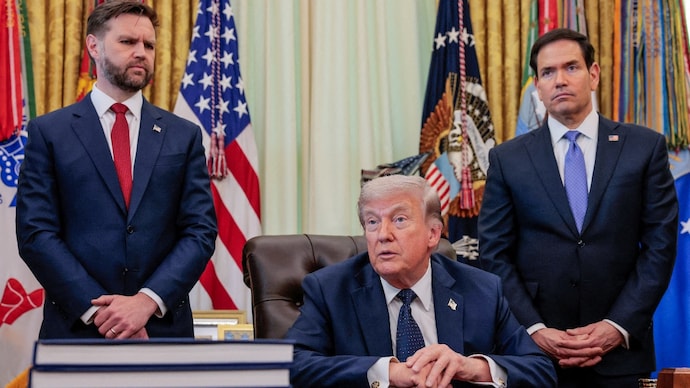
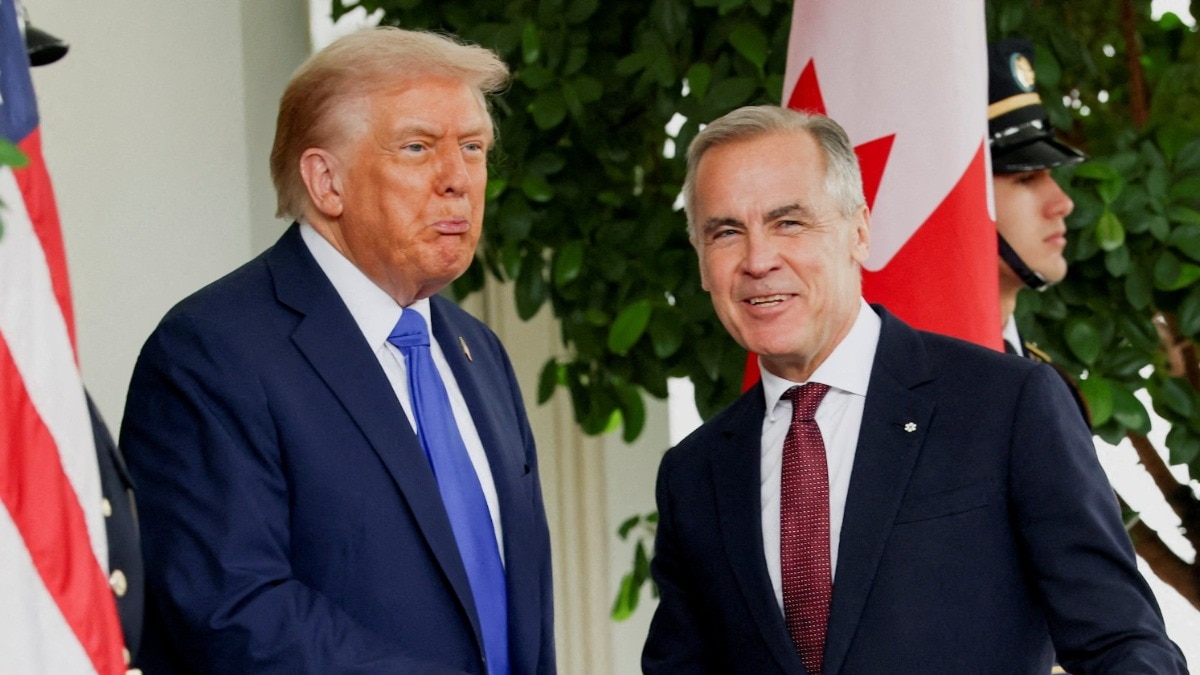
Both Vance and Rubio were tasked with promoting the preliminary US-Iran peace framework reached earlier this month. (File Photo: Reuters)
The Donald Trump administration has worked to present a united front as it steers negotiations with Iran following months of military confrontation. However, as Vice President JD Vance and Secretary of State Marco Rubio fanned out across different parts of the world to defend America's war on Iran, they often delivered different messages -- particularly when it came to Israel, Lebanon and Washington's role in the Middle East.
The differing emphasis has fuelled debate about whether the administration is truly speaking with one voice or if long-standing ideological divides within the Republican Party are beginning to surface. While the White House insists there is no daylight between its senior officials, the contrasting remarks by Vance and Rubio have drawn attention because both are viewed as potential contenders for the Republican presidential nomination in 2028.
DIFFERENT MESSAGES ON IRAN WAR
Both Vance and Rubio were tasked with promoting the preliminary US-Iran peace framework reached earlier this month. But while their destination was the same -- convincing allies and partners that the administration's approach would deliver stability -- their rhetoric reflected different priorities.
Vance, who travelled to Switzerland for talks with Iranians, repeatedly struck an optimistic tone about diplomacy. Speaking to reporters, he portrayed negotiations as an opportunity to reshape relations between Washington and Tehran after decades of hostility. He also floated the possibility that Gulf nations could eventually play a role in financing Iran's reconstruction if peace holds, framing economic engagement as a way to reinforce long-term stability.
The Vice President went even further in discussing the prospect of future cooperation, revealing that the US had invited an Iranian intelligence official to serve as a deconfliction liaison with the Pentagon in Qatar.
Meanwhile, Rubio projected a more cautious approach during his tour of the Gulf, where he met officials in the United Arab Emirates, Kuwait and Bahrain. Rather than focusing on reconstruction or expanded engagement with Tehran, Rubio concentrated on reassuring long-standing regional partners who remain sceptical of any agreement they believe could leave Iran with greater influence.
Speaking during the trip, Rubio dismissed the idea that Gulf states would be expected to finance Iran's rebuilding.
"While we want a deal, we don't want a deal at any price," he said.
He also stressed that any agreement must fully protect both US interests and the security concerns of Washington's allies in Middle East.
ISRAEL BECOMES THE BIGGEST DIVIDING LINE
The contrast became even more apparent in how the two officials addressed Israel's military campaign in Lebanon.
During remarks at the White House, Vance criticised Israeli strikes on civilian infrastructure in Beirut, arguing that such operations risked complicating broader US-led efforts to secure a lasting peace across the region.
Rubio adopted a different tone.
Throughout his Gulf visit, he defended Israel's military actions, repeatedly describing them as a response to attacks carried out by Hezbollah. When asked directly about Vance's criticism, Rubio declined to engage with the disagreement before pointing to a recent Hezbollah attack on an Israeli checkpoint.
TWO CAMPS IN REPUBLICAN PARTY?
Despite those denials, some foreign policy analysts believe the contrasting remarks reflect broader ideological currents within today's Republican Party.
Michael Rubin, a senior fellow at the American Enterprise Institute, said that Vance and Rubio represent different traditions of conservative foreign policy.
"At their core they represent different strains," he told news agency Reuters.
Their backgrounds help explain those differences.
Before entering the White House, Vance frequently questioned prolonged overseas military engagements, arguing that foreign wars often imposed heavy financial and human costs on the United States.
Rubio built his Senate career advocating a far more interventionist approach, consistently supporting tougher policies towards adversaries including Iran, Russia and Cuba.
WHITE HOUSE INSISTS THERE IS NO DIVISION
Administration officials quickly rejected claims that conflicting messages reflected internal disagreement.
"There is one camp -- President Trump's camp -- and the entire administration is fully behind the President's efforts to ensure Iran can never possess a nuclear weapon," White House spokeswoman Anna Kelly said.
State Department spokesman Tommy Pigott also dismissed speculation about divisions, calling it a "tired and fake" narrative.
"The entire administration is 100 per cent in lockstep behind President Trump," he said.
- Ends
With inputs from agencies
Published By:
Satyam Singh
Published On:
Jun 26, 2026 20:00 IST