1 month ago
Repeated Iranian missile and drone strikes hit key facilities at the US naval base in Bahrain. The damage has revived Pentagon plans to reshape its Gulf footprint against newer threats.
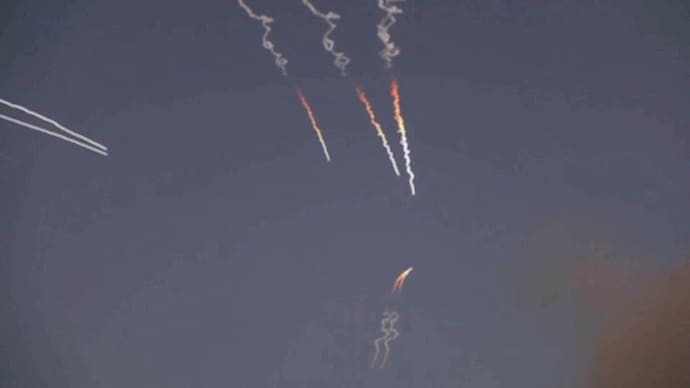
Iranian missiles are launched against a US base in the Gulf. (Photo: Reuters)
The biggest impact of Iran's missile and drone on the US naval base in Bahrain may not be measured in destroyed buildings alone. It could be the strategic rethink now unfolding inside the Pentagon.
According to an investigation by The Wall Street Journal, repeated strikes on Naval Support Activity (NSA) Bahrain between late February and June caused extensive damage to critical military infrastructure. The findings, based on satellite imagery, social media footage and interviews with current and former US servicemembers, flagged the destruction was greater than what the Pentagon has acknowledged.
The scale of the damage has prompted a fresh review of America's military footprint in the region. Officials are considering whether some bases should be relocated, downsized or rebuilt to cope with the growing threat from Iranian missiles and drones.
INSIDE THE IRANIAN ATTACK ON AMERICA'S GULF BASE
The investigation revealed that several Iranian missiles and drones penetrated US air defences and struck strategic parts of NSA Bahrain.
Among the damaged facilities were the command headquarters, at least a dozen other buildings and two satellite communications terminals used for military operations.
While the Pentagon has said that no personnel were killed at the base and operations continued without major disruption, most US military personnel had already been evacuated before the heaviest strikes.
The military has kept only a limited number of staff at the installation.
Responding to questions about the attacks, US Central Command spokesperson Captain Tim Hawkins defended the military's strategy.
"Centcom rightfully prioritised the protection of people over buildings, and our strategy of protecting people worked. Iran shot more than 8,000 missiles and drones and only two hits resulted in US fatalities," Hawkins said, as quoted by The WSJ.
He added that American forces inflicted significantly greater damage on Iran during the conflict.
"The US struck more than 13,500 targets," Hawkins said.
ATTACKS FORCE US STRATEGY RESET
According to The WSJ, the attacks did more than damage buildings. They forced senior US defence officials to reconsider whether long-standing American bases in the Gulf remain viable in an era of precision-guided missiles and armed drones.
It forced the Pentagon to examine several options.
These include redesigning the Bahrain base, reducing the US military presence in Kuwait and Saudi Arabia, moving some command functions farther west and placing more facilities underground. Military planners are also considering spreading capabilities across multiple smaller locations instead of concentrating them at a few large bases.
However, no final decisions have been made.
Israel is among the countries being considered for hosting additional US military assets after it accommodated dozens of American aircraft during the conflict, according to two officials cited by the report.
A COSTLY WAR
The full financial impact of the attacks is still unclear.
Pentagon has declined to provide Congress with a complete estimate of the damage suffered by US bases during the conflict.
When lawmakers pressed US Defence Secretary Pete Hegseth about the costs in May, he replied: "What is the cost of Iran obtaining a nuclear weapon?"
The Pentagon later confirmed that its estimate of the war's $29 billion cost did not include damage to military installations.
The Center for Strategic and Studies (CSIS) has since estimated that the conflict cost roughly $40 billion overall. It puts damage to US bases at between $2.2 billion and $5.1 billion.
Using publicly available Defence Department construction models, The WSJ estimated that rebuilding damaged structures at NSA Bahrain alone would cost about $400 million.
That figure covers construction only and does not include specialised military equipment, communications systems or additional security upgrades.
Two destroyed AN/GSC-52B satellite communications terminals alone were valued at roughly $20 million each, according to CSIS.
IRAN EXPOSED AMERICA'S WEAK SPOT
Military experts believe the conflict exposed weaknesses in infrastructure that was built decades before Iran developed today's arsenal of precision missiles and drones.
Unlike many American military installations overseas, NSA Bahrain also functioned as a residential community. Families lived on the base. It included restaurants, schools, recreational facilities and shops. Sailors returning from long deployments often used the base to rest before returning to duty.
The report comes as US Secretary of State Marco Rubio met Bahrain's King Hamad bin Isa Al Khalifa and other Gulf leaders this week to reassure allies of Washington's commitment to regional security. He also visited the United Arab Emirates and Kuwait during his tour but skipped Saudi Arabia, which restricted US access to its bases and airspace during the conflict.
Officials had previously proposed moving some US military assets farther from Iran during President Donald Trump's first term. The idea was never implemented.
Now, after months of missile strikes that reached America's most important naval base in the region, that conversation has returned with new urgency.
- Ends
Published By:
Satyam Singh
Published On:
Jun 26, 2026 18:40 IST