17 hours ago
According to the inquiry reports, staff failed to follow infection prevention protocols, protective equipment was not used properly and there were shortcomings in the handling of single-use syringes.
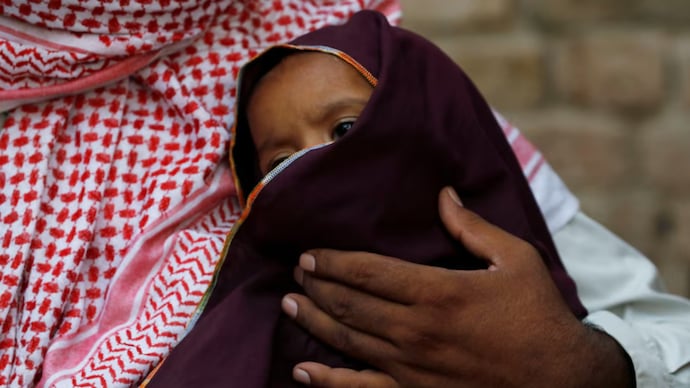
The first six HIV-positive cases linked to the hospital were reported to the health department in October 2025. (File Photo: Reuters)
An HIV outbreak linked to a government-run hospital in Pakistan's largest city has infected at least 130 people, most of them children, exposing serious lapses in infection prevention and putting the country's healthcare system under intense scrutiny.
According to Al Jazeera, the outbreak has been traced to Kulsum Bai Valika (KBV) Hospital, a facility operated by the Sindh Employees' Social Security Institution (SESSI), where investigations have uncovered serious lapses in infection prevention. The number of infections has climbed sharply in recent weeks as screening continues. Officials have warned that more cases could still emerge.
SCREENING FINDS MORE THAN 130 HIV CASES
Sindh Labour Minister Saeed Ghani said more than 10,500 people had been screened in and around KBV Hospital, where 120 individuals tested positive for HIV, as per the report.
A separate screening exercise at another SESSI healthcare facility in Karachi's Landhi area identified 10 additional infections, taking the total number of confirmed cases to at least 130.
SESSI is an autonomous provincial organisation that provides medical care, financial assistance and healthcare services to industrial and commercial workers and their families across Sindh.
Although the outbreak first came to public attention in November 2025 after residents noticed an unusual cluster of HIV infections among children treated at KBV Hospital, officials believe the crisis began earlier.
According to provincial authorities, the first six HIV-positive cases linked to the hospital were reported to the health department in October 2025.
INVESTIGATIONS FIND MAJOR SAFETY FAILURES
Chief Minister Murad Ali Shah was briefed on July 14 about two separate internal investigations that identified serious failures inside the hospital.
According to the inquiry reports, staff failed to follow infection prevention protocols, protective equipment was not used properly and there were shortcomings in the handling of single-use syringes.
The first inquiry, submitted in November last year, linked 16 HIV-positive children to the hospital's paediatrics department.
A second and more detailed investigation, submitted to the provincial ombudsman on June 19, confirmed 78 infections and six deaths. The report held several hospital officials responsible for administrative and supervisory failures.
The number of confirmed infections has continued to rise since then.
Ghani said all infections had been traced to exposure before October 2025 and screening efforts would continue "despite fears that additional cases may emerge".
Authorities have issued show-cause notices to 37 doctors and hospital employees, giving them 14 days to explain their conduct.
Criminal proceedings would follow if individuals were found responsible.
Asked whether he should also accept responsibility, according to the report, Ghani said he had "accepted indirect responsibility" and would not oppose resigning if it helped resolve the crisis.
The outbreak has sparked legal proceedings before the Sindh High Court, where a petition alleges that reused syringes were responsible for spreading HIV among patients.
Even so, official investigations pointed to broader failures in infection control, including poor compliance with safety procedures, inadequate use of protective equipment and improper handling of single-use syringes.
The petition also alleges that the true number of infections is much higher than the official count.
GOVERNMENT ANNOUNCES NEW MEASURES
The Sindh High Court has directed the provincial government to respond to the petition by July 20.
Meanwhile, Pakistan's Drug Regulatory Authority has announced that conventional syringes capable of being reused will be banned from retail sale from January 2027.
Federal Health Minister Mustafa Kamal has also said HIV screening will become mandatory before surgeries nationwide, while stressing that the situation should not yet be described as a nationwide epidemic.
The Sindh government has approved a two-billion-rupee ($7.2 million) endowment fund to provide long-term treatment for affected children. Officials have also approved an isolation ward and ordered an independent audit of KBV Hospital's procurement procedures and infection control systems.
PAKISTAN'S HIV CRISIS CONTINUES TO GROW
Health experts say the Karachi outbreak is not an isolated incident.
According to Al Jazeera, the World Health Organization (WHO) and UNAIDS warned last December that Pakistan is experiencing one of the fastest-growing HIV epidemics in the WHO Eastern Mediterranean Region.
Annual infections have increased by 200 percent over the past 15 years, rising from about 16,000 cases in 2010 to nearly 48,000 in 2024.
The agencies estimate that around 350,000 people in Pakistan are living with HIV, with almost 80 percent unaware of their infection.
The situation among children is particularly worrying.
HIV infections in children aged up to 14 years increased from 530 in 2010 to 1,800 in 2023. Only 38 percent of children living with HIV currently receive treatment, while just 14 percent of pregnant women needing medication to prevent mother-to-child transmission have access to therapy.
The Pakistan Medical Association has also warned that 329 of the 894 HIV cases reported in Sindh during the first quarter of 2026 involved children, describing the figures as "merely the tip of the iceberg".
- Ends
Published By:
Satyam Singh
Published On:
Jul 19, 2026 23:24 IST