1 month ago
Last Updated:March 01, 2026, 19:43 IST
Pakistan called US-Israel attacks unwarranted; it also called Iran's retaliation "blatant violations of sovereignty". Islamabad's response amid ties with US, Iran & Saudi explained


Pakistani Prime Minister Shehbaz Sharif. (File Image)
Although not a direct participant in the US-Israel war against Iran, Pakistan finds itself in a unique position. While the country has ties with both the United States and Iran, which it even shares a boundary with, it has a defence pact with Saudi, which has tacitly supported America, according to reports.
News18 decodes Pakistan’s response of official condemnation and diplomatic caution.
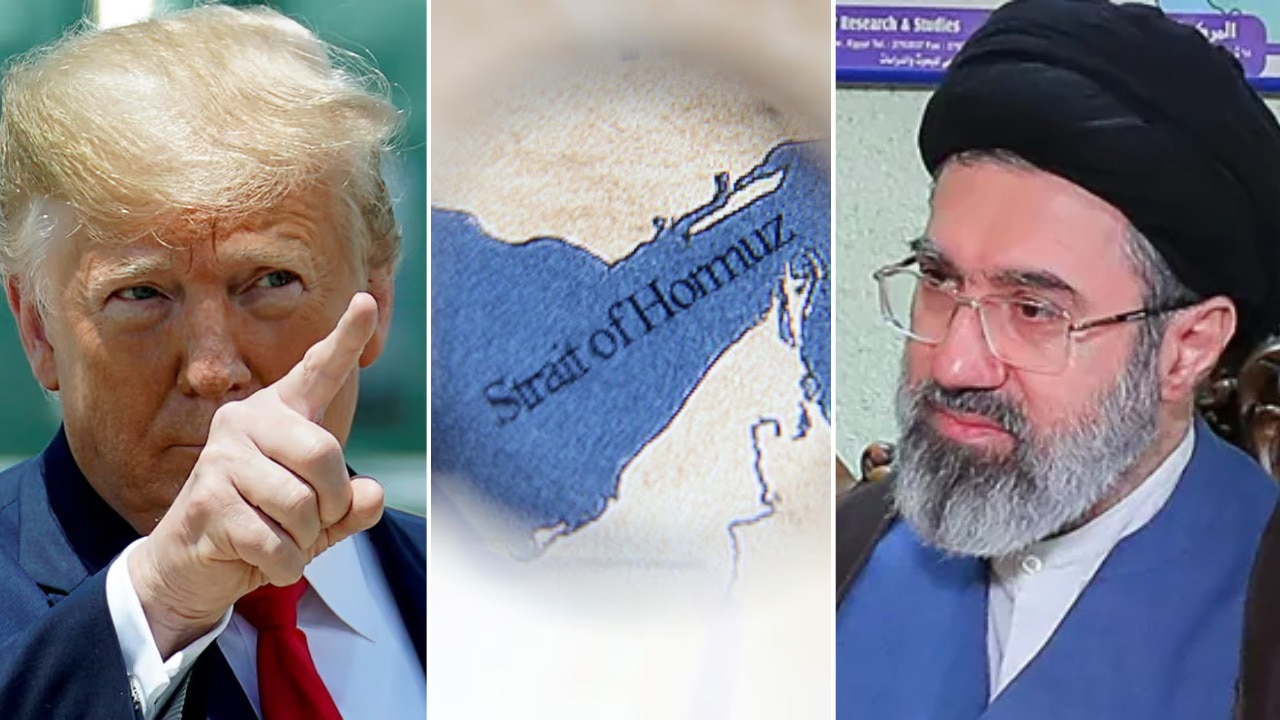
The key players in the war
A major military confrontation erupted between the United States, Israel, and Iran after coordinated US–Israeli strikes hit Iranian territory, drawing strong Iranian retaliation with missile and drone attacks across the region. The conflict has triggered broader instability in the Middle East, with Iran declaring reprisals and continuing attacks on US and Israeli bases, raising fears of a wider regional war.
How Pakistan has responded to the war
In a delicate balancing act, Pakistan condemned the initial U.S. and Israeli strikes on Iran on Friday that triggered the retaliation, calling them “unwarranted attacks".
As Iran struck back, targeting Saudi Arabia, Bahrain, Jordan, Kuwait, Qatar, and the UAE, Pakistan’s Ministry of Foreign Affairs and its Permanent Representative to the UN formally condemned Tehran’s retaliation too, calling it “blatant violations of sovereignty".
Pakistan Prime Minister Shehbaz Sharif also telephoned Saudi Crown Prince Mohammed bin Salman to pledge “full solidarity" and reiterate the terms of the mutual defense pact. Pakistan specifically highlighted the death of a Pakistani national in the UAE during these attacks.
Saudi Arabia amid US-Israel-Iran war
Saudi Arabia’s relationship with the U.S. during the current 2026 conflict is extremely complicated, characterised by private alignment and public distance.
Publicly, Saudi Arabia has taken a firm stance to avoid being dragged into a direct war with Iran. In the weeks leading up to the February 2026 strikes, Riyadh officially informed both Iran and the U.S. that it would not allow its airspace or territory to be used for military actions against Tehran. Saudi officials emphasised that they do not want their land to serve as a launchpad for attacks, fearing that involvement would turn their oil fields into primary targets for Iranian retaliation, according to Reuters.
However, according to The Washington Post, Saudi Crown Prince Mohammed bin Salman (MBS) reportedly made several private phone calls to US President Donald Trump over the past month, pushing for a strike on Iran while publicly endorsing diplomacy.
Saudi Arabia is part of a “complex role" where it reportedly coordinated with the U.S. and Israel to share data on Iranian leadership and infrastructure targets, even while officially staying out of the combat, according to reports.
President Trump called MBS on March 1 to affirm that the United States “stands alongside the Kingdom" and supports all measures Saudi Arabia takes to defend itself. In January 2026, just before the conflict escalated, the U.S. formally designated Saudi Arabia as a Major Non-NATO Ally, deepening their legal and military partnership. Under the new U.S.-Saudi Strategic Defense Agreement (SDA), the two countries have committed to nearly $1 trillion in investments, including sales of F-35 jets and hundreds of tanks to bolster Saudi defences.
Why has Pakistan not declared a war?
Pakistan is in a Strategic Mutual Defence Agreement (SMDA) with Saudi, which has the “attack on one is an attack on both". Then why has it prioritised solidarity over military action?
Pakistan shares historical, cultural, economic, and diplomatic ties with Iran. Islamabad and Tehran have maintained bilateral engagement, including high-level visits and cooperation on regional issues, and Iran has publicly commended Pakistan’s support during past regional crises, highlighting the traditionally friendly relationship.
While Trump was once sharply critical of Islamabad during his first term, more recent interactions have reportedly been warmer, with Trump referring to Prime Minister Shehbaz Sharif as a “friend" in diplomatic exchanges — signaling a reset built around strategic interests rather than past grievances. A key emerging area is critical minerals and rare earth cooperation. As global competition intensifies over supply chains dominated by China, Pakistan has highlighted its untapped mineral reserves — particularly in Balochistan — positioning itself as a potential alternative partner for Western supply diversification. This has opened conversations around investment, extraction partnerships, and broader economic engagement.
At the same time, Pakistan continues to seek security cooperation and counterterrorism coordination; trade access and economic stabilization support; diplomatic backing amid regional tensions. For Washington — especially under a Trump-style “America First" lens — engagement with Pakistan is viewed through strategic leverage: Afghanistan spillover risks, counterterrorism intelligence, competition with China, and regional stability involving Iran and the Gulf.
Entering a hot war with Iran is extremely dangerous for Islamabad, as the two share a long, volatile border. A conflict could ignite internal sectarian fault lines within Pakistan’s own population. Large-scale pro-Iran protests have broken out in Pakistani cities like Karachi and Lahore against the U.S.-Israeli strikes, making it politically difficult for the government to take direct military action against Iran.
Analysts note that while the pact with Saudi is formal, it is often viewed as a “political signal of solidarity" rather than an unconditional guarantee for automatic military escalation.
Moreover, Pakistan is currently engaged in what its ministers call an “open war" with Afghanistan on its northwest border, leaving little military capacity to open a second front with Iran.
Islamabad is pushing a draft resolution at the UN alongside China and Russia, calling for an “immediate and unconditional ceasefire" rather than taking a side in the combat.
Pakistan is effectively attempting a high-stakes balancing act rather than supporting one side exclusively.
With Agency Inputs
First Published:
March 01, 2026, 19:43 IST
News explainers Pakistan In War Crossfire? Ties With US, Iran To Pact With Saudi, Islamabad’s Response Explained
Disclaimer: Comments reflect users’ views, not News18’s. Please keep discussions respectful and constructive. Abusive, defamatory, or illegal comments will be removed. News18 may disable any comment at its discretion. By posting, you agree to our Terms of Use and Privacy Policy.
Read More