1 month ago
Last Updated:February 19, 2026, 16:43 IST
Pakistan's stance explicitly rules out any participation in 'peace enforcement' operations or missions tasked with the forcible demilitarisation of Palestinian groups


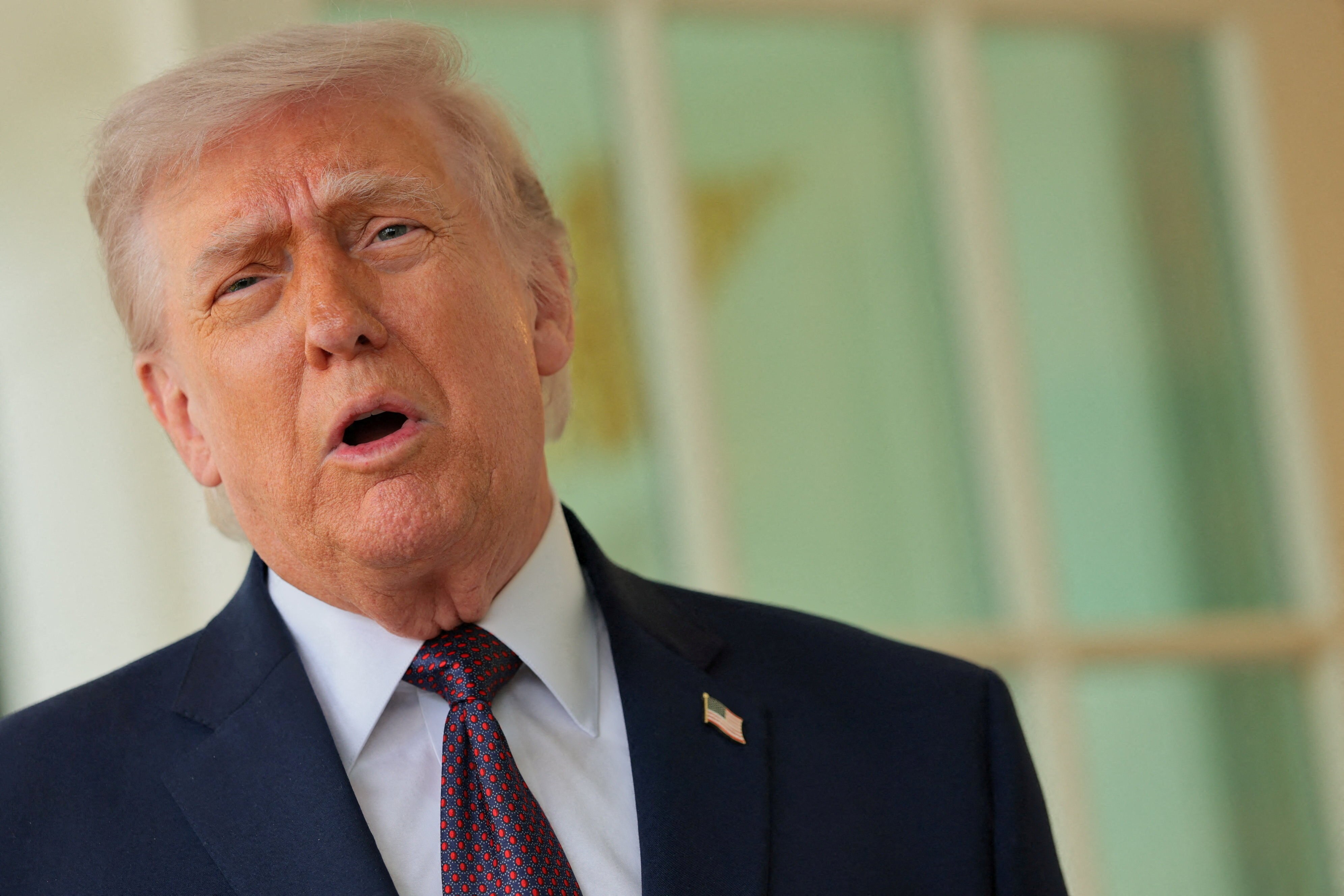
Pakistan PM Shehbaz Sharif speaking alongside US President Donald Trump. (File pic/Reuters)
In a significant recalibration of its regional security posture, Pakistan has formally defined the parameters of its potential involvement in the Gaza Strip. Speaking on behalf of the Foreign Office, spokesperson Mumtaz Zahra Baloch and senior official Tahir Hussain Andrabi clarified that Pakistan is strictly open to a peacekeeping mandate only. This stance explicitly rules out any participation in “peace enforcement" operations or missions tasked with the forcible demilitarisation of Palestinian groups.
The Pakistani government maintains that the internal security and political landscape of Gaza is a domestic matter for the Palestinians themselves. Consequently, Islamabad has made it clear that it will not support any mission intended to impose a specific governing body on the Gaza people. Instead, Pakistan’s proposed role is strictly confined to stabilisation efforts, the securing of humanitarian corridors, and the facilitation of large-scale reconstruction.
The United Islamic Front
Pakistan’s diplomatic manoeuvring has been synchronised with the broader Arab-Islamic world. Alongside seven other nations—Egypt, Jordan, the UAE, Indonesia, Türkiye, Saudi Arabia, and Qatar—Pakistan issued a blistering joint statement condemning Israel’s recent designation of West Bank territories as “state land". The Foreign Office described the land registration as an illegal escalation that violates the Fourth Geneva Convention. Reaffirming its long-standing geopolitical stance, Islamabad reiterated its support for a sovereign Palestinian state based on pre-1967 borders, with Al-Quds Al-Sharif (Jerusalem) as its capital.
High-Stakes Diplomacy in Washington and New York
The gravity of the current crisis has taken Prime Minister Shehbaz Sharif to Washington, DC, where he is attending the inaugural session of the Gaza Peace Board at the invitation of the United States government. Accompanied by a high-level delegation, the Prime Minister’s visit aims to coordinate a unified response with both American leadership and counterparts from Islamic nations.
Simultaneously, Deputy Prime Minister and Foreign Minister Ishaq Dar represented Pakistan at a high-level UN Security Council briefing in New York. During the New York leg of the mission, the Prime Minister held critical meetings:
Coordination with Allies: Bilateral talks with the Foreign Ministers of Egypt and Indonesia focused on ensuring unhindered humanitarian access to Gaza.
Palestinian Engagement: Palestinian Ambassador Riad Mansour met the Prime Minister to formally thank Pakistan for its leadership and consistent diplomatic support.
Diaspora Relations: A joint delegation of the Pakistani American Public Affairs Committee (PAK-PAC) and the United Muslims American Association (UMAA) met the PM to discuss the role of the private sector in fostering trade and interfaith harmony.
Beyond the Conflict: Nuclear Medicine and UNODC
While the Gaza crisis dominated the agenda, Pakistan also secured significant international partnerships in the fields of science and security. Prime Minister Sharif met with IAEA Director General Rafael Mariano Grossi, leading to the signing of a Memorandum of Understanding (MoU) that designates INMOL Lahore as an IAEA collaborating centre. This partnership will focus on advanced cancer research and nuclear medicine, marking a milestone for Pakistan’s healthcare infrastructure.
Furthermore, Pakistan formalised its commitment to global security by signing the Country Programme and Country Partnership Programme (2026-2030) with the United Nations Office on Drugs and Crime (UNODC). This five-year framework is designed to enhance cooperation in combating illicit trafficking and strengthening criminal justice systems.
Handpicked stories, in your inbox
A newsletter with the best of our journalism
First Published:
February 19, 2026, 16:43 IST
News world Peacekeeping, Not Policing: Pakistan Draws Its Gaza Red Line | Exclusive Details
Disclaimer: Comments reflect users’ views, not News18’s. Please keep discussions respectful and constructive. Abusive, defamatory, or illegal comments will be removed. News18 may disable any comment at its discretion. By posting, you agree to our Terms of Use and Privacy Policy.
Read More