1 month ago
Putin calls European leaders 'little pigs' as he insists Russia will achieve its goals in Ukraine by diplomacy or force

Pjotr Sauer
Russian affairs reporter
Meanwhile, Russia’s Vladimir Putin on Wednesday lashed out at European leaders, deriding them as “little pigs”, and said Russia would achieve its territorial goals in Ukraine either through diplomacy or by military force.

Speaking at an annual meeting with the defence ministry, Putin said the aims of what Moscow calls its “special military operation” would be met “unconditionally”.
“If they do not want a substantive discussion,” he said, “then Russia will liberate its historical lands on the battlefield.”
Putin claimed that the previous US administration had “deliberately steered the situation towards an armed conflict”, adding that Washington believed Russia could be weakened or even destroyed in a short period of time.
He then lashed out at European leaders, accusing them of joining in with Joe Biden’s administration. “Europe’s little pigs immediately joined in the work of the previous American administration, hoping to profit from the collapse of our country,” Putin said.
Putin’s hardline comments came as US officials claimed that earlier talks with Ukraine in Berlin had resolved about 90% of the most difficult issues. But major doubts remain over whether the Russian leader is prepared to compromise on his sweeping demands.
Putin has repeatedly insisted that Kyiv cede the remaining parts of the eastern Donbas region still under Ukrainian control – a demand that the White House has at times appeared to endorse, but which Ukraine has flatly rejected. Moscow has also pushed for strict limits on Ukraine’s military, a ban on western troops on Ukrainian territory, and an end to western military support.
The Russian leader on Wednesday also denied that Moscow was planning to invade Nato territory, claiming instead that the alliance had begun preparing for a possible military confrontation with Russia, with a view to 2030.
Key events 2m ago Merz calls for EU move on frozen assets to put pressure on Russia as he warns against Moscow's ambitions 1h ago EU's use of Russian frozen funds needs 'solid legal basis' or we risk handing Putin 'victory', Meloni warns 1h ago Confiscating Russian assets to fund Ukraine would be 'declaration of war,' Hungary's Orbán warns 2h ago Putin calls European leaders 'little pigs' as he insists Russia will achieve its goals in Ukraine by diplomacy or force 3h ago UK will demand £2.5bn of Abramovich cash to be transferred to Ukraine fund, Starmer says, telling oligarch 'pay up now' or face court 3h ago France will 'firmly oppose' EU-Mercosur deal, government spokesperson says 3h ago UK rejoining Erasmus+ 'strong signal in favour of closer cooperation' in higher education, German universities chief says 4h ago 'Far from easy' to get EU agreement on frozen Russian assets, Meloni says, as she hints at Mercosur deal delay 4h ago No deal yet on exempting UK from new import taxes on carbon emissions of goods manufacturers outside EU 4h ago Erasmus move 'symbolic milestone in reset' between EU, UK, German lawmaker says 4h ago Share your views on the UK rejoining the EU Erasmus student exchange programe 5h ago UK to rejoin EU’s Erasmus student exchange programme 5h ago 'Big step forward,' EU chiefs say as they welcome UK's decision to rejoin Erasmus 6h ago UK set to rejoin EU's Erasmus scheme in 2027 6h ago US looking at fresh sanctions on Russia's energy sector to push it to negotiate with Ukraine - reports 6h ago Who stands where on EU reparations loan for Ukraine? 6h ago Morning opening: Show key events only Please turn on JavaScript to use this feature
Merz calls for EU move on frozen assets to put pressure on Russia as he warns against Moscow's ambitions

Jakub Krupa
Speaking in the Bundestag, Germany’s Merz said it was essential for the EU to finalise its reparation loan to use frozen Russian assets to fund Ukraine’s defence to send “a clear signal” for Moscow.
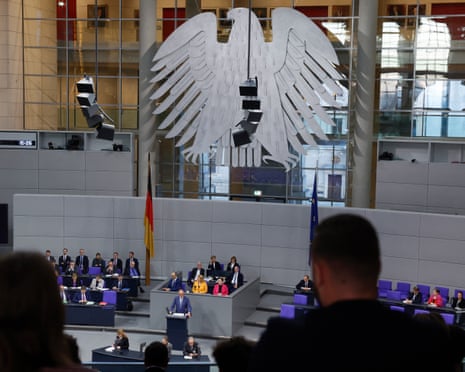
He said that European security “is, and this is becoming particularly clear these days, inextricably linked to the fate and security of Ukraine.” “Inextricably,” he stressed.
Merz welcomed “a great deal of diplomatic momentum” in talks about ending the war, including the Berlin meeting earlier this week, but suggested that Russia’s intentions continued to be confrontational, as it “strives to extend its sphere of influence far beyond its own territory.”
Merz said that as a result, this week’s European Council will have to make decisions “of considerable consequence”
“It is clear that the pressure on Putin must be increased even further in order to persuade him to engage in serious negotiations,” he told lawmakers.
He said the intention was to end the war “as quickly as possible,” and not prolong the war, but the funds would keep Ukraine funded for the next two years if needed.
“That is precisely why we need the decision of the European heads of state and government, and I will personally advocate for such a decision, starting this evening in Brussels,” he said.
Separately, he also said he would “continue to advocate intensively” for the EU leaders to back the Mercosur agreement, allowing the EU representatives to sign it in the coming days – despite opposition from France (13:15) and Italy (12:37).
He argued that if after more than 25 years of negotiations, the EU was to pull its support for the deal, it could question its credibility in trade talks.
EU's use of Russian frozen funds needs 'solid legal basis' or we risk handing Putin 'victory', Meloni warns
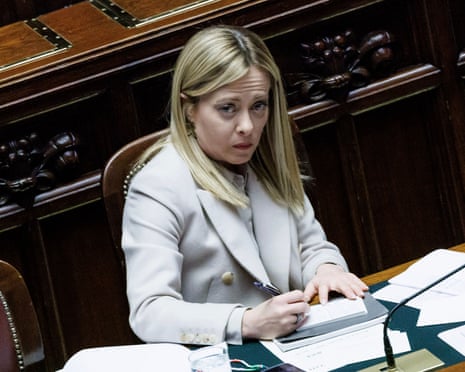
Similarly, Italy’s Giorgia Meloni is speaking in the Italian parliament (again), delivering a statement ahead of the European Council meeting tomorrow.
She largely repeats her earlier lines (12:37), saying that Italy is in favour of using frozen Russian assets, but “only with a solid legal basis.”
Meloni says that this caveat is important, because if the legal basis was shaky and Russia were able to challenge the use of funds, “we would be handing Russia its first victory”.
We are hoping to hear from German chancellor Friedrich Merz fairly soon, as he takes part in a similar session in the German Bundestag. Expect him to present a different argument, strongly in favour of the EU’s proposed move.
Confiscating Russian assets to fund Ukraine would be 'declaration of war,' Hungary's Orbán warns
Meanwhile, we are also getting some more signals from other EU capitals on what (the more critical) heads of governments are thinking about the EU’s plans on frozen Russian assets ahead of the crucial European Council summit starting tomorrow.
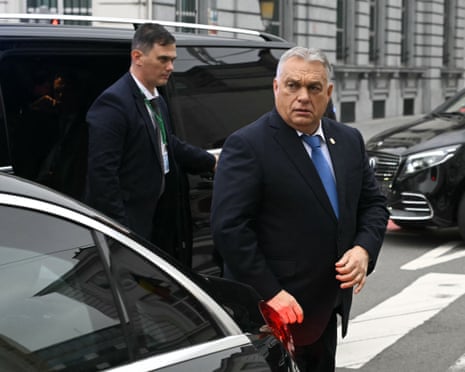
Hungarian prime minister Viktor Orbán did not hold back on his way to Brussels this morning, telling reporters that in his view taking Russian assets to fund Ukraine “cannot be interpreted in any other way than as a declaration of war.”
Orbán has long been critical of the EU’s position on Ukraine and repeatedly threatened to block further sanctions or other measures aimed to help Kyiv, with other capitals often criticising him for maintaining close contact with Moscow, including a trip to see Putin at the Kremlin last month.
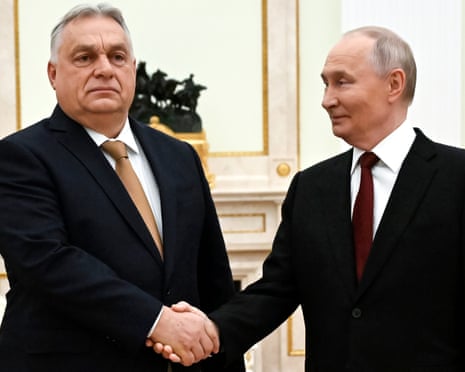
Talking to reporters, he disclosed that he had recently written to Vladimir Putin asking him whether Russia would hit back at the EU, and he would consider how individual countries were to vote on the EU’s controversial proposal before retaliation, getting a confirmation that was the plan.
Given Budapest’s longstanding opposition and plain intention to vote against the plan, he claimed Hungary “has protected ourselves.”
Meanwhile, the new Czech prime minister, Andrej Babiš, has also offered a bit more on his thinking about the issue of frozen Russian assets ahead of his first council meeting.
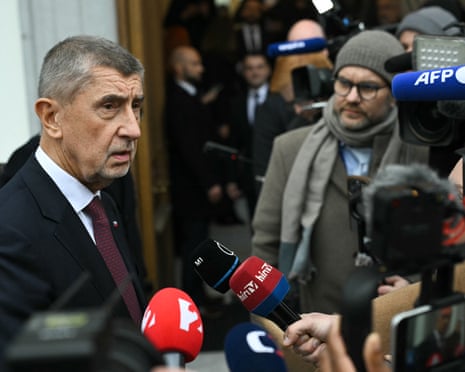
Speaking to reporters this morning, Babiš sounded very non-committal as he said the debate was not about whether to support Ukraine, but how.
He said that the Czech government continues to support further financial assistance for Ukraine, but hinted that the would prefer to raise debt in financial markets rather than use frozen Russian assets, repeatedly referencing Belgium’s legal concerns.
He said that in principle the Czech Republic could support the idea of using frozen assets, but only “under certain conditions” that would address the Belgian concerns and without offering financial guarantees.
He also expressed his concerns that using frozen assets would inevitably prompt Russia to lash back at the EU and could disrupt the peace talks.
Putin calls European leaders 'little pigs' as he insists Russia will achieve its goals in Ukraine by diplomacy or force
Pjotr Sauer
Russian affairs reporter
Meanwhile, Russia’s Vladimir Putin on Wednesday lashed out at European leaders, deriding them as “little pigs”, and said Russia would achieve its territorial goals in Ukraine either through diplomacy or by military force.
Speaking at an annual meeting with the defence ministry, Putin said the aims of what Moscow calls its “special military operation” would be met “unconditionally”.
“If they do not want a substantive discussion,” he said, “then Russia will liberate its historical lands on the battlefield.”
Putin claimed that the previous US administration had “deliberately steered the situation towards an armed conflict”, adding that Washington believed Russia could be weakened or even destroyed in a short period of time.
He then lashed out at European leaders, accusing them of joining in with Joe Biden’s administration. “Europe’s little pigs immediately joined in the work of the previous American administration, hoping to profit from the collapse of our country,” Putin said.
Putin’s hardline comments came as US officials claimed that earlier talks with Ukraine in Berlin had resolved about 90% of the most difficult issues. But major doubts remain over whether the Russian leader is prepared to compromise on his sweeping demands.
Putin has repeatedly insisted that Kyiv cede the remaining parts of the eastern Donbas region still under Ukrainian control – a demand that the White House has at times appeared to endorse, but which Ukraine has flatly rejected. Moscow has also pushed for strict limits on Ukraine’s military, a ban on western troops on Ukrainian territory, and an end to western military support.
The Russian leader on Wednesday also denied that Moscow was planning to invade Nato territory, claiming instead that the alliance had begun preparing for a possible military confrontation with Russia, with a view to 2030.
UK will demand £2.5bn of Abramovich cash to be transferred to Ukraine fund, Starmer says, telling oligarch 'pay up now' or face court
On the use of frozen Russian assets, there is a big breaking news line emerging from the UK, with the British prime minister Keir Starmer formally issuing instructions to transfer £2.5bn from Roman Abramovich’s sale of Chelsea FC to humanitarian causes in Ukraine, telling the billionaire to commit the funds or face court action.
Speaking in the UK House of Commons, Starmer has just said:
“I can announce that we’re issuing a licence to transfer £2.5bn from the sale of Chelsea Football Club that’s been frozen … since 2022.
My message to Abramovich is this: the clock is ticking, honour the commitments that you made, and pay up now.
And if you don’t, we’re prepared to go to court, so every penny reaches those whose lives have been torn apart by Putins illegal war.”
As my colleague Jessica Elgot explains,
“The Russian billionaire sold Chelsea in 2022 under pressure from the British government after the Russian invasion of Ukraine.
Abramovich was granted a licence from the UK government to sell Chelsea as long as the money was spent supporting the victims of the Ukraine war. The proceeds were placed in a UK bank account controlled by Abramovich’s company Fordstam.
Since then, the money has been frozen amid deadlock in negotiations with Abramovich over whether the money should be spent exclusively in Ukraine or whether it can go outside the country as well.”
In a government statement, UK finance minister Rachel Reeves said it was “unacceptable that more than £2.5bn of money owed to the Ukrainian people can be allowed to remain frozen in a UK bank account.”
It’s time for Roman Abramovich to pay up.
UK foreign minister Yvette Cooper said that “this money was promised to Ukraine over three years ago,” and stressed that “it is time Roman Abramovich does the right thing, but if he won’t we will act.”
“That’s why the licence has been issued. It is time this money was used to rebuild the lives of people who’ve seen devastation as a result of Putin’s illegal war.”
France will 'firmly oppose' EU-Mercosur deal, government spokesperson says
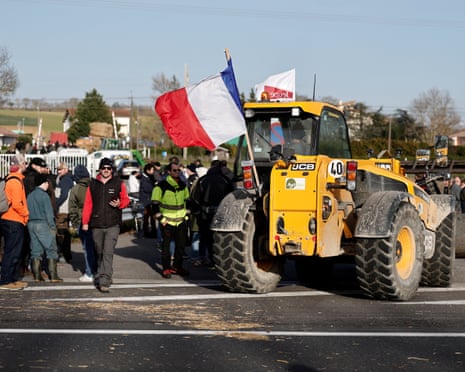
Further to Meloni’s comments earlier (12:37), France is now also doubling down on its longstanding opposition to the Mercosur trade deal, with the French government’s spokesperson saying the French president would “firmly oppose” the agreement.
France keeps demanding robust safeguard clauses, tighter import controls and more stringent standards for Mercosur producers, AFP noted, amid ongoing farmers strikes across the country.
UK rejoining Erasmus+ 'strong signal in favour of closer cooperation' in higher education, German universities chief says
On Erasmus+ news, we have just got a reaction from the German Rectors’ Conference, an umbrella body for German universities, with its chair, Prof Walter Rosenthal telling the Guardian that the UK’s return was “a strong signal in favour of closer cooperation in European higher education.”
Prof Rosenthal told us in a written statement:
“I very much welcome the fact that this agreement has been reached. Erasmus+ is a flagship European project.
Like no other programme, it offers unique opportunities for intercultural exchange and personal development to particularly young people in Europe.
Students and researchers can immerse themselves in a different academic culture and sharpen their own profile. These are life-changing experiences.
The German and British higher education and research systems will benefit immensely from the United Kingdom’s re-entry into the European mobility programme.”
'Far from easy' to get EU agreement on frozen Russian assets, Meloni says, as she hints at Mercosur deal delay
Meanwhile, we are getting some important lines out from Rome, where Italian prime minister Giorgia Meloni has been speaking in parliament about current EU affairs.
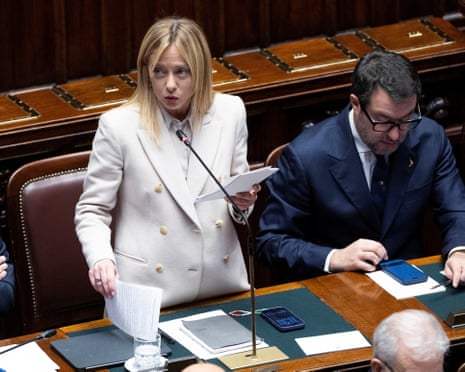
Meloni told the parliament that Berlin talks were “constructive” and said Russia was making “unreasonable” territorial demands in US-led peace talks on ending the Ukraine war, as she reaffirmed Rome’s support for Kyiv.
But she admitted that finding a legal way to use frozen Russian assets to help finance Ukraine remained “far from easy,” and said the focus shouldn’t be specifically on Belgium, but also other Russian assets more broadly, Corriere della Sera reported.
She suggested Rome was generally in favour on the use of frozen Russian assets, but needed to see strong legal basis for all proposed actions.
Frozen Russian assetsMeloni also appeared to back the French call to delay the EU-Mercosur trade deal into early next year, saying it would be “premature” to sign it now as more guarantees were needed for the European agriculture sector.
No deal yet on exempting UK from new import taxes on carbon emissions of goods manufacturers outside EU

Lisa O’Carroll
Speaking of the EU-UK reset … the EU’s climate commissioner has said there is no deal yet with the UK to exempt it from new import taxes linked to carbon emissions of goods manufactured outside the bloc including the UK.
“We are in very good conversations with our UK friends,” said Wopke Hoekstra at a press conference in Strasbourg on Wednesday on the carbon adjustment border mechanism CBAM.
The UK had hoped a deal could be done by 1 January when the new levies are due to come into force and some believed London’s concession on rejoining Erasmus may have paved the way for a deal removing a Christmas cliff edge for exporters.
Hoekstra played down the significance of the 1 January deadline saying “the price it [the UK] will be paying is actually minimum” because decarbonisation efforts in Britain were well under way as part of political efforts to get to net zero.
The problem between the two sides has arisen because the UK is introducing its own emissions trading system (ETS) in 2027, a year after the EU.
Hoekstra said they hoped to link the two ETS systems, which would also mean exemptions for EU exporters into the UK.
“This is really a matter of doing things in the right order, step by step, chiffre par chiffre, pas à pas. So that means, first we need to conclude – and we stand ready to do that ASAP – to make sure we link the two systems.
“Then, in all likelihood, the conclusion is going to be that we are fully linked. That will have the very, very significant ramifications. And my assessment is that that if the full linkage of the ETS has taken place, that then it is likely that there is nothing in the book-keeping and nothing in terms of the paperwork that still needs to be done,” he said.
Separately, the EU and the UK have announced that they “concluded exploratory talks on the United Kingdom’s participation in the European Union’s internal electricity market, with the details set out in letters to be published in the coming days.”
“The European Commission and the United Kingdom will now work towards negotiating the United Kingdom’s participation in the internal electricity market of the European Union and set out the necessary framework for that participation. Closer cooperation on electricity would bring real benefits to businesses and consumers across Europe, drive up investment in the North Seas and strengthen energy security.”
Erasmus move 'symbolic milestone in reset' between EU, UK, German lawmaker says
German MEP Bernd Lange, chair of the European Parliament’s trade committee, said the UK’s decision to rejoin Erasmus+ was “a symbolic milestone in reset.”
“We must now continue to build on this momentum to promptly launch further concrete measures like SPS [Sanitary and Phytosanitary] or youth mobility,” he said.
Share your views on the UK rejoining the EU Erasmus student exchange programe
We would like to hear from people who may want to participate in the programme from 2027 and those who have taken part in the past.
If you are keen to take part in the scheme, tell us why. For those who took part in the past, how did you find it? Would you recommend it?
Share your views and experience with us.