4 weeks ago
Last Updated:January 21, 2026, 12:16 IST
With Trump threatening tariffs tied to Greenland, Europe is weighing a rarely discussed tool meant to protect the bloc from economic pressure.

People wave Greenlandic flags as they take part in a demonstration that gathered almost a third of the city population to protest against US President Donald Trump's plans to take Greenland, in Nuuk, Greenland, on January 17, 2026. (Image: AFP)
Europe is once again confronting an unorthodox geopolitical challenge: a revived American push to acquire Greenland, now tied directly to sweeping tariff threats against some of the continent’s largest economies.
What began as an unexpected escalation from US President Donald Trump has rapidly grown into a broader test of transatlantic political trust and economic resilience. At the centre of Europe’s debate is a powerful but never-used instrument — the Anti-Coercion Instrument (ACI), often described as a “trade bazooka". Designed for deterrence against non-allied states, it is suddenly being considered against Washington itself.
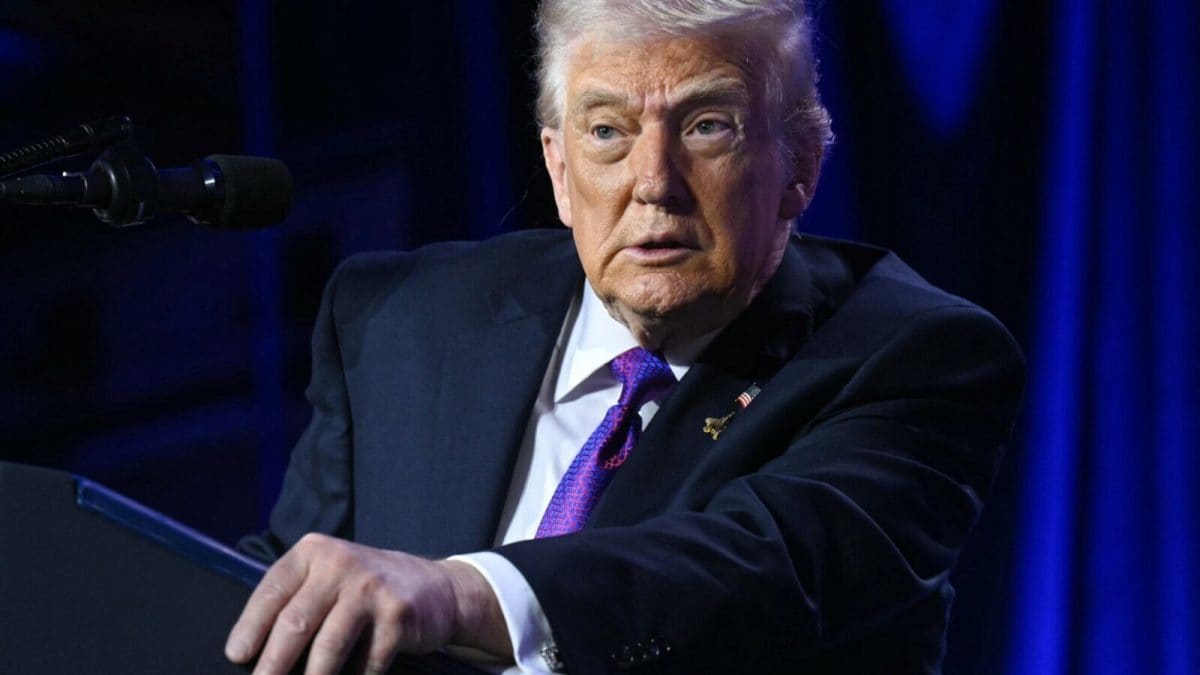
Trump’s warning — a 10 per cent levy on goods from Denmark, Norway, Sweden, Finland, France, Germany, the Netherlands and the United Kingdom from February 1, rising to 25 per cent on June 1 if Europe does not negotiate — has forced a strategic recalibration in Brussels. European leaders say the confrontation risks damaging both economies, straining relations with a key NATO ally, and placing Greenland, a semi-autonomous Danish territory, at the centre of an unprecedented clash.
For the European Union, the question is whether diplomacy is enough, or whether conditions justify unleashing the most far-reaching economic countermeasure it has ever built.
What Triggered The Latest Tariff Threat Over Greenland?
The current standoff emerged from Trump’s renewed attempt to purchase Greenland, an idea with deep roots in US strategic planning. In a post on January 17, he argued that the US had subsidised Denmark and other European partners by not imposing tariffs, and announced that he would now apply duties until Europe agreed to what he called the “Complete and Total purchase of Greenland".
He said the US had sought to buy the island “for over 150 years", referring to a history that includes Secretary of State William Seward’s failed attempt after the purchase of Alaska and President Harry Truman’s secret $100m offer in 1946.
Danish and Greenlandic officials have repeatedly rejected the notion, and recent public demonstrations on the island have also opposed it. Trump nonetheless argued that Denmark cannot secure Greenland against Russia or China, insisting that “The World is not secure unless we have Complete and Total Control of Greenland."
Eight European countries, the ones targeted by the new tariffs, issued a joint statement saying they “stand in full solidarity" with Denmark and the people of Greenland. They warned that tariff threats “undermine transatlantic relations and risk a dangerous downward spiral", while affirming that Greenland’s future rests with Denmark and the island’s residents.
How Has Europe Responded To Trump’s Tariff Threat?
European leaders have taken markedly different tones, but their formal position remains unified. The European Commission emphasised that “our priority is to engage, not escalate," with spokesperson Olof Gill saying that “sometimes the most responsible form of leadership is restraint." Yet he also noted, “The EU has tools at its disposal and is prepared to respond should the threatened tariffs be imposed."
Prime Minister Keir Starmer called tariffs on allies “completely wrong", saying the UK would raise concerns directly with Washington, but reiterated that he is “not in favour of launching retaliatory tariffs" for now. Germany’s Chancellor Friedrich Merz also urged dialogue, warning of serious harm to both sides if a trade war were allowed to develop. “We want to avoid any escalation in this dispute if at all possible," he said.
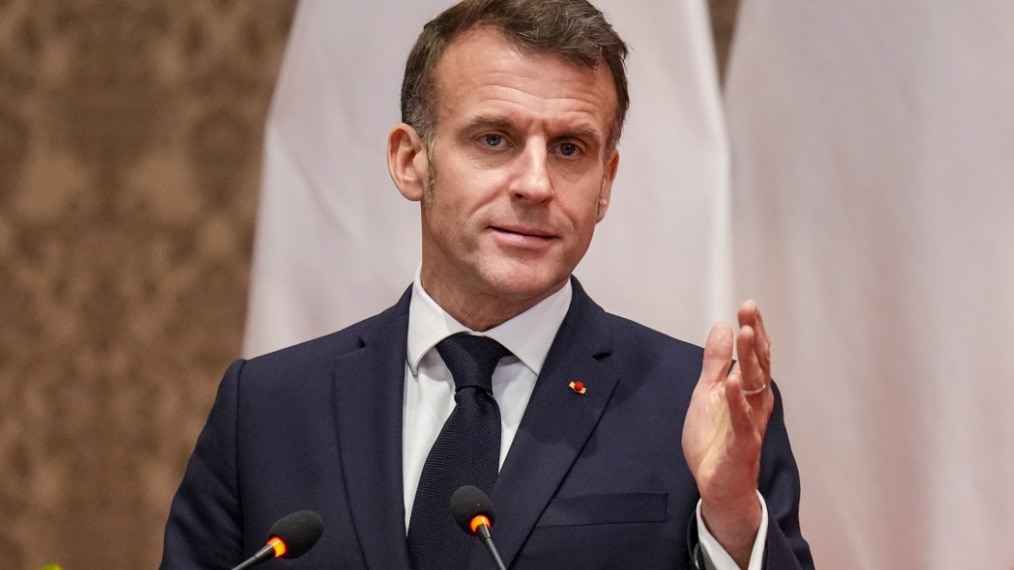
At the same time, several prominent voices argued that Europe must demonstrate strength. Dutch foreign minister David van Weel described Trump’s move as “blackmail". German MEP Bernd Lange, chair of the European Parliament’s trade committee, said the Anti-Coercion Instrument “must now be used". French President Emmanuel Macron made the same request during the EU’s emergency meeting.
The European Commission affirmed that the tool “was never off the table", signalling that it could be activated if diplomacy fails.
What Exactly Is The EU’s ‘Trade Bazooka’?
Europe’s “trade bazooka" refers to the Anti-Coercion Instrument (ACI), a legal mechanism that allows the EU to hit back at economic coercion by restricting another country’s access to the EU single market. It is the most sweeping trade-defence tool the bloc has ever created, giving Brussels the ability to impose retaliatory tariffs, service restrictions, investment limits, public-contract bans, quotas, licences, and even curbs on access to EU-based financial infrastructure.
In practical terms, the ACI lets the EU raise the cost of doing business in Europe for a foreign state it believes is exerting economic pressure on any member.
The EU adopted the ACI in 2023 after a series of coercive actions by powerful economies underscored the bloc’s vulnerability. A key trigger was China’s 2021 decision to block Lithuanian exports after Vilnius allowed Taiwan to open a de facto embassy. The episode strengthened calls for an instrument that could protect the EU’s internal market and deter future pressure.
Its measures go far beyond conventional tariffs. According to economists cited by Al Jazeera, the instrument can impose fees and charges on goods and services, restrict US investment within the bloc, and bar American firms from public procurement. It can also force companies to operate under quotas or licensing rules, and in more severe cases, limit the US financial sector’s ability to use EU-based payment or settlement systems, raising funding costs for American banks and firms.
Jo Michell, a professor of economics at the University of the West of England, told Al Jazeera that “imposing restrictions on the large US tech companies would be particularly painful for the US", given their reliance on European markets. The ACI, he noted, “is the European Union’s most powerful economic weapon."
Initially conceived with countries like China in mind, it was not expected to be considered for use against a close security partner such as the United States, which underscores how unusual the present situation is.
How Would The Anti-Coercion Instrument Be Activated?
The ACI is deliberately complex, reflecting its status as a last-resort mechanism. The process begins when a company, member state or the Commission files a complaint alleging coercion. The European Commission then opens a formal investigation, typically lasting up to four months.
If coercion is established, the Commission first attempts diplomatic resolution. Only when those efforts fail does it propose ACI action. For the bazooka to be triggered, a “qualified majority" of member states — at least 15 countries representing 65 per cent of the EU population — must approve it. Larger countries such as France, Germany and Italy therefore play a decisive role.
Once a proposal is submitted, member states have up to ten weeks to vote. The entire process can take up to a year before the bazooka takes full effect, though urgency could accelerate initial steps. Dan Hamilton, a senior non-resident fellow at the Brookings Institution, told CNN that suspending US company licences or taxing US services could take the EU months to implement.
This timeline matters: although Europe may have powerful tools, its leaders must weigh them against the immediate economic risks of escalating a trade conflict.
Could The Bazooka Hurt The US, Or Backfire On Europe?
The US runs a significant goods trade deficit with the EU. In 2024, Europe exported goods worth €531.6bn to the United States and imported €333bn, leaving a surplus of nearly €200bn. The picture reverses for services, where the United States holds a surplus of more than €109bn, driven by technology, intellectual property and financial services.
The ACI’s most potent effect would be on services rather than goods. Restrictions or charges on US digital, technology or financial firms could be highly disruptive, with potential market repercussions. The EU could also deny government contracts to US companies or impose compliance requirements that make market access more expensive.
But Europe would face consequences as well. Retaliatory tariffs would increase prices for consumers and industries relying on American goods, while restrictions on US services would affect banking, technology access and supply chains. Both sides would feel the impact of such measures.
Carsten Brzeski, global head of macro at ING, said that “some European leaders are willing to play hardball", but warned that businesses now face “another period of uncertainty around investments in and exports to the US". Uncertainty has already caused American firms to pause hiring, according to CNN, as shifting tariff policies complicate planning.
Is There A Loophole In Trump’s Tariff Strategy?
Because the tariffs target specific European countries rather than the EU as a whole, some analysts say that goods could be rerouted through other member states to avoid penalties. Joseph Foudy, a New York University Stern School of Business professor, told CNN that “there’s no border between Spain, Italy, Germany and France. Anybody can ship a good through another country quite easily if we try and tariff individual states." This raises practical questions about how effectively Washington could enforce such a policy.
The loophole also highlights the difficulty of applying tariffs within a vast free-trade bloc where supply chains are deeply integrated.
What Will Europe Choose To Do?
UK financial media have reported that the EU is considering €93bn in retaliatory tariffs against the United States, a step that would not require triggering the ACI. Mohit Kumar, chief European economist at Jefferies, told Al Jazeera that “imposing 93 billion of tariffs is the first line of defence", but believes that activation of the bazooka remains unlikely because the ACI requires a qualified majority and key states prefer negotiation.
“My base case remains that cooler heads will prevail," he said, suggesting that a compromise involving mineral rights or enhanced US military access, without altering Greenland’s sovereignty, could be discussed.
European leaders, from Ursula von der Leyen to Antonio Costa, have warned that tariffs risk a “dangerous downward spiral". Yet they also emphasise that Europe will remain “united, coordinated, and committed to upholding its sovereignty".
The coming weeks will determine whether diplomacy can resolve a dispute that now touches security, economics and political identity on both sides of the Atlantic. What is clear is that Trump’s Greenland-linked tariff threat has forced Europe to consider deploying a tool it never expected to use against the United States. Whether the continent’s most powerful economic weapon remains a deterrent, or becomes an active instrument, will shape the next phase of transatlantic relations.
First Published:
January 21, 2026, 12:16 IST
News explainers What Is Europe's 'Trade Bazooka'? The Option Being Weighed Against Trump's Greenland Threats
Disclaimer: Comments reflect users’ views, not News18’s. Please keep discussions respectful and constructive. Abusive, defamatory, or illegal comments will be removed. News18 may disable any comment at its discretion. By posting, you agree to our Terms of Use and Privacy Policy.
Read More