1 month ago
Last Updated:February 24, 2026, 14:27 IST
Prime Minister Narendra Modi will be embarking on a two-day state visit to Israel – his second to the country after his landmark 2017 trip – from February 25


Prime Minister Narendra Modi greets his Israeli counterpart Benjamin Netanyahu (Image: PTI/File)
Amid the West Asia turmoil, Prime Minister Narendra Modi is visiting Israel – his second to the country after his landmark 2017 trip – for a two-day state visit on Wednesday, February 25.
Prime Minister Modi is looking to deepen bilateral relations with Israel, spanning defence, trade and technology. The visit comes at a time when Israeli Prime Minister Benjamin Netanyahu has named India as a potential member of his “Hexagon of Alliances."
Netanyahu has publicly described Modi as a “dear friend" and called the India-Israel relationship a “powerful alliance between two global leaders." The two leaders are expected to hold wide-ranging talks on defence co-development, advanced technology cooperation and a proposed regional security framework that Netanyahu has been pushing ahead of the visit.
WHAT IS ON THE TABLE?
Talks between Modi and Netanyahu are expected to focus on expanding cooperation in artificial intelligence, cybersecurity, agriculture and water management.
On the defence side, both sides are looking at joint development of anti-ballistic missile systems, laser weapons, drones and long-range stand-off missiles. Indian officials have also signalled interest in deeper collaboration on Israeli systems such as Iron Dome, David’s Sling and Arrow. An updated security pact is expected to be signed, covering next-generation defence technologies.
Modi is also expected to address the Knesset, Israel’s parliament – a rare honour that underlines the diplomatic weight both sides attach to the visit.
Bilateral trade between the two countries stood at approximately $3.75 billion in 2024-2025, as per Indian figures, excluding arms sales.
Israel is among India’s top arms suppliers. Between 2020 and 2024, it accounted for 13 percent of India’s military hardware imports making it the third-largest supplier after Russia and France, as per data from the Stockholm Peace Research Institute.
Indian defence cooperation with Israel dates back to the 1962 war with China and has strengthened significantly under successive governments.
THE HEXAGON OF ALLIANCES
The most discussed matter going into this visit is Netanyahu’s “Hexagon of Alliances," a proposed six-nation bloc involving countries in and around West Asia.
Netanyahu has named India, Greece and Cyprus as potential members, alongside unspecified Arab, African and Asian countries.
“In the vision I see before me, we will create an entire system, essentially a hexagon of alliances around or within West Asia," Netanyahu was quoted by the Times of Israel. “The intention here is to create an axis of nations that see eye to eye on the reality, challenges, and goals against the radical axes, both the radical Shia axis, which we have struck very hard, and the emerging radical Sunni axis."
The framework is designed to operate across three tracks: economic cooperation, diplomatic alignment and security collaboration. Netanyahu has drawn a parallel to the India-Middle East-Europe Economic Corridor, known as IMEC, though the hexagon carries a distinctly stronger security dimension.
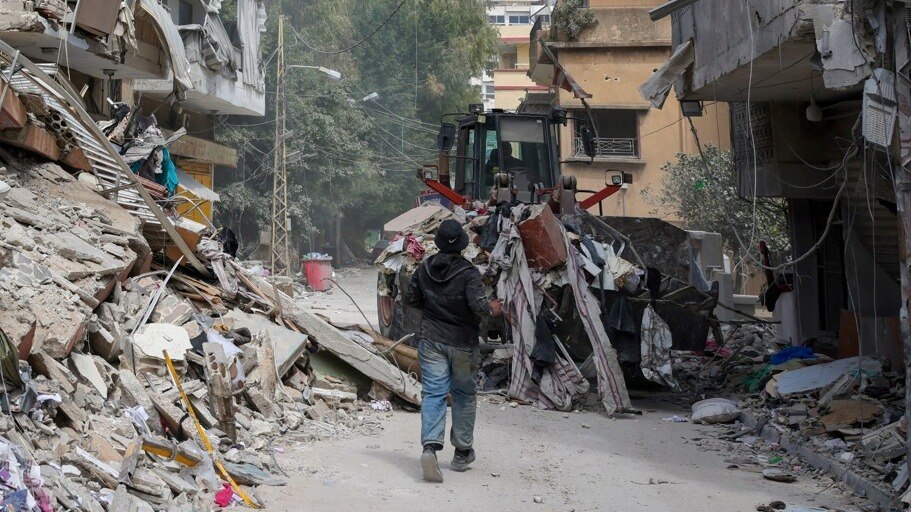
The primary target of the grouping is Iran and its network of regional proxies, collectively referred to as the Axis of Resistance. It includes Lebanon’s Hezbollah, Yemen’s Houthis and various Iranian-backed armed groups across Iraq and Syria.
Israel has conducted sustained military operations against several of these groups since the outbreak of the Gaza war in October 2023. Netanyahu sees the hexagon as a longer-term diplomatic and strategic architecture to counter Iran’s regional influence, especially in the wake of military setbacks the Axis of Resistance has suffered.
Hamas has already responded. Spokesperson Hazem Qassem rejected the proposal, calling it “a direct threat to their strategic interests" and urging Arab states to recognise what he called the dangers of the plan, as reported by i24News.
INDIA’S BALANCING ACT
While Israel is keen to formally bring India into this architecture, New Delhi is expected to approach any such commitment with caution.
India maintains strong ties with Iran, including involvement in the development of Iran’s Chabahar port, a strategic trade gateway to Afghanistan. It also counts Gulf nations among its most important economic and diplomatic partners, with millions of Indian workers employed across the region.
“This allows India to deepen cooperation with Israel in areas such as defence, technology and economic integration, while also sustaining diplomatic engagement with the Palestinian leadership and strong ties with Arab states," Kfir Tshuva, a lecturer in economics at the Ramat Gan Academic College, told Al Jazeera.
India’s official position continues to support a two-state solution to the Israeli-Palestinian conflict. Only days before Modi’s departure, India joined more than 100 nations in condemning Israel’s expansion in the occupied West Bank. New Delhi has, however, consistently abstained from UN resolutions calling for a ceasefire in Gaza and an arms embargo on Israel.
Geopolitical analyst Kadira Pethiyagoda told Al Jazeera that the timing of the visit carries risk for India’s image as a neutral actor in regional disputes.
“The timing of the visit, when the US is likely to strike Iran, is not ideal in terms of maintaining this image," Pethiyagoda was quoted.
TRADE, INVESTMENT AND PEOPLE
Beyond defence and diplomacy, economic ties form a solid foundation for the relationship. India is currently Israel’s second-largest trading partner in Asia after China.
The Adani Group operates the Mediterranean port of Haifa, and Israeli defence companies including Elbit Systems and Rafael Advanced Defense Systems have established joint ventures with Indian firms such as Tata Advanced Systems.
Thousands of Indian workers are now employed in Israel’s construction sector, having replaced Palestinian workers whose permits were revoked after the 2023 Hamas attack on October 7. India and Israel also signed a Bilateral Investment Treaty in September 2024.
The two countries share historical and civilisational connections as well. Over 1,00,000 Jews of Indian origin live in Israel today. The Paradesi Synagogue in Kochi, built in 1568, stands as a marker of ties that stretch back centuries.
Modi’s visit is being closely watched across the region and in New Delhi. It signals India’s intent to remain a key player in west Asian affairs, even as it navigates relationships with partners whose interests do not always align. Whether India formally engages with the Hexagon of Alliances, or keeps its distance, will offer the clearest signal yet of how far New Delhi is willing to go in reshaping its role in the Middle East.
Handpicked stories, in your inbox
A newsletter with the best of our journalism
First Published:
February 24, 2026, 14:27 IST
News world Shalom, Namaste: Trade & Defence To 'Hexagon Of Alliances', What PM Modi's Israel Visit Will Focus On
Disclaimer: Comments reflect users’ views, not News18’s. Please keep discussions respectful and constructive. Abusive, defamatory, or illegal comments will be removed. News18 may disable any comment at its discretion. By posting, you agree to our Terms of Use and Privacy Policy.
Read More