56 minutes ago
In his maiden UN General Assembly address, Tarique Rahman said Bangladesh is pursuing a 3-R repair strategy. He also sought continued support for Rohingya refugees and stressed diplomacy in global conflicts.
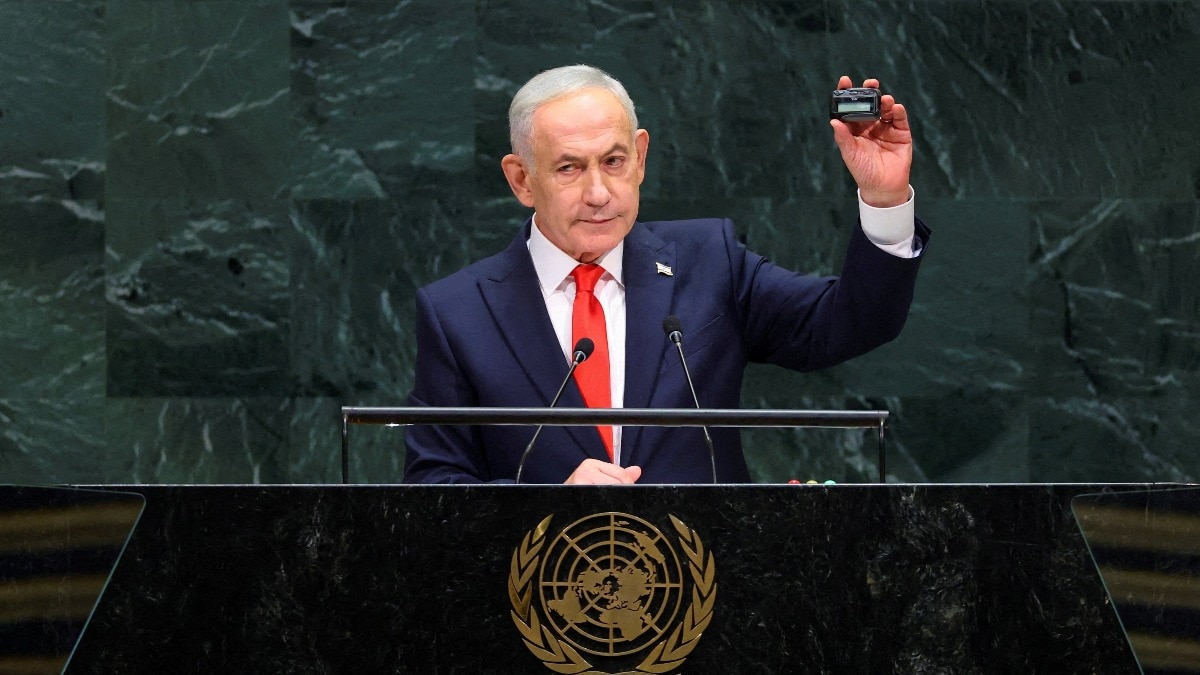
Image used for representational purposes only
Unitednations,Sep 25, 2026 09:52 IST

Bangladesh is following a strategy of recovery, restoration and reconstruction to “repair” the country after it “became free from fascism in 2024”, Prime Minister Tarique Rahman said in his maiden address to the UN General Assembly. Speaking in Bangla at the General Debate of the 81st session on Thursday, Rahman said the country was now “once again embarking on the path of democracy”.
Rahman also became the third member of his family to address the UNGA, after his father, former president Ziaur Rahman, who spoke at the assembly in 1980, and his mother, former prime minister Khaleda Zia, who addressed it in 1993.
“After ending more than a decade and a half of fascist rule and exploitation, Bangladesh became free from fascism in 2024,” Rahman said. “Having been freed from the scourges of enforced disappearances, killings, abductions, corruption, plunder and money laundering that had become the norm under fascist rule, Bangladesh is now once again embarking on the path of democracy,” he said. He said the government was pursuing a “3-R strategy: Recovery, Restoration and Reconstruction” to repair a country battered by “fascist rule and exploitation”. He added that after “more than a decade and a half of movement and struggle against fascist rule and exploitation, and through the sacrifice of thousands of lives, Bangladesh is now free from fascism”. Rahman also said that in a “free, fair and impartial” national election held in February this year, the people entrusted the Bangladesh ist Party with the responsibility of governing the country.
On global conflicts, Rahman said every dispute should be resolved through “dialogue, diplomatic processes and cooperation”. “Equality, fairness, protection of mutual interests, and respect and dignity among disputing states should form the basis of bilateral and multilateral relations,” he said. “We aspire to a peaceful world, a humane global community where, rather than weapons of destruction, reason and debate, diplomacy, education and humanity become the instruments of change,” he added.
On the Rohingya issue, Rahman said Bangladesh had been sheltering more than 1.2 million forcibly displaced Rohingya from Myanmar for more than nine years, putting “immense pressure” on the country’s resources, environment, security and local communities. He said Bangladesh believed the source and origin of the crisis lay in Myanmar and that “the only solution to this problem is the early safe return of the displaced Rohingya people to their homeland, Myanmar”. He urged the United Nations and the international community to continue life-saving assistance programmes for the displaced Rohingya until they could be repatriated. “If the international community fails to ensure justice for the displaced Rohingya people, this could turn into a humanitarian crisis in the near future,” he said.
In his address, Rahman presented Bangladesh’s political changes since 2024, outlined the government’s 3-R strategy, called for disputes to be settled through diplomacy, and sought continued international support for Rohingya refugees until their return to Myanmar.
With PTI Inputs
- Ends