1 month ago
In a message directed at neighbouring and 'friendly' countries, Iranian President Masoud Pezeshkian said Iran had worked with regional leaders to keep tensions from escalating before the ongoing armed hostilities broke out.
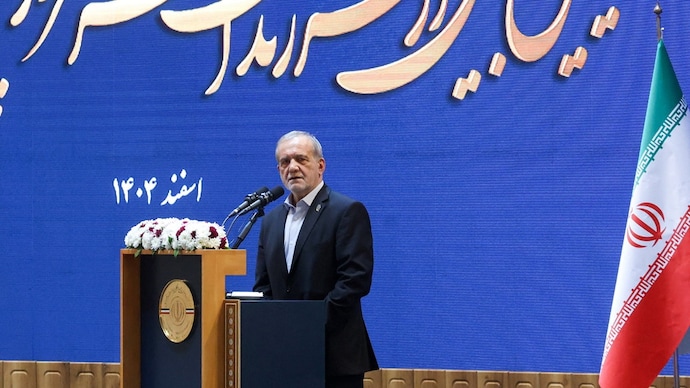
Iranian President Masoud Pezeshkian said regional peace must be ensured by countries in the region themselves. (Reuters photo)

New Delhi,UPDATED: Mar 5, 2026 02:28 IST
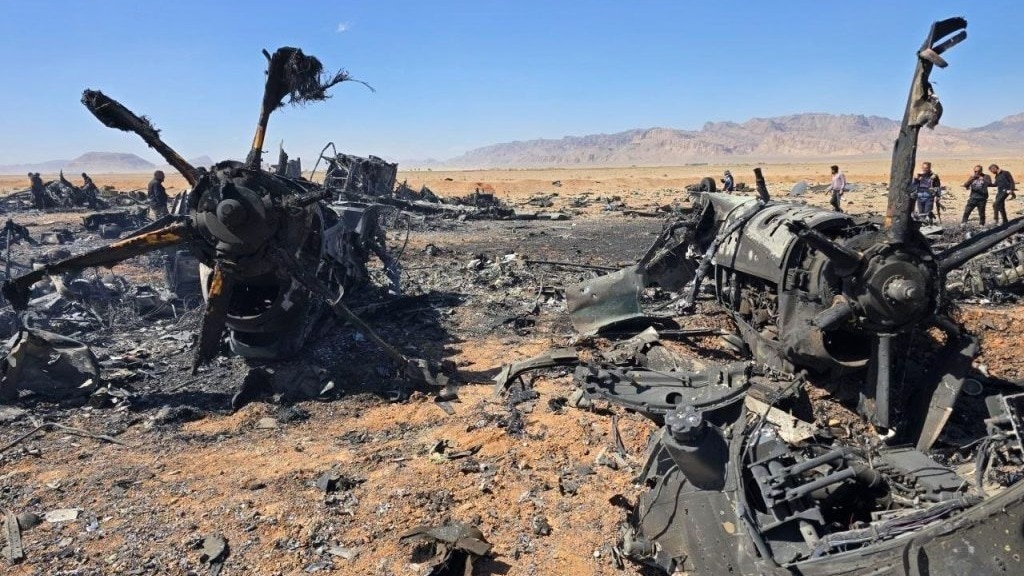
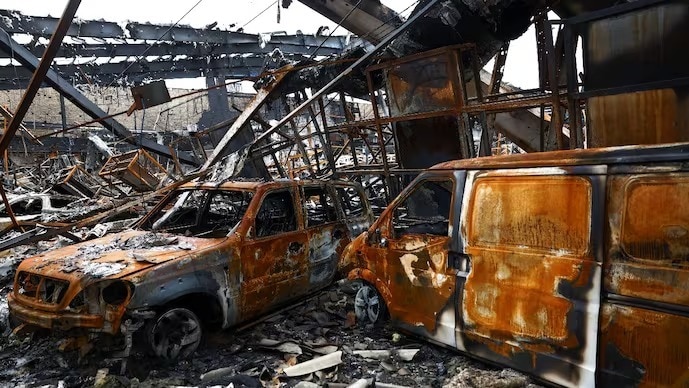
Iranian President Masoud Pezeshkian said on Wednesday that Tehran had attempted to prevent war through diplomacy but was forced to respond after the joint American-Israeli military strike that rattled Iran over the past weekend.
In a message directed at neighbouring and 'friendly' countries, he said Iran had worked with regional leaders to keep tensions from escalating before the ongoing armed hostilities broke out.
"Dear esteemed leaders of our friendly and neighbouring countries, we have strived, with your assistance and through diplomacy, to avoid war," Pezeshkian said in a message (originally in Persian) posted on X.
"However, the American-Zionist military attack has left us with no choice but to defend ourselves."
The Iranian president addressed his remarks directly to leaders across the Persian Gulf from Iran, seeking to reassure them that Tehran values regional cooperation despite the intensifying conflict.
"We respect your sovereignty and still believe that the region's peace must be ensured by the countries of the region," he said. Pezeshkian's comments came as hostilities escalated across the Middle East.
Meanwhile, Iran's Islamic Revolutionary Guard Corps (IRGC) has tightened its grip on wartime decision-making despite the loss of several senior commanders, according to officials and analysts.
According to Reuters, the Guards had already pushed operational authority down the chain of command before the weekend’s US-Israeli strikes. The move was meant to ensure continuity during wartime, but analysts warn that empowering mid-ranking officers could increase the risk of miscalculation or widen the conflict. On Wednesday, Iran also launched strikes targeting Turkey, a NATO member.
Within Iran, the Guards' powerful role in the political and security apparatus — along with their strict control over internal security — may also make it difficult for large-scale protests to emerge, potentially frustrating any expectations in Washington or Israel that the attacks could trigger an uprising against the government.
Washington indicated that the military campaign against Iran could intensify.
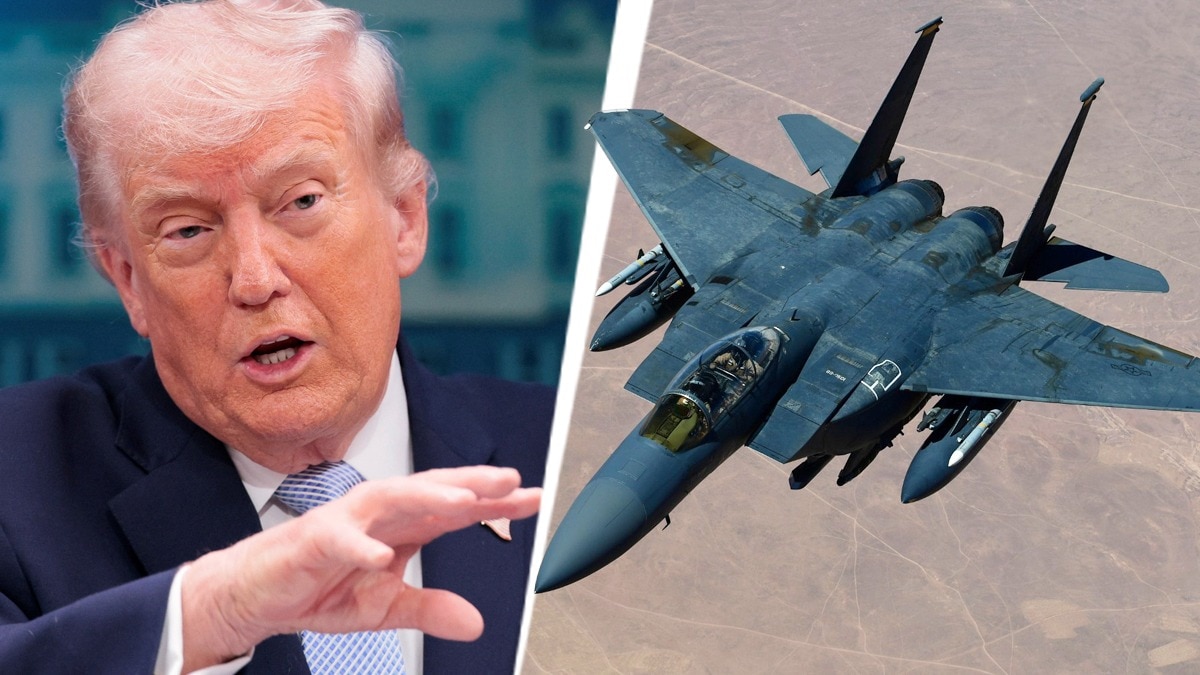
US Defense Secretary Pete Hegseth said American and Israeli forces were nearing control of Iranian airspace as Iran’s defences weaken under continued strikes.
According to him, the two militaries are close to achieving "complete control of Iran’s airspace", a move that could further tilt the battlefield in favour of US-Israeli operations.
ARAB LEAGUE'S CONDEMNATION OF IRAN
On Wednesday, Arab League chief Ahmed Aboul Gheit, in a formal statement, said that Iran's missile and drone strikes are deepening an "unprecedented state of hostility" with its Gulf neighbours.
He demanded Tehran stop the attacks, which he called a "strategic mistake", saying "Iran must come to its senses".
The Arab League, made up of 22 member states, promotes regional cooperation. However, it is widely seen as toothless and has long struggled to help solve conflicts.
- Ends
(With inputs from agencies)
Published On:
Mar 5, 2026 02:28 IST
Tune In