1 month ago
Trump rejected Iran's demand for war compensation as Tehran linked Hormuz reopening to US concessions. The exchange sharpened regional anxieties over oil flows, sanctions and widening instability.

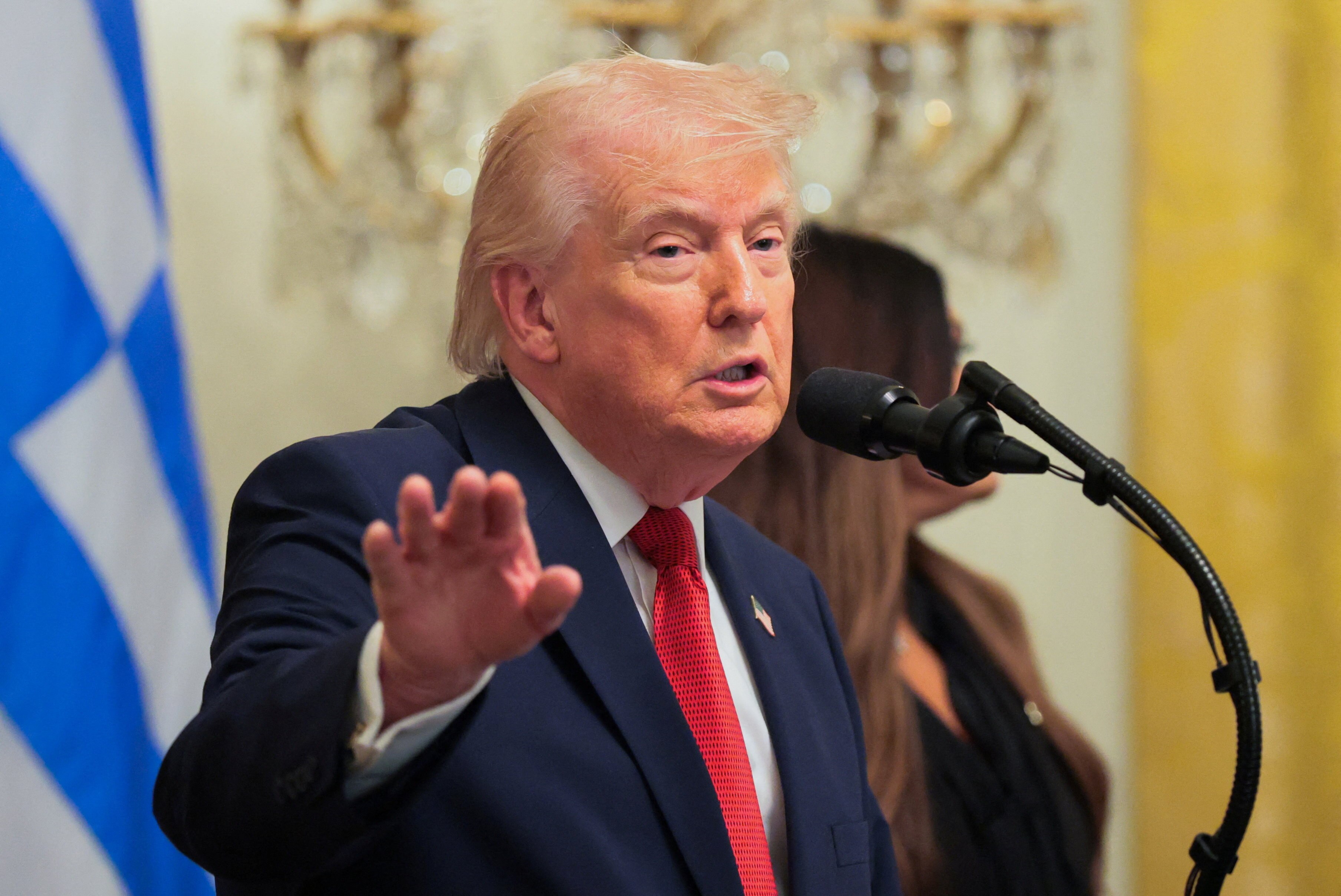
Image used for representational purposes only

Dubai,UPDATED: Aug 11, 2026 09:14 IST
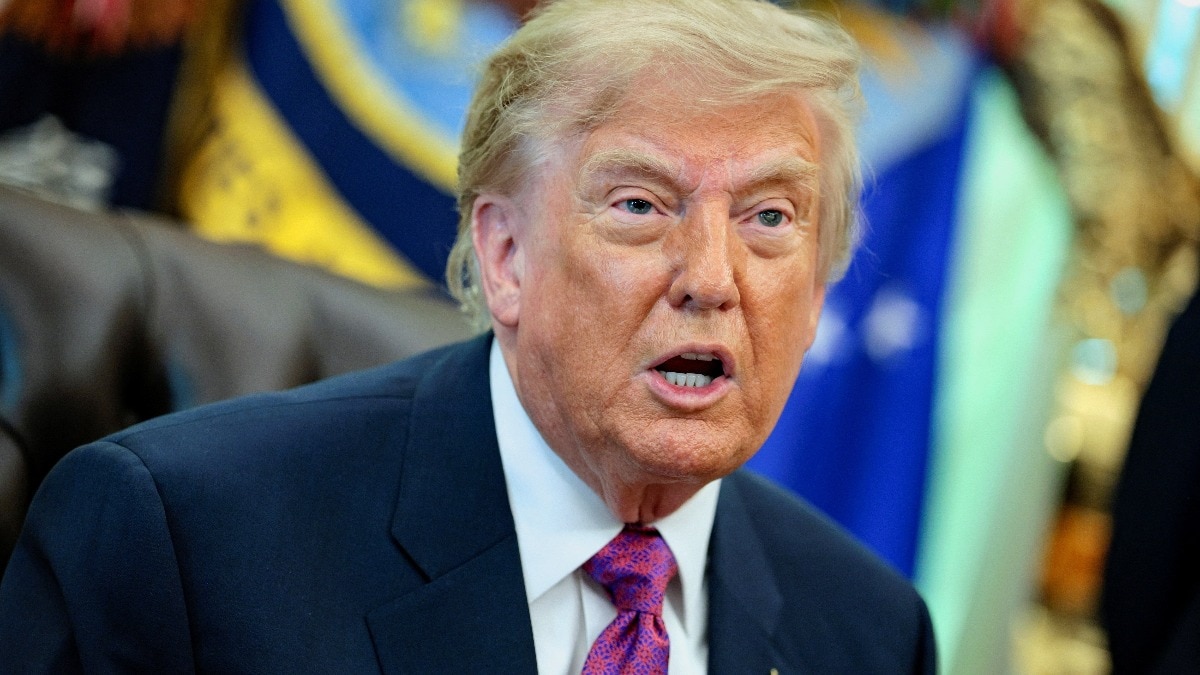
US President Donald Trump on Monday rejected Iran's demand for compensation for damage caused by months of US and Israeli bombardment, saying Tehran's negotiators had not raised the issue until now. His remarks came as Iran insisted it would not reopen the Strait of Hormuz unless Washington met a set of conditions, keeping the waterway and energy prices at the centre of attention.
The developments came amid wider tensions across the region. Iran's president said the country's new supreme leader was pushing for "unity and cohesion" as the Islamic Republic dealt with sanctions and economic strain. Iran has also named former Revolutionary Guard commander Mohsen Rezaei to its top security post, while Israel announced a closed military zone in the West Bank town of Taybeh and Yemen reported casualties from a Houthi attack on the Red Sea town of Mokha.
Trump's social media post came after Iranian Foreign Ministry spokesperson Esmail Baghaei said Iran would not reopen the Strait of Hormuz until the US ended its blockade of Iranian ports, lifted economic sanctions, released frozen Iranian assets and paid compensation for war damage. "It is up to the US side to stop and make amends for its illegal and destructive actions," Baghaei said.
Trump responded by saying he was now demanding "compensation from Iran, for all of the people that they have killed and gravely wounded with their roadside bombs and many conflicts". The US government has blamed Iran-backed militants for the deaths and injuries of hundreds of Americans over several decades, including the 1983 bombing that killed 241 US military personnel at a Marine compound in Beirut and the deaths of at least 603 US troops in Iraq between 2003 and 2011.
Trump also said he wanted Tehran to compensate the families of Iranian protesters who were killed. "I have instructed my representatives to put this firmly into any, and all, future negotiations," he said. The closure of the Strait of Hormuz, through which about one-fifth of the world's traded oil supplies passed before the war, has kept energy prices in focus in US politics ahead of November's midterm elections.
In Iran, President Masoud Pezeshkian said the country's supreme leader wanted "unity and cohesion" as the country faced economic hardship and sanctions linked to the war with the United States. In an interview aired by state television, Pezeshkian described a meeting of nearly seven hours with Ayatollah Mojtaba Khamenei amid apparent tensions among Iran's leaders.
Pezeshkian told IRIB that he and Khamenei discussed "people's livelihoods, the state of the market, employment, people's housing", along with "problems that are now being created as a result of the sanctions". He did not say when or where they met. He said Khamenei's main message was unity. "All of the enemy's plans are aimed at creating division," Pezeshkian said. "What we have to do is prevent divisions from emerging." It was only the second time Pezeshkian had said he met the new supreme leader since Khamenei was appointed in March after a US-Israeli strike killed his father. Khamenei, believed to have been wounded in the same attack, has not appeared in public since then.
Iran on Sunday appointed Rezaei, a military adviser to Khamenei, as head of the Supreme Security Council. Rezaei led the Revolutionary Guard from 1981 to 1997, including during the 1980s war with Iraq. The 71-year-old hard-liner said last week that American forces would face "serious risks and casualties" if the US did not lift its blockade of Iranian ports. He replaces Mohammad Bagher Zolghadr, who will become a political adviser to Khamenei. The Institute for the Study of War said Rezaei appeared ready to negotiate with the US to "secure Iran's maximalist aims, including control of the Strait of Hormuz," while being "unwilling to present any Iranian concessions".
In the occupied West Bank, Israel's military said it had declared the Christian-majority town of Taybeh a closed military zone to keep out Israeli settlers and other non-residents. The move follows arson, vandalism and settlers entering private and village property. The army said Palestinian residents and journalists would be allowed in unless soldiers found their presence posed a threat, and said troops would detain suspects and disperse gatherings to keep the peace. The designation came after months of the army and police struggling to maintain order in the territory, where at least 87 Palestinians have been killed by Israeli settlers or soldiers in 2026, according to the Ramallah-based Palestinian Health Ministry.
In Yemen, the Iran-backed Houthis attacked the government-held Red Sea port town of Mokha on Sunday, killing seven people and injuring 30, according to Yemen's Defence Ministry. The ministry said the dead included four military personnel and three civilians. Clashes continued on Monday near Taiz. The Houthi group said a 13-year-old child was killed by artillery shelling and another child was injured. The attack was the latest in one of the biggest waves of Houthi strikes on Yemeni military positions and Saudi-backed government-held areas since a 2022 truce, as threats to shipping through the Strait of Hormuz renewed attention on the Red Sea and the Bab el-Mandeb Strait.
Overall, Monday's developments underlined the strain across the region, with Trump and Iran trading demands over compensation and the Strait of Hormuz, Iran's leadership stressing internal unity, and new tensions unfolding in the West Bank and Yemen.
With PTI Inputs
- Ends
Published By:
India Today Web Desk
Published On:
Aug 11, 2026 09:14 IST