1 month ago
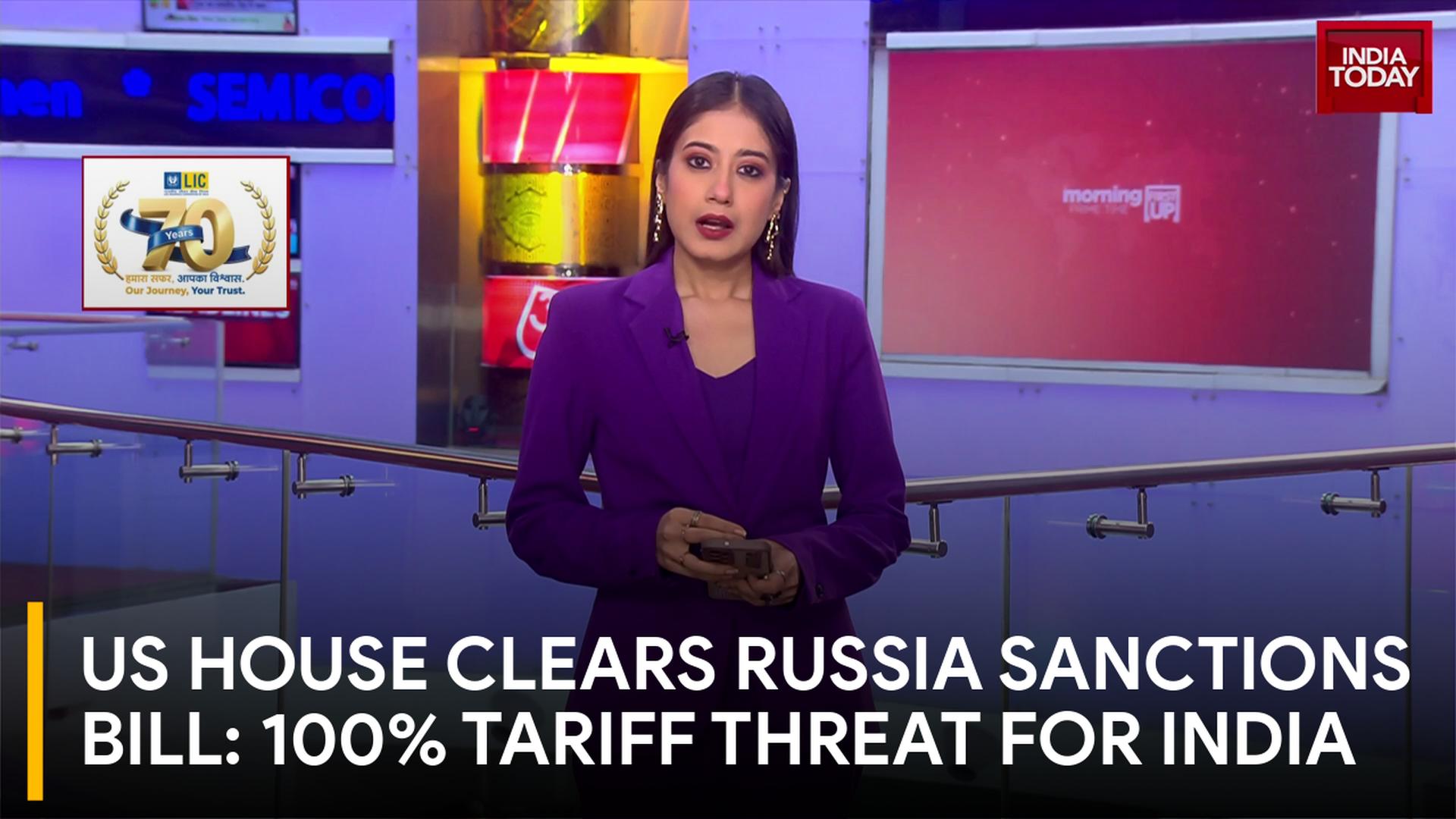
The US Senate has moved to fast-track a bipartisan sanctions bill targeting major buyers of Russian and Iranian oil. The measure could expose India and China to steep tariffs while expanding Donald Trump's trade powers.

Washington,UPDATED: Jul 29, 2026 12:00 IST
The US Senate on Tuesday voted 86-12 to fast-track a bipartisan bill that would allow President Donald Trump to impose sanctions on major buyers of oil from Russia and Iran, a move that could affect countries such as India and China. The legislation, named the Lindsey O Graham Sanctioning Russia and Iran Act of 2026, is widely expected to pass in the 100-member Senate.
The vote came hours after senators gathered to bid a final farewell to Senator Lindsey Graham of South Carolina, who died on July 11. Senators cast their votes after meeting visiting Ukrainian President Volodymyr Zelenskyy, who was in Washington for Graham’s funeral service and later watched from the Senate gallery, waving and smiling as senators lined up to vote.
The Senate voted to invoke cloture, a formal procedure that sets a time limit for debate before a final vote. Graham, a Republican, and Democratic Senator Richard Blumenthal had worked on the Russia sanctions bill for more than a year, while Iran was added to the measure at Trump’s instance. Before the vote, Senator Roger Wicker, Republican from Mississippi and chairman of the Armed Services Committee, said, “The Lindsey Graham sanctions bill will advance the cause of freedom, and it will combat Vladimir Putin’s war machine.”
Blumenthal said the bill would also empower the president to impose tariffs of up to 100 per cent on the five largest purchasers of Russian oil and gas. “It is carefully crafted to make sure we are not hitting our allies and that we are hitting China and India. Let’s be really blunt. China and India are the main culprits here. They purchase the vast majority of oil and gas, they are fuelling Russia’s war machine and they are doing us no favours anywhere else in the world,” he said.
The bill has 62 co-sponsors and would impose primary and secondary sanctions on Russia and those supporting its war in Ukraine. The sanctions would target Russian officials, oligarchs, their family members, foreign persons, Russian banks and financial institutions, and the Russian Shadow Fleet. It also allows the president to impose targeted tariffs on imported goods from countries that buy most Russian oil or gas and help Russia evade sanctions. Section 113 specifically targets the five countries that buy the largest volumes of Russian fuel or facilitate sanctions evasion through shadow fleets, threatening them with additional 100 per cent tariffs. Besides China and India, the other top purchasers named in the bill are Slovakia, Hungary and Azerbaijan. The US Trade Representative would have to reassess the top five purchasers every 180 days to adjust tariff rates based on changes in buying behaviour.
On Iran, the legislation extends the Iran Sanctions Act for five more years, keeping secondary restrictions in place until 2031. It also limits the new tariff authority to a five-year sunset period so that it does not become a permanent part of US trade policy without renewal. Even so, the bill could face resistance in the House, where some Democrats oppose expanding Trump’s tariff powers. “It is extremely dangerous to give Trump massive new tariff powers, particularly after we’ve seen the disastrous impacts of his corrupt, chaotic, and inflationary tariff spree,” House Ways and Means ranking member Richard Neal and Senate Finance ranking member Ron Wyden said in a statement. The bipartisan group backing the measure said it was “proud to announce an agreement on legislation to stop purchasers of Russian oil and gas from fuelling Putin’s war machine and to continue restricting the Iranian regime’s ability to support terrorism and build its nuclear programme”. Overall, the legislation seeks to tighten pressure on Russia and Iran while giving the US president wider powers to act against their major energy buyers.
With PTI Inputs
- Ends
Published By:
India Today Web Desk
Published On:
Jul 29, 2026 12:00 IST