1 month ago
Iran has appointed veteran hardliner Mohsen Rezaei as secretary of the Supreme Security Council. The move returns a longtime Revolutionary Guards commander to the centre of security decision-making during the US conflict.
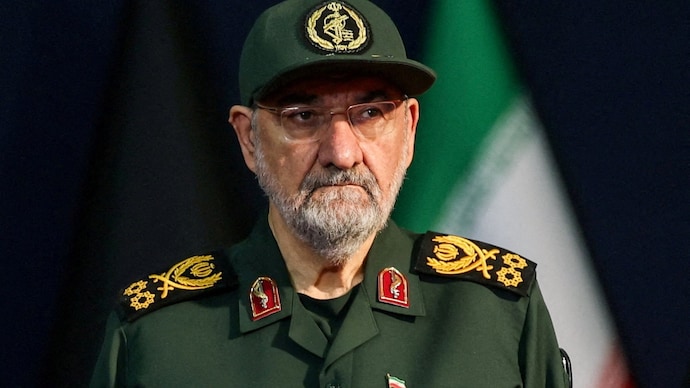
Mohsen Rezaei's rise through Iran's security establishment began soon after the 1979 Islamic Revolution.
Iran has appointed veteran Revolutionary Guards commander Mohsen Rezaei as secretary of its Supreme Security Council (SNSC). He is one of Iran's most prominent hardliners and has been elevated to a key security post more than five months into the country's conflict with the United States. The 71-year-old Rezaei has spent decades in Iran's military and political establishment. He is also a close ally of Supreme Leader Ayatollah Mojtaba Khamenei. Rezaei replaces Mohammad Baqer Zolqadr, who has been appointed as a political adviser to Khamenei.
The SNSC is chaired by President Masoud Pezeshkian. It brings together senior officials from Iran's political, military and intelligence establishments to coordinate national security and foreign policy.
Rezaei is the second person to be appointed to head Iran's Supreme Security Council since the killing of powerful Iranian official Ali Larijani in March, just weeks after the US-Israeli war against the Islamic Republic began.
Khamenei has two representatives on the council, giving the Supreme Leader a direct role in its deliberations. Khamenei confirmed Rezaei's appointment in a post on X, saying: "Considering your valuable experience, I am hereby appointing you, who were one of the first commanders in the triumphant 8-Year Sacred Defense, to be my representative in the Supreme Security Council."
COMMANDER OF THE REVOLUTIONARY GUARDS AT 27
Rezaei's rise through Iran's security establishment began soon after the 1979 Islamic Revolution. He joined the Islamic Revolutionary Guard Corps shortly after the overthrow of the Pahlavi monarchy. In 1981, he became its commander at the age of 27.
He went on to lead the IRGC for 16 years. This included most of the 1980-88 Iran-Iraq war.
During his tenure, the force expanded its ground, naval and air capabilities. The IRGC also emerged as one of the most powerful institutions in Iran's military and political system. Rezaei belongs to a generation of IRGC commanders who emerged from the revolutionary underground. Many of them later became influential figures in Iran's military, political and security establishment.
His influence continued after he left the IRGC command. He remained a prominent political figure and was a perennial candidate for president of the Islamic Republic. Rezaei later entered government. He served as vice president for economic affairs from 2021 to 2023 under hardline President Ebrahim Raisi.
He also holds a doctorate in economics from the University of Tehran.
CLOSE TIES TO MOJTABA KHAMENEI
Rezaei's long military career has also brought him close to Iran's Supreme Leader.
He was appointed military adviser to Mojtaba Khamenei in March. The appointment followed Mojtaba's rise as Iran's Supreme Leader after the death of his father, Ayatollah Ali Khamenei, at the start of the US-Israeli war against Iran.
Since the conflict began, Rezaei has repeatedly commented on the war. His statements have often reflected a strongly confrontational position towards Washington. He has expressed deep scepticism about negotiations with the US. He has also repeatedly warned of the consequences of American military action against Iran.
In April, Rezaei said it would be "great" if the US launched a ground invasion of Iran. He said Iranian forces could take American personnel hostage.
"we would take thousands of hostages and then for each hostage we would get a billion dollars".
He also said at the time: "I am not in favour of extending the ceasefire at all, and this is a personal view".
In June, before Iran signed a memorandum of understanding aimed at ending the war on June 17, Rezaei said the agreement contained ambiguities that needed to be clarified. On June 27, he accused Washington of violating the deal by creating tensions in the Strait of Hormuz.
AN EARLY OPPONENT OF THE SHAH
Rezaei's association with Iran's revolutionary movement dates back to his teenage years. He opposed the Pahlavi monarchy, which was overthrown during the 1979 Islamic Revolution. In 1973, while still a teenager, he was arrested and imprisoned by SAVAK, the Shah's security service.
He also helped establish and develop the Mansouroun militant group, which operated against the monarchy during the 1970s.
Several members of the group who were imprisoned together, including Rezaei, later became part of the senior leadership of the IRGC after the revolution.
CONTROVERSIAL IRAQ WAR RECORD
Rezaei's military career has also been marked by controversy. Critics in Iran have questioned his role in several costly offensives during the Iran-Iraq war that resulted in heavy Iranian casualties.
One of the most controversial was Operation Karbala-4. The December 1986 assault was aimed at breaking through Iraqi defences towards Basra. The operation returned to the spotlight after Rezaei discussed it in a 2018 social media post.
He said Karbala-4 had been conducted to deceive Iraqi forces before the subsequent Karbala-5 operation. Rezaei later clarified that Karbala-4 had initially been planned as a genuine offensive. He said Iran subsequently used the failure of the operation as part of a deception strategy ahead of Karbala-5.
His comments sparked criticism from war veterans, bereaved families and senior political figures.
In addition to his long career as commander of Iran's elite IRGC, Rezaei, 71, has been accused of involvement in the 1994 bombing of the AMIA Jewish community centre in Buenos Aires. The attack killed 85 people and injured more than 300, making it one of the deadliest antisemitic attacks in recent decades.
Argentine prosecutors have accused senior Iranian officials and Hezbollah of involvement in the bombing. Rezaei is among the Iranian officials sought by Argentina over the attack, with Interpol issuing a Red Notice for his arrest. Iran has repeatedly denied involvement in the bombing.
WHAT DOES HIS APPOINTMENT MEAN FOR IRAN?
Rezaei's return to the Iran's national security establishment highlights the continued influence of the country's older political and military elite. His views on the Strait of Hormuz could also become significant in his new role.
Rezaei has repeatedly argued that maintaining control over the strategic waterway is vital for Iran. He has previously said that control of the strait was more important to Iran than acquiring nuclear weapons.
The SNSC is Iran's highest body responsible for national security affairs. It coordinates the country's security and foreign policy and brings together senior government officials, military leaders and intelligence agencies.
The council is chaired by the President, while the Supreme Leader has two representatives on it.
- Ends
With inputs from agencies
Published On:
Aug 10, 2026 18:22 IST