 1 month ago
As Prime Minister Modi heads to the Netherlands to formalise a new Strategic Partnership, New Delhi is signalling a subtle but significant reordering of its European priorities. A strategy that places Amsterdam's ports, Eindhoven's chips, and Dutch billions at the centre of India's global ambitions.
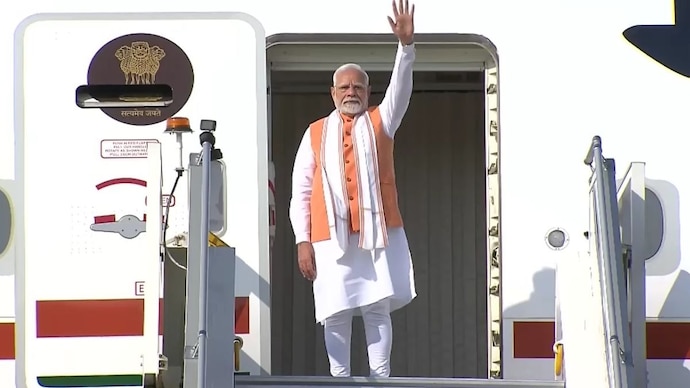
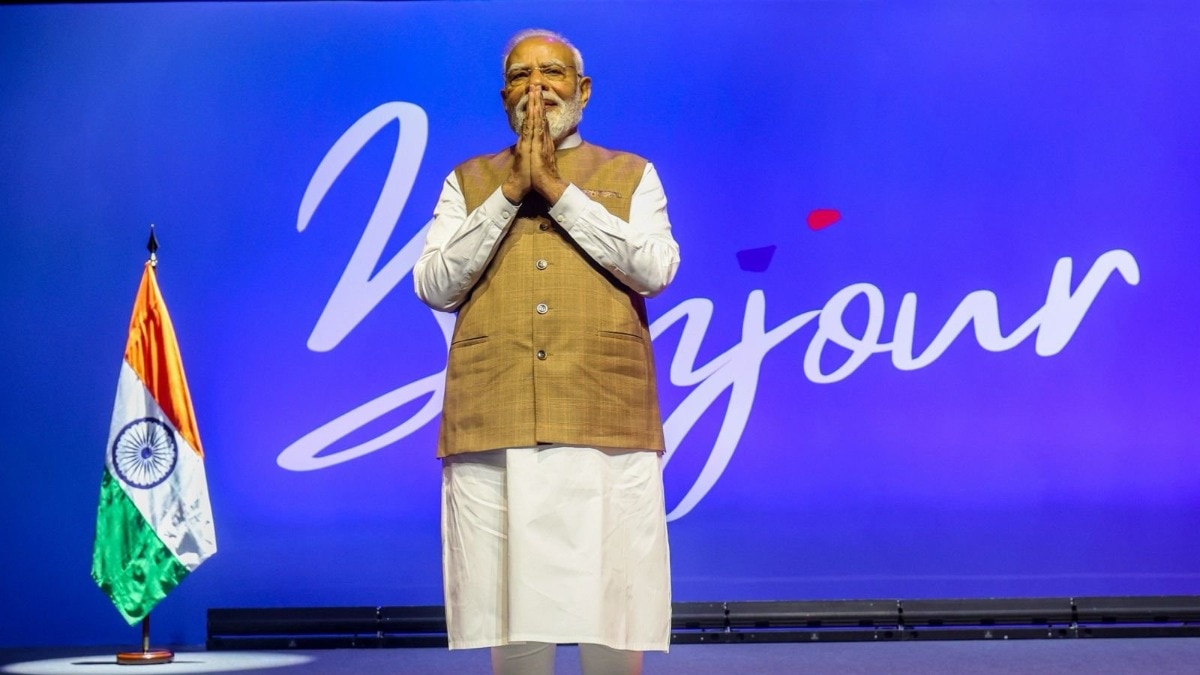
PM Modi to leave for a 5-nation tour to UAE, Netherlands, Sweden, Norway and Italy.

UPDATED: May 13, 2026 09:39 IST
Indian Prime Minister Narendra Modi's two-day visit to the Netherlands may lack the theatre of a summit in Paris or the historic weight of a meeting in London. Yet, for those who read foreign policy carefully, it may well prove to be one of India's most consequential engagements in Europe this year.
At the heart of the visit is the formal signing of a new India-Netherlands Strategic Partnership — a framework that elevates what has long been an underappreciated bilateral relationship into something of far greater geopolitical significance. Modi is scheduled to meet Prime Minister Rob Jetten as well as King Willem-Alexander and Queen Mxima, but the ceremonial dimensions of the visit should not obscure its harder-edged ambitions. This is fundamentally about technology, capital, and long-term strategic alignment.
An unlikely heavyweight
On the surface, the Netherlands might appear an unexpected priority. It commands no permanent seat on the United Nations Security Council, wields no independent nuclear deterrent, and occupies a fraction of the geographic space of Europe's more celebrated powers. And yet the economic relationship between India and the Netherlands is, by any serious measure, remarkably substantial.
Bilateral trade between the two countries has reached nearly 28 billion dollars — a figure that places the Netherlands amongst India's largest trading partners anywhere on the continent. More strikingly still, cumulative Dutch investment into India now exceeds 55 billion dollars, making the Netherlands India's fourth-largest foreign investor globally. These are not the numbers of a peripheral partner. They are the numbers of a country that has quietly become a major stakeholder in India's economic trajectory.
Sectors that matter
What lends this visit its particular strategic texture is the nature of the sectors under discussion. India and the Netherlands are deepening cooperation across semiconductors, green hydrogen, defence, water management, innovation, and advanced technology supply chains. In each case, the choice of partner reflects something deliberate.
The semiconductor dimension is perhaps the most telling. The Netherlands sits at the very apex of the global chip-manufacturing ecosystem. Dutch companies are indispensable to the production of the advanced lithography machines without which modern semiconductors cannot be made. As India presses ahead with its ambition to establish itself as a semiconductor manufacturing hub — backed by significant state incentives and growing private investment — access to Dutch technological expertise and supply chain integration is not merely desirable. It is essential.
Water management, whilst less glamorous, is equally significant. India faces a gathering crisis across multiple dimensions: erratic monsoons, urban water stress, coastal vulnerability, and the long-term consequences of glacial retreat. The Netherlands, which has spent centuries engineering its relationship with water — reclaiming land from the sea, managing river deltas, designing flood-resilient urban infrastructure — offers precisely the kind of applied expertise that India urgently requires. That water cooperation features prominently in the bilateral agenda is a recognition of how seriously both sides take this challenge.
Green hydrogen, meanwhile, sits at the intersection of energy security and climate commitments. As both India and Europe push to decarbonise their industrial economies, the development of hydrogen supply chains — and the infrastructure to support them — represents a long-term area of shared interest that this partnership is well positioned to accelerate.
Timing and geography
The timing of the visit is not incidental. Europe is in the midst of a substantial reassessment of its trade dependencies, energy partnerships, and engagement with the Indo-Pacific. Against this backdrop, India has been working methodically to position itself as a trusted alternative — economically, politically, and in terms of supply chain reliability.
The Netherlands, in this context, is not simply a bilateral partner. It is a strategic gateway. Rotterdam — the largest port in Europe — is a principal node through which goods entering or leaving the continent are routed. Dutch financial and logistics infrastructure has long served as a conduit for international capital flows. A deepened partnership with the Netherlands thus connects India not merely to one country, but to the arteries of European commerce.
This is also Modi's second visit to the Netherlands, the first having taken place in 2017. That continuity matters. It signals political trust, accumulated engagement, and a relationship that has moved beyond the transactional.
The broader foreign policy logic
What this visit ultimately reflects is a maturation in India's approach to Europe. For decades, New Delhi's European diplomacy was organised almost entirely around the major capitals — London, Paris, Berlin, Brussels. Those relationships remain important. But India has increasingly come to recognise that some of its most consequential European partners are countries that control chokepoints: in technology, in logistics, in investment, and in the norms-setting processes of multilateral institutions.
The Netherlands fits this profile precisely. It is a country whose influence vastly exceeds what its size might suggest — a function of its deep integration into global trade, its technological industrial base, and its historical role as a hub for international capital.
By formalising a Strategic Partnership with The Hague, New Delhi is not merely adding another bilateral agreement to a growing list. It is signalling a more sophisticated understanding of where European power actually resides — and ensuring that India has a firm footing there.
- Ends
Published By:
indiatodayglobal
Published On:
May 13, 2026 09:39 IST