1 month ago
Last Updated:February 18, 2026, 12:01 IST
The appointment of these ministers comes at a time when Bangladesh has seen major incidents of violence against religious minorities.


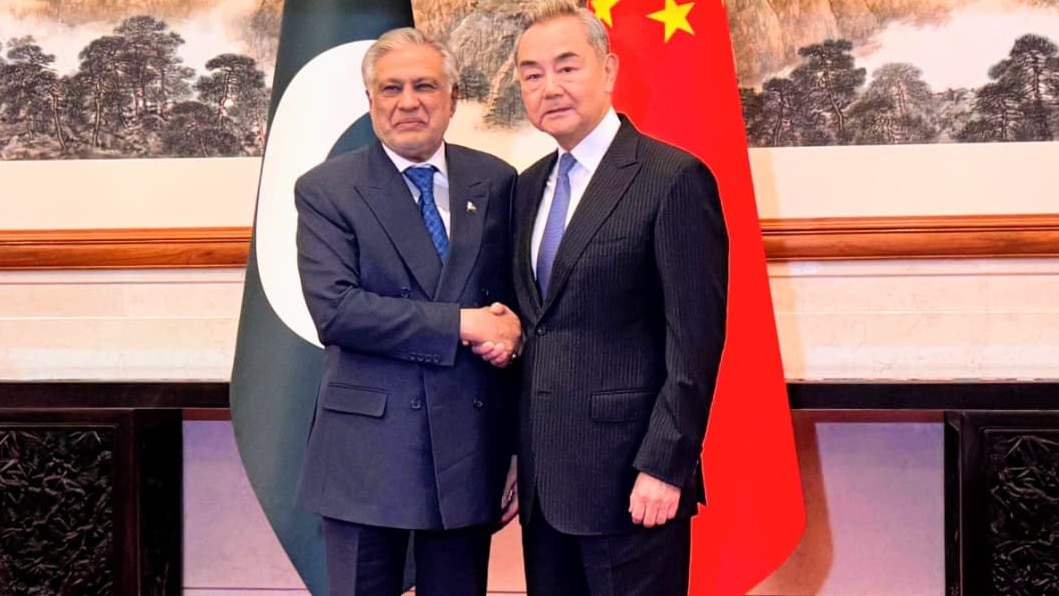
Tarique Anwar has appointed Nitai Roy Chowdhury and Dipen Dewan into his cabinet. (Image: PTI)
Could there be better days ahead of religious minorities in Bangladesh? With the cultural ministry now given to a Hindu minister and the Chittagong Hill Tracts Affairs with a Buddhist minister, political observers are hoping for winds of change with Tarique Rahman taking over as the Prime Minister of Bangladesh.
Tarique Anwar has appointed Nitai Roy Chowdhury, a senior leader of the Bangladesh ist Party (BNP) and one of its vice presidents, as Minister of Cultural Affairs in the cabinet. He represents the Hindu minority community in the government. Dipen Dewan, a politician from the Buddhist Chakma ethnic community, has been appointed as Minister of Chittagong Hill Tracts Affairs. His inclusion represents the Buddhist minority in the cabinet.
The appointment of these ministers comes at a time when Bangladesh has seen major incidents of violence against religious minorities in the days leading to the country’s national elections. The Bangladesh Hindu Buddhist Christian Unity Council reported at least 51 incidents of communal violence in December alone, including 10 murders, 23 cases of looting and arson, homes and temples targeted, physical assaults and alleged false blasphemy detentions, one reported case of gang-rape and torture of a Hindu widow.
Why The Presence Of A Hindu And Buddhist Minister In Tarique Cabinet Matters
BNP Resurrecting Minorities?
Bangladesh has been going through a period of political churn following the electoral transition that brought Tarique Rahman and the Bangladesh ist Party (BNP) to power. For years, the BNP has faced criticism from opponents — particularly the Awami League — over allegations that minority communities, especially Hindus and Buddhists, felt insecure during past BNP-led administrations. In this backdrop, appointing ministers from these communities serves as a political signal aimed at reassuring minorities that the new government intends to be inclusive.
Rights Of Minorities
Bangladesh’s minority communities have faced periodic communal tensions, attacks on temples, land disputes, and migration pressures over the past decade. The Hindu community, which constitutes roughly 8 per cent of the population, has seen its demographic share decline over decades due to historical migration and insecurity. Similarly, Buddhists — particularly from the Chittagong Hill Tracts — have long-standing grievances related to land rights, autonomy, and ethnic recognition. Having direct representation in the cabinet gives these communities not just symbolic visibility but also institutional access to policymaking.
Global Image
The appointments carry international significance. Bangladesh’s treatment of minorities is closely watched by neighbouring India and global human rights observers. After political instability and protests in recent years, the new government faces pressure to demonstrate democratic credibility and communal harmony. Including minority ministers strengthens the administration’s image as pluralistic rather than majoritarian.
Repositioning The BNP
Finally, domestically, these appointments help the BNP reposition itself. Historically perceived as relying heavily on conservative and Islamist-leaning voter blocs, the party is now attempting to broaden its appeal. By bringing Hindu and Buddhist leaders into key portfolios, it signals a recalibration toward moderation and national unity.
Why This Matters For India-Bangladesh Ties
India, particularly under Prime Minister Narendra Modi, has repeatedly stated that the safety of Hindus and other minorities in Bangladesh is a matter of concern. The Modi government has often raised attacks on Bangladeshi Hindus in Parliament and public speeches.
Given that India shares a 4,000-km border with Bangladesh and deep civilisational ties, communal unrest across the border quickly becomes a domestic political issue in India — especially in West Bengal, Assam and Tripura. So when violence against Hindus or Buddhists rises in Bangladesh, it directly affects diplomatic messaging between Dhaka and New Delhi.
Including Hindu and Buddhist ministers in the cabinet therefore sends a reassurance signal not just internally, but externally to India.
Under Sheikh Hasina and the Awami League, India–Bangladesh relations were widely seen as being at their strongest phase — particularly on security cooperation, connectivity and counter-terror coordination.
By contrast, the Bangladesh ist Party (BNP), now led by Tarique Rahman, has historically been perceived in Indian strategic circles as less aligned with New Delhi and more open to Islamist political alliances. In that context, the presence of minority ministers helps the new BNP-led government counter concerns in India that a political transition might mean weakening secular safeguards.
A cabinet that visibly includes Hindus and Buddhists strengthens Bangladesh’s image as pluralistic and stable — making it easier for India to maintain high-level engagement without domestic political backlash.
Handpicked stories, in your inbox
A newsletter with the best of our journalism
First Published:
February 18, 2026, 11:58 IST
News world Why The Presence Of Hindu, Buddhist Ministers In Bangladesh Cabinet Matters
Disclaimer: Comments reflect users’ views, not News18’s. Please keep discussions respectful and constructive. Abusive, defamatory, or illegal comments will be removed. News18 may disable any comment at its discretion. By posting, you agree to our Terms of Use and Privacy Policy.
Read More