 1 hour ago
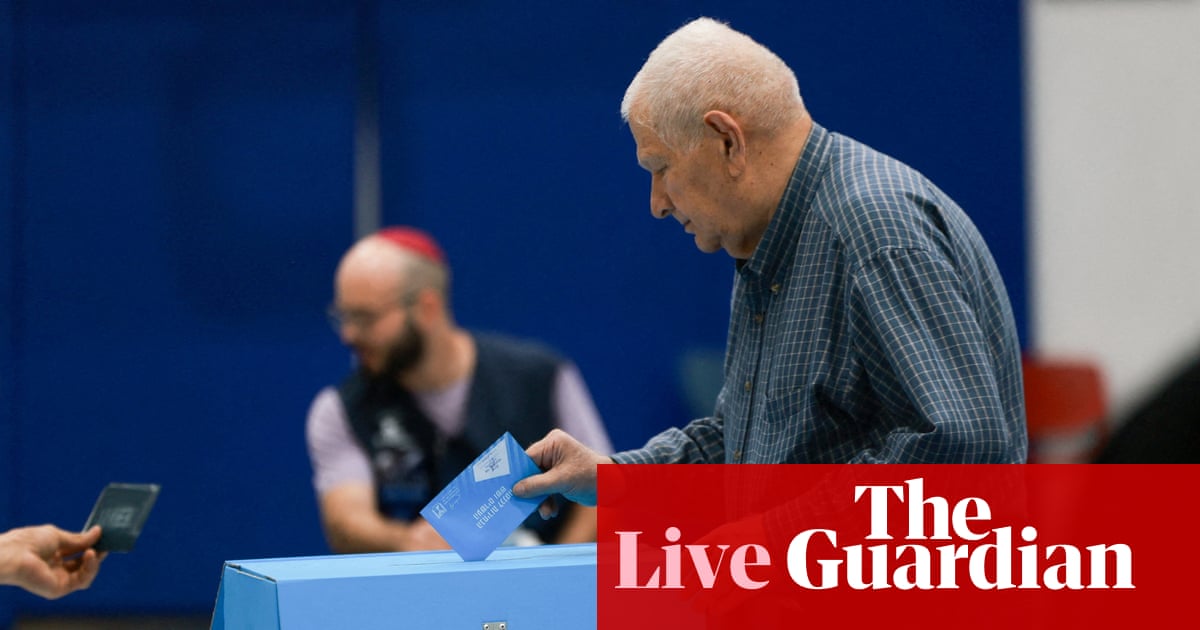
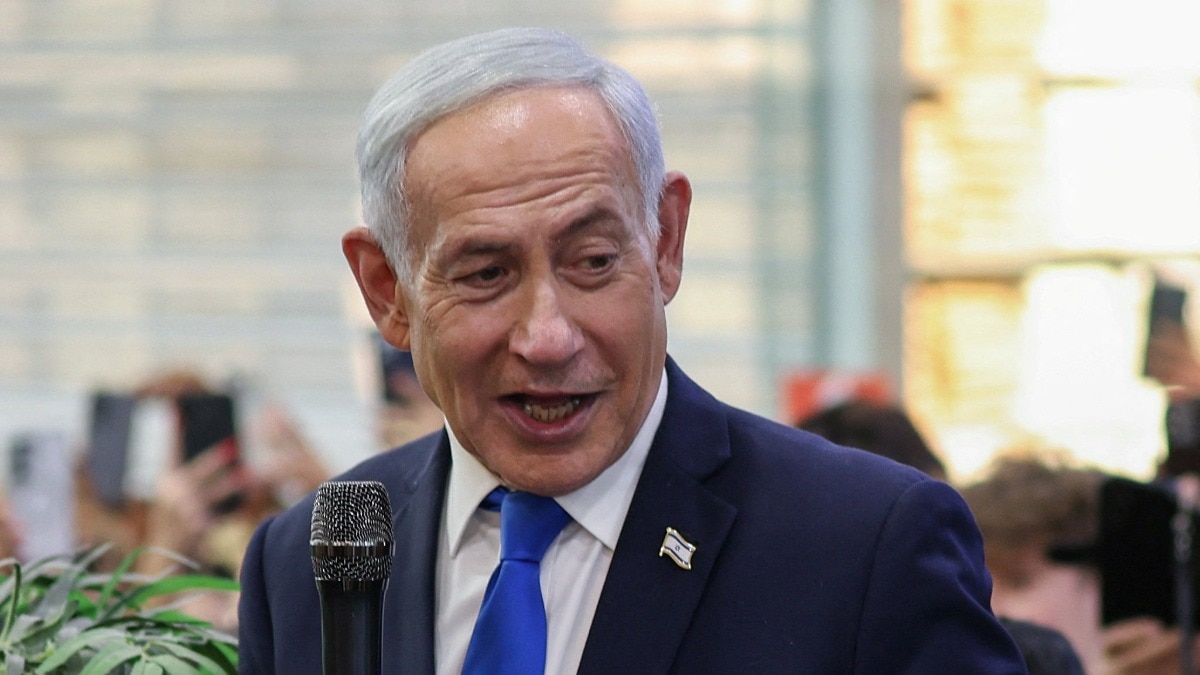
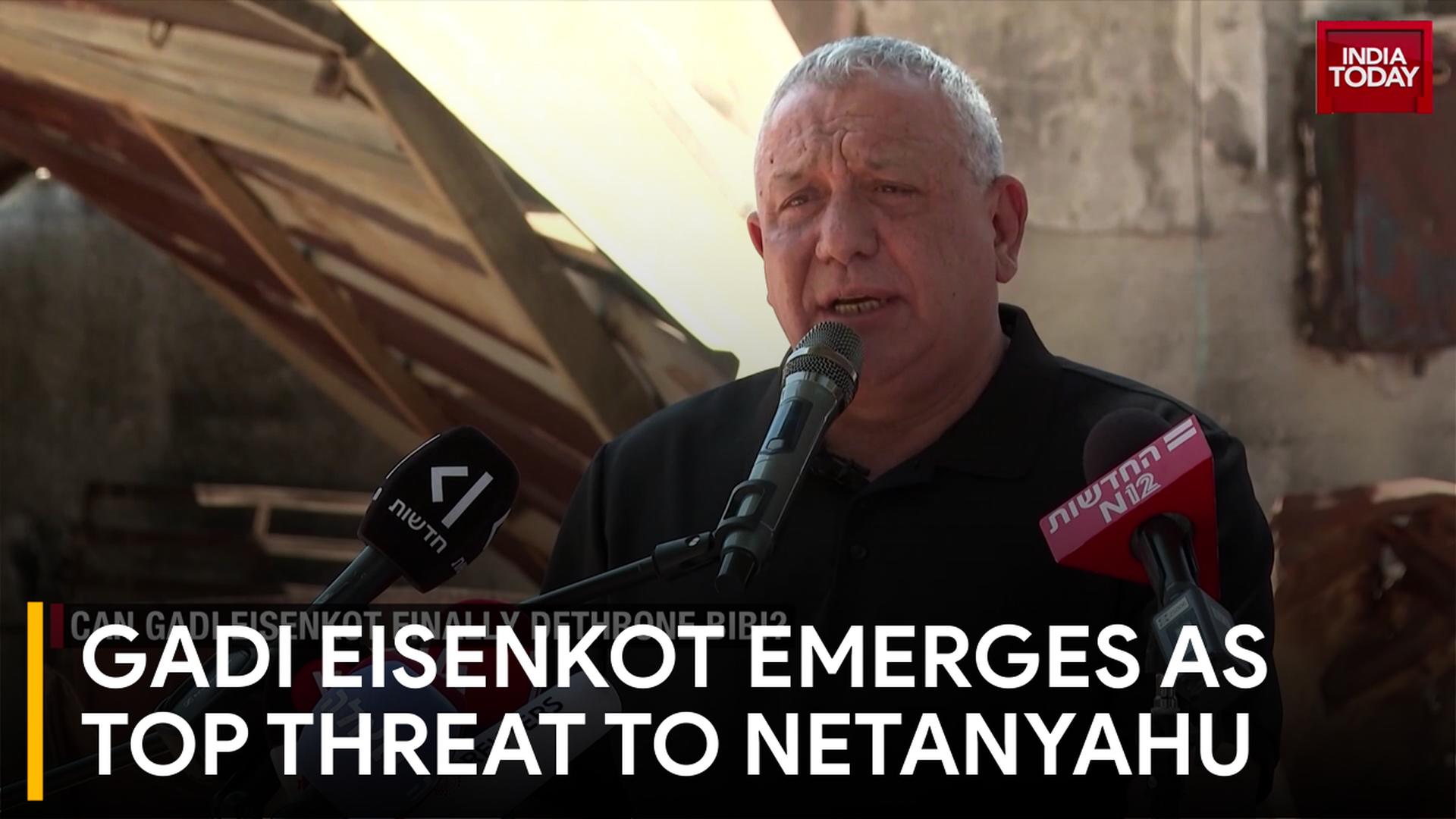
Israel's incumbent Prime Minister Benjamin Netanyahu, projected as polling behind his rival Gadi Eisenkot in the October 27 Israel legislative elections, could still return to power in a unity government, with US President Donald Trump reportedly receptive to the idea.
According to a report in The Washington Post, Netanyahu's allies, including members of his Likud party, are actively pushing for a coalition with Eisenkot, leader of the Yashar party, even though the latter had campaigned on replacing the incumbent PM. Trump's representatives have also discussed the possibility with Israeli officials.
The prospect comes amid polls showing Eisenkot's party ahead of Netanyahu's Likud. Neither of the two political blocs, however, appear to be certain of securing the 61 seats needed for a majority in Israel's 120-member Knesset.
WHAT DOES ISRAEL'S ELECTION POLLING SHOW?
A report in The Jerusalem Post published on October 23, citing polls from Israeli broadcaster N12 and Channel 13, said Eisekot's Yashar party was ahead of Netanyahu's Likud.
The N12 poll put Yashar at 23 seats and Likud at 19, while the Channel 13 poll projected both at 20 and 19, respectively.
Neither of the two polls, however, showed either of the Yashar or Likud-led blocs securing the 61 seats needed for a majority in the 120-member Knesset.
The N12 poll projected Eisenkot's opposition bloc as securing 55 seats, compared with the incumbent Likud bloc securing 51. Channel 13, meanwhile, projected both blocs securing 52 and 49 seats respectively.
NETANYAHU PITCHES FOR MORE MODERATE GOVERNMENT
It is against this backdrop that the incumbent PM, Benjamin Netanyahu, has been privately telling American and European officials that a partnership with Eisenkot could allow him to form a far more moderate government than the one he is heading.
According to The Washington Post, such a government could see Netanyahu dispose of many of his old far-right allies, including Itamar Ben-Gvir, chief of the Otzma Yehudit party.
The PM has also argued in front of US officials that a government with him at the helm would be the strongest Israeli partner supporting Washington DC in its war against Iran.
US President Donald Trump has, for his part, thrown his support behind Netanyahu getting another stint as PM. He publicly endorsed him on October 18, describing the Likud party leader as a "great warrior prime minister" and a "partner for peace in combating the Islamic Republic of Iran.
Trump repeated his endorsement on Sunday, October 25, and has publicly pressured Israeli President Isaac Herzog repeatedly to pardon Netanyahu, who faces corruption charges.
An official from the Likud party told the paper that Trump wants a "stable and reliable Israeli government that can be formed as soon as possible after the election," and that Netanyahu, not Gadi Eisenkot, was the man for the job.
Many in the Trump administration, however, remain divided on the idea of a unity government, those familiar with the matter told The Washington Post. Some US officials believe Netanyahu could govern more moderately without Ben Gvir's influence, while others distrust the PM, citing his record of breaking with political allies to remain in power, the report said.
THE ROTATIONAL LEADERSHIP DEALS IN BIHAR AND KARNATAKA
The concept of two leaders agreeing to rotate the top post is not new and would be familiar to many in India.
In Bihar, for instance, Janata Dal (United) leader Nitish Kumar and Rashtriya Janata Dal (RJD) leader Tejashwi Yadav joined hands in August 2022 to form a Mahagathbandhan (Grand Alliance) government, with Nitish as Chief Minister and Tejashwi as his deputy.
The arrangement was based on the understanding that the two would eventually swap positions, with Tejashwi taking over as the CM.
Nitish's JD(U) and Tejashwi's RJD governed Bihar together until January 2024, but ahead of Tejashwi's turn to be the chief minister, Nitish broke away from the Mahagathbandhan, resigned as CM and returned to the BJP-led Democratic Alliance (NDA). He was sworn in as CM again, while the RJD moved to the Opposition, with Tejaswi nowhere near the CM's seat.
The example is not just limited to Bihar. Back in February 2006, a similar power-sharing arrangement was seen in Karnataka between the Janata Dal (Secular) and the BJP.
Under what is known as the 20:20 Formula, it was stipulated that HD Kumaraswamy of the JD(S) would serve the first 20 months as the chief minister, followed by BS Yediyurappa for the next 20 months.
However, the coalition collapsed in 2007 after Kumaraswamy refused to step down as CM and hand over power to Yediyurappa, with the BJP withdrawing support, and reducing the JD(S) to a minority.
Will such a deal work out for Netanyahu?
CHALLENGES IN FRONT OF A BIBI-GADI UNITY GOVERNMENT
Even though Benjamin Netanyahu has been pushing for a unity government following the results of the October 27 elections in Israel, it is something much easier said than done.
For one, Gadi Eisenkot and his allies, who have directed flak at Netanyahu for his handling of October 7 and the subsequent war with Hamas, and his alliances with far-right and ultra-Orthodox parties, have publicly ruled out an alliance.
Eisenkot himself has repeatedly rejected the idea of forming an administration with Netanyahu, telling Israel's 103FM last week, "Absolutely not. I will not serve under Netanyahu, not even in a rotation agreement," adding that he would sooner resign.
And he has reasons not to join as well. According to The Washington Post report, in 2020, Benny Gantz, another retired general, ran on an anti-Netanyahu platform but formed a unity government with Likud that installed Netanyahu as the first PM in a rotation deal. The coalition fell before Gantz took over amid widespread accusations that Netanyahu engineered the collapse to keep Gantz away from the top job.
Furthermore, Netanyahu's plans to drop his old allies risk burning several bridges.
The hard-right Security Minister, Itamar Ben-Gvir, attacked Netanyahu and Likud on Monday, accusing the party of trying to weaken his party ahead of the election, The Jerusalem Post reported.
Ben-Gvir alleged that the Prime Minister's Office had assured European countries that the next government would be a unity coalition excluding him. "Instead of bringing votes from Eisenkot, they are trying to lower me below the threshold," he said.
"Netanyahu needs to stand with me on the right and pursue a full, full right-wing government," Ben-Gvir told The Jerusalem Post, adding, "Only that way will we be able to save the State of Israel."
At the same time, even as Eisenkot is pledging not to join hands with Netanyahu, polling numbers suggest he might have to drink from that poison chalice, should he want to form a government.
With his Yashar-led bloc projected to fall short of a majority, his only other option to form a government would be to reach out to Israel's Arab parties, the Joint List and Ra'am, which represent the country's Palestinian-origin citizens.
But his own partners, such as the Jewish hardliner Avigdor Liberman, have ruled out such a policy in advance, reported The Jerusalem Post.
Will Gadi Eisenkot form a unity government with Benjamin Netanyahu in the event of a hung assembly? Seems unlikely at first. As Menachem Lazar, a prominent Israeli pollster, told The Washington Post, "There is no trust inside the political arena in Netanyahu — and that's an understatement. It would be political suicide for Gadi, because the opposition camp is so, so much against Netanyahu."
Yet, if neither bloc can secure a majority and coalition talks fail, Netanyahu could aim to take advantage of the political gridlock, staying on as a caretaker prime minister and ultimately seeking to force another vote, reported The Washington Post. That possibility could increase pressure on Eisenkot to reconsider his options, even if a unity government with Netanyahu would carry considerable political risks.
- Ends