1 month ago
“US forces are hitting Iran surgically, overwhelmingly, and unapologetically,” US Secretary of State Marco Rubio said, after two days into what is now a full-fledged regional war in West Asia.
While the statement may carry substance, the reality appears more layered. Over 2,000 projectiles, including over 1,000 missiles, have been launched from each side. Iran’s dependence remains largely on missiles and drones, while the US and Israel have collectively inflicted serious damage on Iran’s capabilities, particularly its naval assets, even when the intensity of Tehran’s missile and drone attacks has been on the higher side. Iran has suffered exponentially higher casualties. Its warships have been sunk, infrastructure has been hit, ports have been attacked, and aircraft have been lost in combat, not as the US, which “blames” the “friendly fire” for the loss of 3 F-15 Eagle Strike in Kuwait.
India Today’s Open Source Intelligence (OSINT) team tracked official updates, credible reports, and open source data to assess the assets lost, resources depleted, and human casualties so far in the ongoing West Asia conflict that began on February 28.
NAVAL ASSETS DESTROYED/DAMAGED
“The only carrier that has been hit is Shahid Bagheri, an Iranian drone carrier,” reads a CENTCOM statement refuting Iranian state media claims of a successful ballistic missile attack on USS Abraham Lincoln. Another US CENTOCOM statement reads that “two days ago, the Iranian regime had 11 ships in the Gulf of Oman, today they have ZERO.”
And that is how the story stands so far. US and Israeli forces have destroyed a total of 12 Iranian vessels, including 11 warships in the Gulf of Oman and one forward base ship and mobile logistics hub at Bandar Abbas, IRIS Makran.
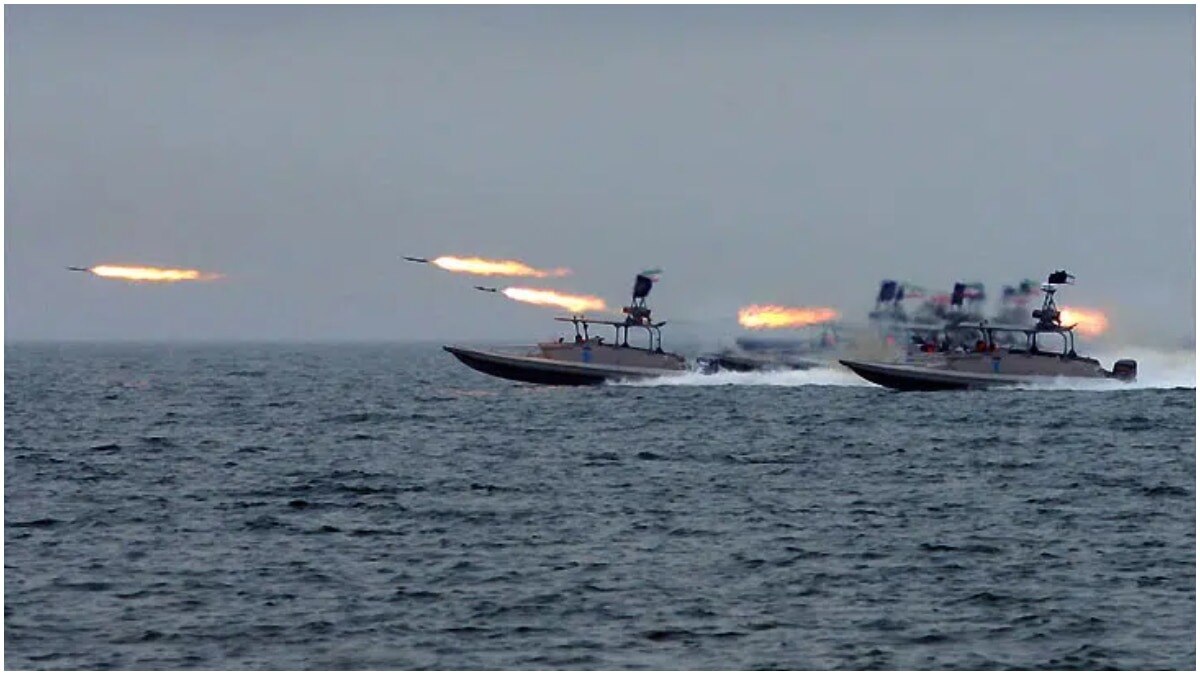
Iranian missiles and drones have, so far, failed to breach their adversaries’ defence systems at large or inflict any confirmed naval damage, except for an attack in the close vicinity of the US naval base in Bahrain.
AIRCRAFT LOST
“Documenting Equipment Losses during the 2026 Israel/USA – Iran War,” a report by independent analyst @elmustek, who tracks and verifies conflict losses, states that Iran has lost eight aircraft so far. Of these, four remain unidentified. Two are vintage American-made McDonnell Douglas F-4 Phantom II jets, and two are Northrop F-5 Tiger II aircraft, also of US origin. The other two known fighter aircraft lost in combat are the Su 22M4, a Soviet designed and Russian-built platform that Iran acquired from Iraq during the 1991 Gulf War.
Although there have been no reports so far of the US, Israel, or any of their allied forces losing an aircraft in combat, the US has suffered a setback. Three US F-15E Strike Eagles flying in support of Operation Epic Fury went down over Kuwait due to an “apparent friendly fire” incident on March 1, as later informed by the US CENTCOM.
MISSILES AND DRONES
Drones and missiles are the decisive factors that will determine how long Iran can sustain this war and what level of damage it can inflict on its adversaries, as Tehran appears focused on imposing costs on the US, Israel, and their allies in this war. The larger question remains, which side will reach its threshold first?
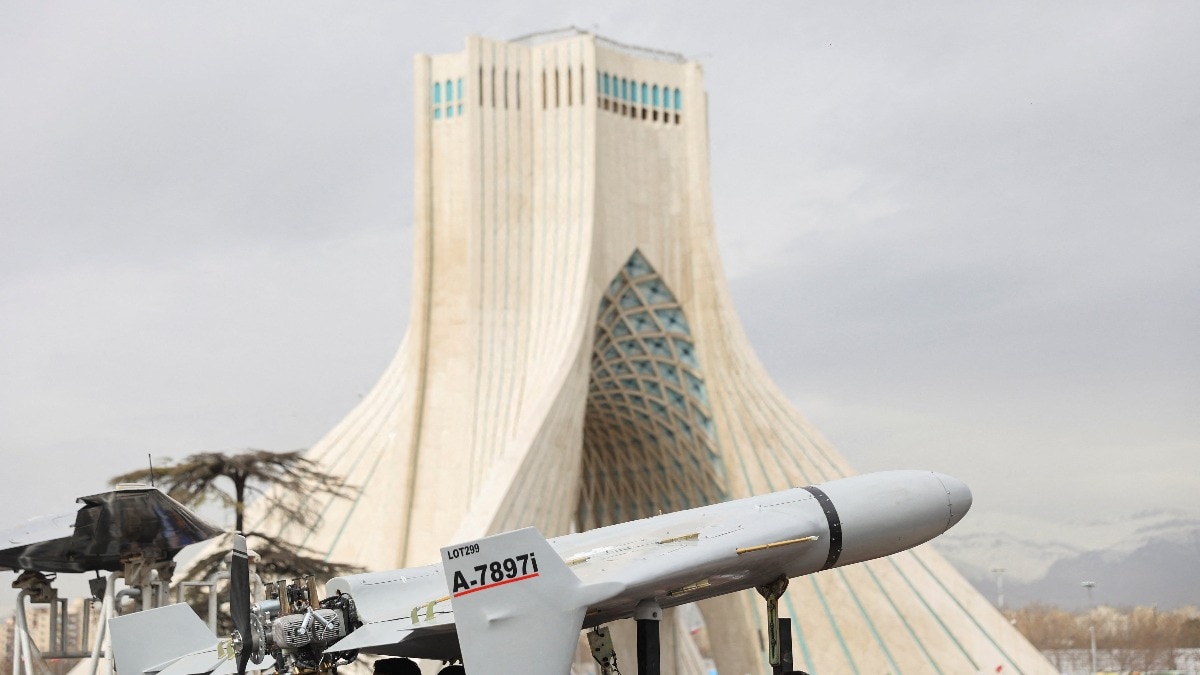
Iran has launched over 2,000 projectiles across its West Asian adversaries. Around 1,000 of them were missiles, with a roughly similar number of drones, primarily the delta-winged Shahed 136, a platform widely tracked since its extensive use in the Ukraine war. However, almost all of them encountered solid, layered, and integrated air and missile defence systems.
Israel and the US, leveraging superior naval and air power, have used around 1,250 projectiles, breaching air defence systems and repeatedly inflicting damage, reflected in Iran’s asset losses and casualties that have crossed 555, according to the Red Crescent Society.
Iran’s Choqa Balk drone facility in Kermanshah has been severely damaged in what appears to be a precision strike, according to satellite imagery obtained by India Today from Vantor, a US-based geospatial intelligence company.
In another precision strike, the Khorgu Missile Base in Hormozgan appears to have been heavily damaged, as reflected in satellite imagery from Planet via PBC.
Further compounding the losses, at least 13 Iranian ballistic missile systems and five radar systems have been destroyed, significantly weakening parts of Tehran’s strike and early warning architecture. Despite launching large volumes of missiles and drones across multiple fronts, Iran has yet to inflict any confirmed damage to any missile or ADS systems of its adversaries.
HUMAN LOSSES AND ATTACKS ON CIVIL INFRASTRUCTURE
Human losses across the theatre reflect the widening arc of the conflict. Iran has borne the brunt, with 555 fatalities and hundreds injured, according to Red Crescent and official tallies. Israel reports 10 deaths and hundreds wounded, while Lebanon has recorded 13 killed and 149 injured. Among US personnel, six service members have been killed and four injured, underscoring that the conflict’s human cost now stretches well beyond a single frontline. Spillover casualties are visible across Iraq, the UAE, Qatar, Kuwait, Bahrain and Oman.
Major “non-military” sites targeted in Iranian strikes include Amazon Cloud data centers in the UAE and Bahrain, Etihad Towers in Abu Dhabi, the US Embassy compound in Riyadh, bomb shelters and residential areas in Beit Shemesh, Kuwait Airport, Jebel Ali Port terminal in Dubai, and the Burj Al Arab. Damage ranges from structural impact caused by drones and falling debris to limited operational disruption, with casualties reported in some locations.
Inside Iran, “civilian” sites struck include Gandhi Hospital and Motahari Hospital in Tehran, as well as the Shajareh Tayyebeh school in Minab. Reports indicate fatalities crossing over 150 in the school strike, including students. The school is located in close proximity to an IRGC Navy facility in Minab, placing it near a militarily sensitive zone.
- Ends
Published On:
Mar 3, 2026 21:51 IST
Tune In