4 weeks ago
More than a century after Woodrow Wilson shaped the Treaty of Versailles, Donald Trump signed a 14-point Iran accord at the same palace. While Wilson projected American dominance, analysts argue the new deal marks a reversal, with Washington making greater concessions than Tehran.
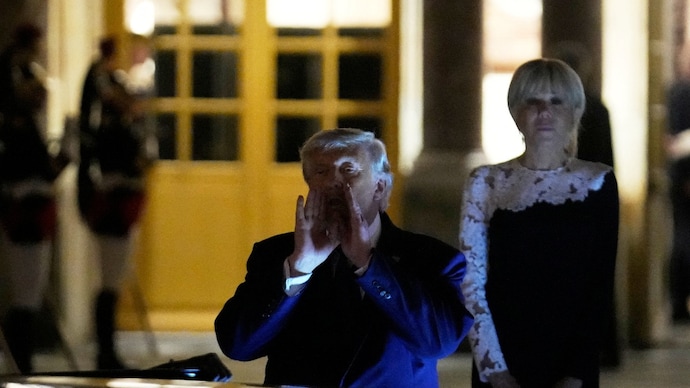
“It’s signed,” Donald Trump shouted to reporters after dinner at the Palace of Versailles on Wednesday, as French First Lady Brigitte Macron looked on during the historic moment. (Photo: Reuters)

New Delhi,UPDATED: Jun 18, 2026 08:57 IST
On June 28, 1919, the Treaty of Versailles ended World War I and cemented the victors' terms on Germany. At the centre of the negotiations stood US President Woodrow Wilson.
Wilson was one of the principal decision-makers in the Big Four Council -- France, Great Britain, Italy and the United States -- that shaped the terms of peace.
Six months before the treaty was signed, Wilson, addressing the Paris Peace Conference at Versailles, declared: “At last, the world knows America as the saviour of the world.”
But more than a century later, just 10 days before the anniversary of the World War I peace treaty, US President Donald Trump sat in the same palace and signed a 14-point agreement with Iran to bring the Gulf crisis to an end.
The symbolism is striking. Wilson's famous Fourteen Points formed the basis of his 1918 vision for ending World War I. Now, in a twist of history, another American president has signed a 14-point accord at Versailles. But this time, the tables appear to have turned. A closer look at the US-Iran pact suggests that it is Trump, not Tehran, who has made the larger concessions.
- Ends
Published On:
Jun 18, 2026 08:57 IST