1 hour ago
Iran has asked Yemen's Houthi movement to be ready to shut the Bab el-Mandeb Strait if the US attacks Iranian power infrastructure. The reported plan raises the risk of wider disruption to global energy supplies and Red Sea shipping.
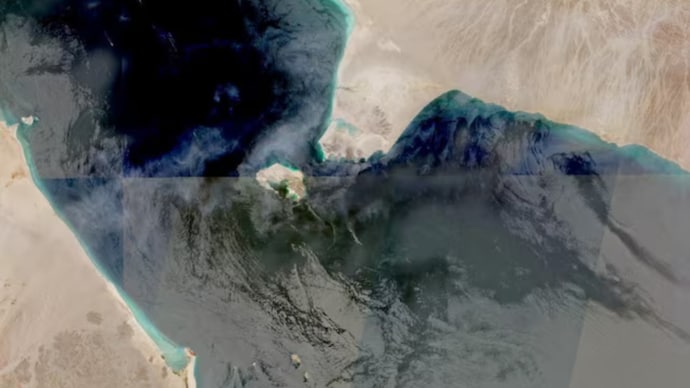
Iran's leadership has internally debated the plan and has already informed its Houthi allies to remain prepared for action. (File Photo: Reuters)
The Middle East's energy crisis could soon widen beyond the Strait of Hormuz. Iran has asked Yemen's Houthi movement to be ready to shut down the Bab el-Mandeb Strait if the US attacks Iranian power infrastructure, according to news agency Reuters. The move, if carried out, could deepen the global energy crisis by disrupting another key oil shipping route after Iran's closure of the Strait of Hormuz.
According to two senior Iranian officials, Iran's leadership has internally debated the plan and has already informed its Houthi allies to remain prepared for action.
It comes as the US and Iran continue to exchange strikes after a fragile peace memorandum unravelled over disputes surrounding the Strait of Hormuz. The conflict has since expanded beyond direct military exchanges, with US stepping up attacks on Iranian military targets and Tehran retaliating through missile and drone strikes while threatening regional shipping routes.
HOUTHIS SAID TO HAVE DEPLOYED MISSILES, DRONES
A source close to the Houthi movement told Reuters that the group has completed preparations for possible attacks on commercial shipping. Missiles and drones have been positioned near the Bab el-Mandeb Strait, with launch sites located in Yemen's highlands overlooking Hodeidah and the Gulf of Aden. The fighters are now waiting for instructions before launching any operation.
Representatives of Iran's Islamic Revolutionary Guard Corps (IRGC), who are already present in Yemen, would decide when to move forward with any attempt to block the strategic waterway, the source added.
The Bab el-Mandeb Strait links the Red Sea to the Gulf of Aden and serves as one of the world's busiest shipping lanes. Any disruption there would affect global trade and energy markets.
SECOND MAJOR ENERGY ROUTE COULD COME UNDER THREAT
With the Strait of Hormuz already closed by Iran, the reported plan threatens to disrupt another critical global shipping route.
Before the war, the Strait of Hormuz carried roughly one-fifth of global oil and liquefied natural gas shipments. Since its closure, Gulf producers have redirected a significant portion of their exports through Saudi Arabia's pipeline network to Red Sea ports.
The Red Sea route now carries around 7 per cent of global energy supplies. If Houthi forces begin attacking ships or port infrastructure there, both of the Middle East's primary export corridors would face simultaneous disruption.
Such a scenario could place fresh pressure on oil prices and further strain global supply chains already affected by the conflict.
HOUTHI-SAUDI TENSIONS RISE AGAIN
Regional tensions have also increased after the Houthis launched missiles toward Saudi Arabia earlier this week.
The group said the attack was retaliation for an alleged Saudi air strike on an airport under Houthi control on Monday. The exchange has effectively broken a four-year truce between Saudi Arabia and the Yemeni movement.
In response to the crisis, Saudi Arabia is taking the latest threats from Iran and the Houthis very seriously. According to Reuters, Saudi officials believe the Yemeni group is now coordinating more closely with Tehran over developments in the Red Sea.
The conflict between the US and Iran began on February 28, when American and Israeli forces launched strikes against Iranian targets. Tehran responded by closing the Strait of Hormuz, triggering widespread disruption to global energy supplies.
Although a temporary truce was reached in June, it quickly collapsed, leading to renewed fighting and increasing uncertainty across the region.
RED SEA THREAT COULD DEEPEN ENERGY CRISIS
Energy and security experts say any conflict around the Bab el-Mandeb Strait would have consequences far beyond the Middle East.
During previous Houthi attacks linked to the Gaza war, many international shipping companies diverted vessels around the southern tip of Africa, significantly increasing costs and delivery times.
Saudi Arabia has also shifted nearly 70 per cent of its energy exports to the Red Sea port of Yanbu since the Strait of Hormuz was closed. Any attacks on that route would further tighten oil supplies.
One regional source told Reuters Iran's leadership sees pressure on global energy markets as a way to increase the cost of continued US military action.
Iran considers the Houthis part of its regional "Axis of Resistance," a network that also includes Lebanon's Hezbollah and Shi'ite armed groups in Iraq. While those groups have already been drawn into the direct confrontation between Tehran and Washington, the Houthis have not formally entered the conflict.
The United States has repeatedly accused Iran of backing the Houthis with weapons, money and military training, including support routed through Hezbollah. Iran has denied the claims.
- Ends
With inputs from agencies
Published By:
Satyam Singh
Published On:
Jul 16, 2026 18:57 IST