 3 weeks ago
The 60-day negotiating window is expected to address unresolved military, nuclear and economic issues that continue to threaten stability across the Middle East.
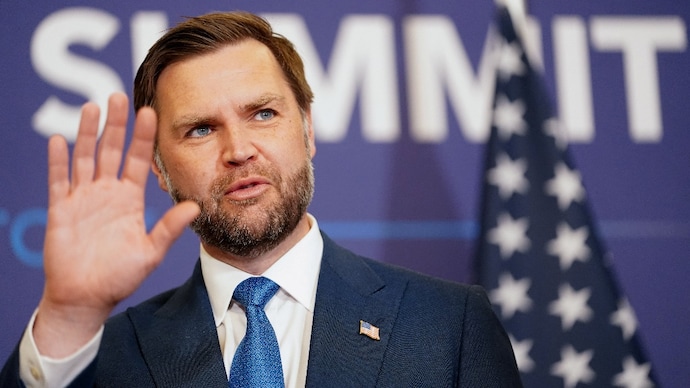
US Vice President JD Vance at the Buergenstock Resort Lake Lucerne, near Stansstad, Switzerland. (Photo: Reuters)
US Vice President JD Vance has emerged as the face of President Donald Trump's efforts to end the three-month war with Iran, placing the 40-year-old Republican in what could become the defining diplomatic test of his political career and a potential audition for the White House.
With Washington and Tehran agreeing to a provisional peace arrangement that has paused hostilities but left key disputes unresolved, Vance has been tasked with shepherding negotiations over Iran's nuclear programme, support for regional armed groups and the future of the Strait of Hormuz — issues that could determine whether the fragile truce holds.
According to Reuters, the assignment has thrust Vance onto the international stage in a role usually associated with America's top diplomats, raising both his profile and the stakes for his political future. Even Trump acknowledged the risks involved.
"If it works out, I'm going to take the credit. If it doesn't work out, I'm blaming JD!" Trump joked during a news conference at the G7 summit in France.
A FRAGILE PEACE, A HIGH-RISK MISSION
The United States and Iran agreed to a provisional peace deal that suspended fighting but deferred major issues to 60 days of negotiations.
Vance, who had earlier cancelled a planned visit to Switzerland amid escalating regional violence, arrived on Sunday and participated in the first round of negotiations with the Iranian delegation.
Republican allies have underscored Vance's growing influence in the process. Senator Lindsey Graham described the vice president as the "architect" of the peace agreement and suggested he should ultimately present any final deal to the Senate.
DEFENDING TRUMP, SHAPING HIS OWN FEATURE
Vance has become one of the administration's most visible defenders of Trump's Iran policy, even as critics argue the president has failed to achieve many of the goals he set out at the start of the conflict.
Trump has portrayed the provisional agreement as a major victory, but Iran's government remains in power, it retains ballistic missiles and enriched uranium stockpiles, and continues to back regional groups such as Hezbollah.
Facing questions about the administration's approach, Vance has repeatedly urged patience.
"Have a little bit of faith in the president of the United States. The idea that he is going to strike a deal that's bad for the American people, it's preposterous," Vance said during a White House appearance last week.
He also outlined what Washington hopes to achieve through diplomacy.
"If the Iranians don't change their behavior, their military and their nuclear programme is still destroyed," Vance said. "If they do change their behaviour, then they are going to have a transformative relationship with the Middle East."
2028 IMPLICATIONS
The negotiations are being closely watched not only for their impact on the Middle East but also for what they could mean for the future of the Republican Party.
Vance is widely viewed as a potential contender for the 2028 Republican presidential nomination, although he has avoided discussing any White House ambitions. Secretary of State Marco Rubio is also considered a possible candidate, making the administration's decision to elevate Vance as the public face of the negotiations particularly notable.
One person close to the White House told Reuters that Trump's decision fits a broader pattern of testing potential successors in high-profile roles.
"This back and forth is throwing people off, but Trump knows what he's doing," the person said. "He is literally conducting a tryout in real time."
BOOK TOUR MEETS DIPLOMACY
The diplomatic push has unfolded alongside Vance's media tour for his new book, Communion, which chronicles his conversion to Catholicism.
The vice president has frequently mixed discussions of faith, politics and diplomacy while promoting the book, at times injecting humour into otherwise tense conversations about war and peace.
During an appearance on ABC's The View, where he faced questions on Iran, immigration and civil rights, Vance cracked: "Let's talk about the book — I'm here to sell books."
For now, however, the success or failure of the Iran negotiations may prove far more consequential than book sales. If the talks deliver a lasting agreement, Vance could strengthen his standing as Trump's political heir. If they collapse, he risks becoming the face of one of the administration's most consequential foreign-policy setbacks.
- Ends
With inputs from Reuters
Published By:
Nitish Singh
Published On:
Jun 22, 2026 05:54 IST