1 hour ago
Hezbollah has rejected the Israel-Lebanon framework signed in Washington without its participation. The rebuff, protests and fresh strikes have deepened doubts over whether the deal can be enforced.

Image used for representational purposes only

Beirut,UPDATED: Jun 27, 2026 21:28 IST
Hezbollah leader Naim Kassem on Saturday criticised the framework agreement signed by Israel and Lebanon a day earlier to end months of conflict, raising fresh doubts about whether the deal can work. Lebanon and Israel signed the agreement in Washington without Hezbollah, and the deal links an Israeli withdrawal from Lebanon to the Iran-backed group's disarmament, which Hezbollah has rejected.
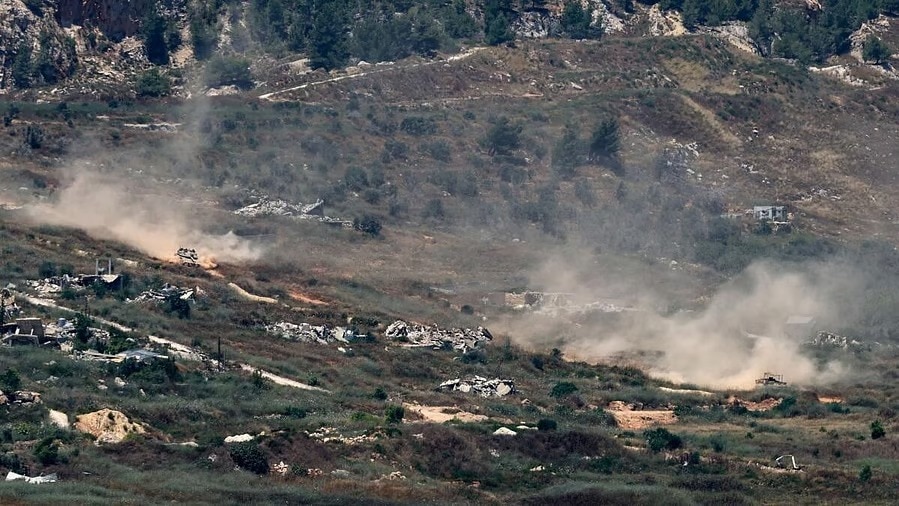
The agreement comes despite a record of earlier ceasefire arrangements between Lebanon and Israel not being carried out on the ground since the latest Israel-Hezbollah war began. Soon after the announcement, Hezbollah supporters protested on the streets of Beirut, while Lebanon's state news agency reported an Israeli drone strike near the southern city of Nabatiyeh.
In a statement, Kassem said Hezbollah would keep fighting until Israel was forced to leave Lebanon. From Hezbollah's point of view, the deal is nonexistent, he said. He called the agreement a "humiliation" and said linking Israel's withdrawal to Hezbollah's disarmament was a "very dangerous suggestion".
Details released by the US State Department on Saturday said Lebanon and Israel aim to eventually end the state of war between them that began when Israel was created in 1948. Under the deal, Israel will withdraw from Lebanon provided Hezbollah disarms. It calls for Israel to first pull back from two small areas described as pilot zones, though it does not say where those zones will be. The Lebanese army will gradually take full security responsibility in those areas, and the two countries will later agree on more pilot zones for future Israeli withdrawals.
The agreement also includes a security annex setting out the deployment of the Lebanese army and the redeployment of Israeli troops, but that annex has not been made public. As part of the deal, Israel says Hezbollah's disarmament across Lebanon, along with additional security measures to be agreed by the two countries, would remove any future need for Israeli military action or presence in Lebanon. The talks between Israel and Lebanon were separate from the interim deal signed earlier this month by the leaders of the US and Iran to end the fighting in the Islamic Republic.
The deal prompted Hezbollah official Hassan Fadlallah to warn that it could lead to civil war because Hezbollah would not give up its weapons and would resist any steps taken by the Lebanese army. On Saturday, Lebanon's top public prosecutor, Judge Ahmed Rami al-Hajj, told the heads of the country's security agencies to take measures to prevent riots.
Even after the agreement was signed, tensions continued. Lebanon's state news agency said the Israeli military released three Lebanese and three Syrian workers who were taken near the southern village of Ain Arab on Friday. The deal states that restoring security in southern Lebanon through the deployment of the Lebanese army, the safe return of civilians, and the security of Israel's northern communities are essential for long-term stability and peace.
People on both sides of the border expressed doubt and division over the deal. "Personally, I don't think it will be lasting because the Lebanese military cannot really stand a chance against Hezbollah," said Israeli citizen Ronit Belson while visiting the border town of Metula. In Lebanon, Sidon resident Rabie Sammour said, "People just want to rest for good. I support the Lebanese authorities in the decision" taken. Another Sidon resident, Khaled Ghannoum, said the agreement "legitimised Israel's occupation."
In an apparent reference to Iran, the deal says Lebanon and the United States commit to stopping funds from reaching any entity, organisation or individual linked to non-state armed groups, and to use available legal measures to ban such activity. It also says the Lebanese government explicitly commits to preventing reconstruction funds from reaching non-state armed groups and connected entities. The agreement has set out a path for an Israeli withdrawal and wider security arrangements, but Hezbollah's rejection and fresh tensions on the ground have already cast a shadow over its implementation.
With PTI Inputs
- Ends
Published By:
India Today Web Desk
Published On:
Jun 27, 2026 21:28 IST