1 month ago
Last Updated:December 18, 2025, 08:35 IST
The EU’s debate over tapping frozen Russian assets for a Ukraine loan reaches a decisive moment as leaders convene for a summit on Thursday and Friday.

A man holds a banner as people demonstrate outside the European Commission, in support of using frozen Russian assets to finance Ukraine, amid Russia's attack on Ukraine, in Brussels, Belgium, December 17, 2025. (REUTERS)
Europe is approaching one of its most consequential financial and political decisions since Russia’s full-scale invasion of Ukraine in 2022. At a crucial summit on Thursday, EU leaders will decide whether to use Russia’s frozen central bank assets to raise a loan for Kyiv, a step advocates describe as necessary for Ukraine’s survival, and critics deem legally shaky, financially risky and geopolitically explosive.
The stakes are enormous: Ukraine is running out of money, the EU faces pressure to plug the gap left by the United States, and Europe’s credibility as a geopolitical actor hangs in the balance.
The EU froze about €210bn of Russian central bank assets in 2022 as part of sanctions imposed after Moscow’s invasion. These assets are largely held at Euroclear, a Brussels-based financial institution that safeguards and settles securities for central banks, major lenders and international bodies. Until recently, the EU used only the interest generated by these immobilised Russian holdings to support Ukraine.
But as Kyiv’s financial crisis deepens and US backing has fallen sharply, the bloc is considering going further: borrowing against the assets to extend an unprecedented loan to Ukraine. This is the core of the proposal EU leaders must now decide on, and the reason it has become so contentious.
What Exactly Is The EU Proposing?
Under the European Commission’s plan, the bloc would use the “cash balances" generated by Russia’s frozen assets — the principal, interest and income that have accumulated as these securities mature — to finance a loan for Ukraine. Ursula von der Leyen, the European Commission President, explained the logic clearly: “We’re taking the cash balances, we’re providing them to Ukraine as a loan, and Ukraine has to pay back this loan if and when Russia is paying reparations."
The frozen assets total about €210bn, and this, the Commission has said, is therefore the ceiling for any loan structured through this mechanism. The immediate proposal is to lend Ukraine €90bn across 2026 and 2027. This represents roughly two-thirds of the estimated €136bn Kyiv needs over those two years to sustain its military and civilian functions, according to the European Commission and IMF projections.
A key feature of this loan is that Europe expects eventual repayment not from Ukrainian taxpayers but from Russia, if and when Moscow agrees to pay war reparations. Until that happens, Russia would technically remain the legal owner of the assets, but it would not be able to access them due to EU sanctions.
Why Is Europe Considering This Now?
Several political and financial pressures have converged. For much of 2024, EU leaders avoided touching the principle of Russia’s frozen holdings, fearing it would rattle global investors and undermine trust in the eurozone. That caution shifted in October when Germany’s new chancellor, Friedrich Merz, publicly backed the idea of using the assets, without confiscating them, arguing that Russia’s aggression poses a greater long-term economic threat to Europe than the legal uncertainties of the plan.
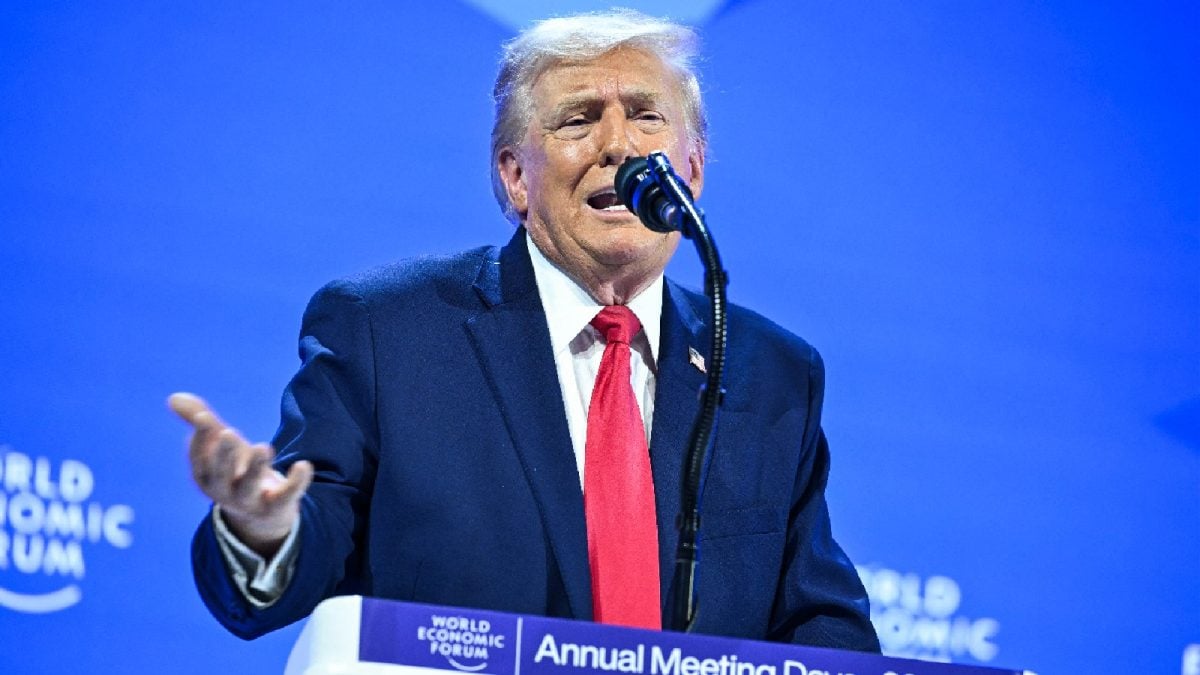
Another factor is the sharp decline in US support. US President Donald Trump has halted new military aid to Kyiv, while the United States has floated rival ideas for the frozen assets, including investing them for US-led reconstruction initiatives. European leaders, worried that Washington might repurpose the funds, have been spurred to act.
Meanwhile, Ukraine’s financial situation is becoming dire. Without fresh resources by spring, Kyiv could struggle to pay soldiers, teachers and police. As Ukrainian President Volodymyr Zelenskyy put it: “Without such support, I don’t see the possibility for Ukraine to hold on, or to stand tall economically. I don’t see us being able to cover such big deficits with other vague promises or unclear alternatives."
Europe has committed to support Ukraine regardless of whether the frozen-assets plan passes, but it must still decide how to pay for it. Given sluggish European economies and tight national budgets, governments face limited room for additional spending. The frozen-assets loan is seen by many capitals, including Germany, Poland and the Baltic states, as one of the few feasible avenues left.
Why Is Belgium, Of All Countries, Pushing Back?
Belgium hosts Euroclear, which holds the bulk of Russia’s immobilised assets. That alone gives Belgium a uniquely exposed position. Brussels has described the reparations loan as “fundamentally wrong" because it could be interpreted as confiscation, potentially prompting Russia to retaliate or pursue expensive litigation.
Belgian Foreign Minister Maxime Prévot has been explicit about the risks: “We have repeatedly said that we consider the option of the reparations loan the worst of all, as it is risky – it has never been done before." Belgium argues that the EU’s proposed guarantees are insufficient. The European Commission has asked member states to promise they will cover repayments if Russia ultimately pays reparations, but Belgium fears that is only part of the financial exposure.
Euroclear is already embroiled in more than 100 cases in Russia, and the Russian central bank has filed a $230bn claim for damages against it. Belgium worries that, without watertight guarantees, it could be left to bear the legal costs of defending Euroclear, and to absorb any retaliation against Belgian property in Russia or third countries. Belgian officials have highlighted that jurisdictions close to Moscow, such as Kazakhstan or China, might enforce Russian rulings by seizing Belgian-owned assets on their soil.
Brussels has therefore demanded that EU member states provide 100% guarantees against every possible financial consequence, not just the loan itself but all associated risks. It also wants other countries holding Russian assets, including the UK, Canada, Japan, Switzerland, Norway and the US, to make proportional contributions.
What Are Other EU Concerns About The Plan?
The controversy extends beyond Belgium. Italy, the Czech Republic and others have questioned the financial guarantees required, or whether their national budgets should be on the line. The Czech prime minister has said Prague will not provide such guarantees because its funds must be reserved for Czech citizens.
There is also a broader strategic worry: that using frozen sovereign assets in this manner could damage Europe’s reputation as a safe place for international capital. Countries such as China, which could one day face EU sanctions if it were to take aggressive action on Taiwan, may hesitate to hold large reserves in Europe if they see the Russian precedent as a warning sign.
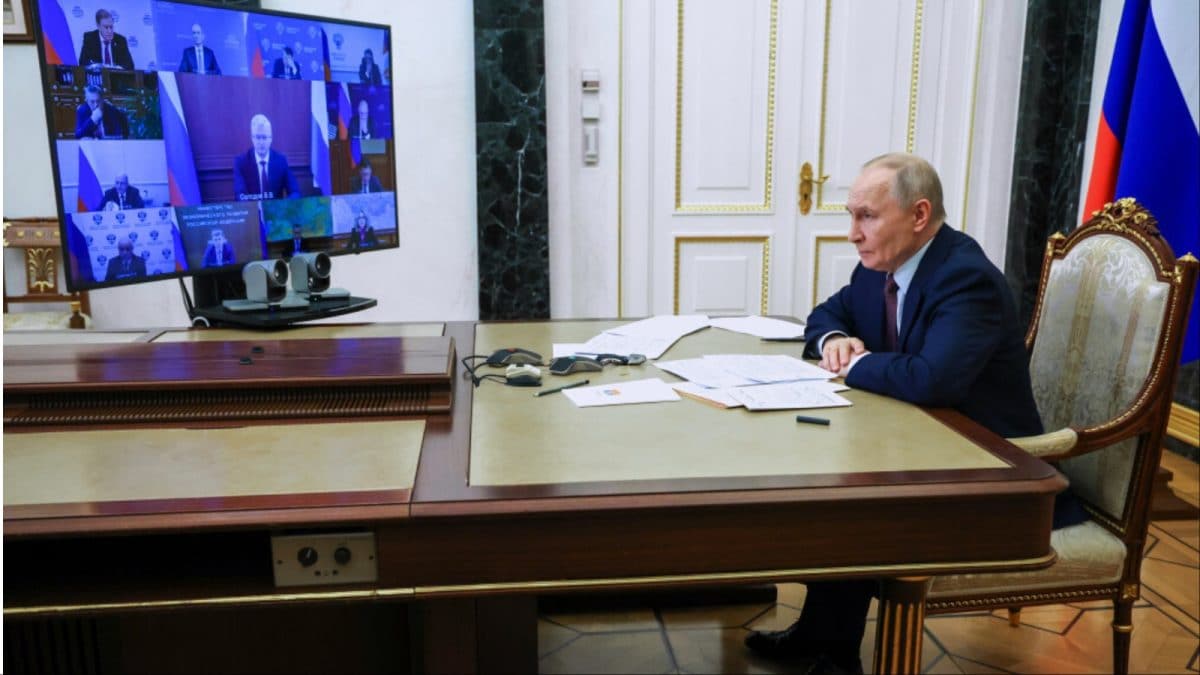
Russia, for its part, has denounced the EU’s idea. Russian President Vladimir Putin has said using the frozen assets for a loan would amount to “theft of someone else’s property". In a recent interview with CNN, Kremlin-linked Russian banker Andrey Kostin called the plan “a robbery." Moscow has issued repeated warnings that the plan would destabilise the eurozone and erode investor confidence.
What Is The US Position On The Frozen Russian Assets?
The United States has its own vision for how the frozen Russian assets should be used, and this has added a layer of tension to Europe’s deliberations. A US-backed 28-point plan that leaked last month proposed investing $100bn of Russia’s immobilised assets in “US-led efforts to rebuild and invest in Ukraine," with Washington receiving profits generated from those investments. Because most of the frozen assets are held in Europe, the American approach depends heavily on EU cooperation, and the bloc’s reparations-loan proposal diverges sharply from these US ambitions.
US officials on Monday discussed the use of the frozen assets with Ukrainian delegates and European counterparts, but it is unclear how the American framework has evolved after multiple rounds of negotiations.
Meanwhile, the Trump administration has halted new US support packages for Ukraine, sharply reducing Washington’s financial role. According to data compiled by the Kiel Institute, Ukraine’s European allies have allocated $221bn in military, financial and humanitarian aid since January 2022, compared with $134bn from the United States. This gap is one reason why Kyiv sees the frozen assets as indispensable.
Is There An Alternative On The Table?
Yes, but it may be even harder to implement. The European Commission has proposed a second, more traditional option: for the EU to borrow directly from financial markets using the EU budget as collateral, then lend the money to Ukraine. This is a method the EU has used before, including during the pandemic.
However, this route requires unanimous approval from all 27 EU member states. That means Hungary or Slovakia, governments aligned more closely with Russia, could block it outright. The frozen-assets loan, by contrast, needs only a qualified majority.
Belgium and a few others argue that the alternative is legally safer and shields Euroclear from retaliation. But most EU officials acknowledge that unanimity may be impossible and that, without the frozen-assets plan, securing the necessary funds for Ukraine could be extraordinarily difficult.
What Happens If EU Leaders Fail To Agree?
A deadlock would deal a significant blow to Europe’s credibility. German chancellor Merz warned that “if we do not succeed in this, then the European Union’s ability to act will be severely damaged for years, if not longer, and we will show the world that we are incapable of standing together and acting at such a crucial moment in our history."
It would also leave Ukraine scrambling for alternatives just as its financial crisis peaks and its battlefield pressures mount.
The EU has pledged to support Kyiv regardless, but without agreement on how to mobilise funds, that promise risks becoming symbolic. Failure would also weaken Europe’s influence in any peace negotiations, particularly at a time when the United States is taking a more transactional approach and questioning Europe’s resolve.
And If There Is Agreement?
Relief would likely be immediate, but the work would only begin. The decision would have to be translated into binding legislation at speed so that Ukraine receives funds by spring. Even then, long-term uncertainties remain: who will cover the enormous reconstruction bill — now estimated at $524bn (€506bn) — and how any future peace deal will address borders, security and Russian reparations.
The EU’s decision, therefore, is not merely a financial debate. It is a test of Europe’s cohesion, legal framework and geopolitical confidence, and a sign of whether the bloc can rise to a historic moment even amid profound internal divisions.
 Click here to add News18 as your preferred news source on Google.
First Published:
December 18, 2025, 08:35 IST
News explainers How The EU Plans To Use Frozen Russian Assets For Ukraine, And Why It Has Split Europe
Disclaimer: Comments reflect users’ views, not News18’s. Please keep discussions respectful and constructive. Abusive, defamatory, or illegal comments will be removed. News18 may disable any comment at its discretion. By posting, you agree to our Terms of Use and Privacy Policy.
Read More