2 hours ago
Before the conflict, commercial vessels transited the strait without paying any charges. That changed after Iran effectively blockaded the route during the war, sending crude oil prices sharply higher and disrupting global shipping.
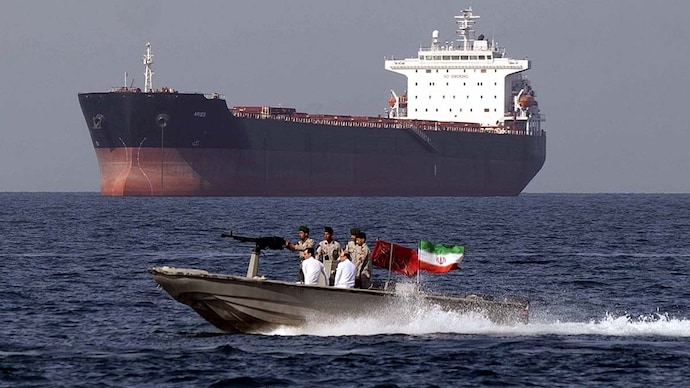
Iranian officials have repeatedly signalled that they intend to introduce a payment mechanism for ships using the passage. (File Photo)
Oman has proposed a joint mechanism with Iran to collect fees from ships passing through the Strait of Hormuz, opening a new chapter in negotiations over one of the world's most strategically important waterways.
According to The New York Times report, Oman submitted a formal proposal to the US and other Western partners outlining a framework under which Iran and Oman would jointly collect payments from ships using the Strait of Hormuz.
Before the conflict, commercial vessels transited the strait without paying any charges. That changed after Iran effectively blockaded the route during the war, sending crude oil prices sharply higher and disrupting global shipping.
Since then, Iranian officials have repeatedly signalled that they intend to introduce a payment mechanism for ships using the passage.
Diplomatic sources cited in the report say Oman's proposal attempts to create a structured arrangement rather than allowing unilateral Iranian action.
The proposal comes months after the Iran-US war changed the security landscape in the Gulf and after Tehran demonstrated its ability to disrupt one of the busiest energy shipping routes in the world.
If implemented, the plan would end decades of free passage through the strait and could reshape global maritime trade. It has emerged as one of the most sensitive issues in ongoing negotiations between Washington and Tehran aimed at securing a permanent peace agreement following months of conflict.
US REMAINS SCEPTICAL
The proposal has reportedly reached American negotiators.
A person familiar with the US position said Washington had received the Omani proposal and planned to discuss several concerns with Muscat during technical negotiations.
US officials have consistently insisted that commercial navigation through the Strait of Hormuz should remain free.
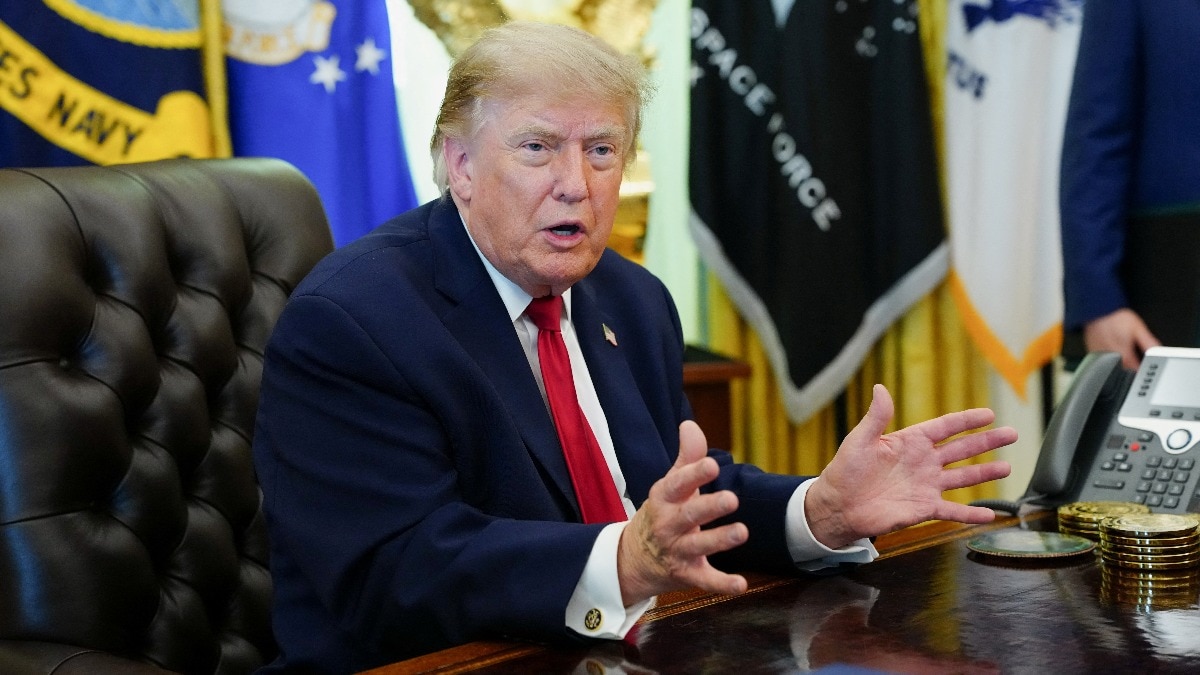
President Donald Trump has repeatedly criticised the idea. Earlier this month, he described charging ships for passage through the waterway as "unacceptable."
He had also threatened military action against Oman after reports first emerged that Muscat had discussed partnering with Iran on a fee collection system.
Despite those objections, US officials say discussions with Oman remain constructive. Washington values its partnership with Oman and believes technical differences can still be resolved.
IRAN WANTS PAYMENT SYSTEM
Iran has made little secret of its intention to ensure that the Strait of Hormuz does not return to its pre-war status. Deputy Foreign Minister Kazem Gharibabadi said this week that reaching an agreement with Oman remains Tehran's preferred option.
However, he warned that Iran would move ahead independently if no joint arrangement could be reached. Iranian Foreign Minister Abbas Araghchi has also said the waterway would never again operate exactly as it did before the conflict. Senior Iranian officials have said that countries responsible for securing maritime traffic should be compensated for the services they provide.
Mehdi Mohammadi, a senior adviser to Iran's lead negotiator with the United States, dismissed the debate over terminology.
"There is no free service anywhere in the world," he said.
VOLUNTARY OR MANDATORY?
One of the biggest disagreements concerns whether ships would be required to pay.
According to The NYT, Oman's proposal draws inspiration from the Strait of Malacca and the Singapore Strait, where a Japanese foundation manages voluntary contributions to support navigation safety. Under that model, shipping companies contribute voluntarily to help fund maintenance, emergency response and navigational safety.
Iran, however, appears to favour a different approach. Tehran wants payments to be compulsory rather than voluntary.
That difference remains one of the key issues still under negotiation.
PEACE DEAL ADDED NEW DEADLINE
The debate comes against the backdrop of the temporary peace agreement signed by the US and Iran earlier this month.
The framework agreement guarantees free passage for commercial vessels through the Strait of Hormuz for 60 days while negotiators work on a permanent settlement. It also requires Iran and Oman to begin discussions over the future management of the waterway after that period expires.
Those negotiations are expected to begin within days. According to Iranian state media, the talks will cover shipping arrangements, navigation routes and possible fee collection mechanisms.
The proposal has sparked concern among Western governments and international maritime bodies.
The Maritime Organisation (IMO) has long maintained that freedom of navigation through international waterways must be protected. IMO Secretary-General Arsenio Domnguez said any toll system that interferes with that principle would not comply with international law.
At the same time, he acknowledged that a voluntary funding arrangement could be workable.
"It's learning from something that already exists, that is being tested," Domnguez said.
"The goal is to find practical solutions to the crisis brought on by the war."
Oman's Foreign Minister Badr al-Busaidi has similarly argued that his country is not proposing transit tolls. Instead, he has distinguished between charging ships merely for passage and collecting voluntary contributions for services such as maritime safety, emergency response and pollution control.
"All we are saying is that perhaps we can benefit from some existing experiences, on a voluntary basis, between the countries concerned with this matter," he said.
GULF STATES WATCH CLOSELY
The proposal is also drawing attention across the Gulf.
Several Gulf countries rely heavily on the strait to export oil and natural gas, making any change to its management economically significant.
Saudi Foreign Minister Prince Faisal bin Farhan questioned whether the conflict should permanently alter how the waterway operates.
"Why should we now, as a result of a conflict, accept some novel arrangement that is going to be imposed on it?" he asked during a recent event.
As diplomats race to bridge their differences, the future of the Strait of Hormuz has emerged as one of the biggest unresolved questions in the post-war Middle East, with implications stretching far beyond West Asia.
- Ends
Published By:
Satyam Singh
Published On:
Jul 1, 2026 00:32 IST